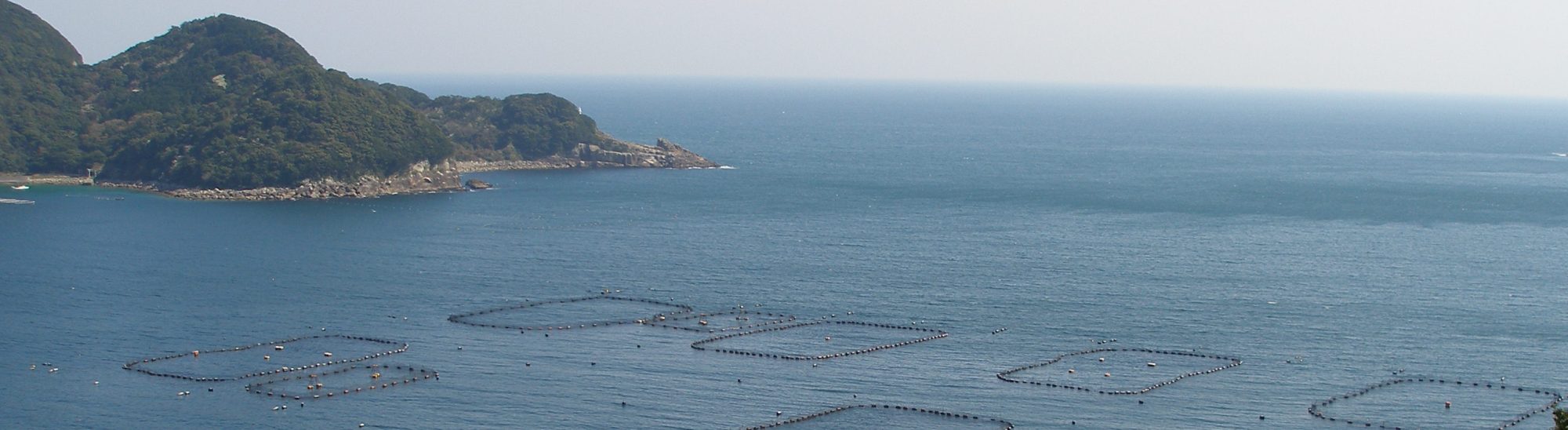
Amidst the search for sustainable alternative food sources, aquaculture has expanded greatly, with the proliferation of fish farms in more areas across the world, some of which are popular tourist destinations. Aquaculture can make significant contributions to these destinations, for example by providing tourists with fresh local seafood or supporting local communities, but a major concern is its environmental impact. In addition, unspoilt coastal scenery is important for tourists who are interested in natural and pristine areas, with many choosing particular locations simply because of their attractive settings. Fish cages or mussel rafts typically have large surface structures that can impact the aesthetics of seascapes viewed from the shore, adding to tourists’ concerns.
However, in Greece, where 65% of domestic production of fishery products comes from aquaculture, the sector is being turned into a touristic asset, rather than a source of concern.
Greece has everything we might dream of for the perfect vacation: crystal clear water, a warm climate and delicious local food, while aquaculture is also a familiar sight. Now, the the sector is keen to highlight how offshore farms are not a disturbance, but rather a touristic asset, and in June I went to see this for myself on the island of Rhodes. There, I saw just how tourists are learning about aquaculture and how two very different sectors can co-exist.
The trip took me to Lamar S.A, a small-scale farm that produces around 300 tonnes of sea bream, sea bass, meagre and gilted sea bream each year on the west coast of Rhodes. Together with Blutopia Diving Center, which offers local scuba dives, Lamar S.A runs educational marine biology trips and diving excursions to an island called Strongyli. Tourists learn about sustainable farming practices and become familiar with fish farming while encountering dolphins, tuna and seals that aggregate around the farm site. During the tour, we heard about the necessity for aquaculture growth in Europe, the relationship between aquaculture and the marine environment, and the importance of environmental protection. By far the biggest highlight was swimming with sea bream in a designated net pen. Close to Lamar S.A.’s net pens, the sea is a hub of biodiversity. On the day of my first tour, dolphins passed our boat all the time and seals made the occasional appearance, while tuna can also be seen swimming in between the cages.

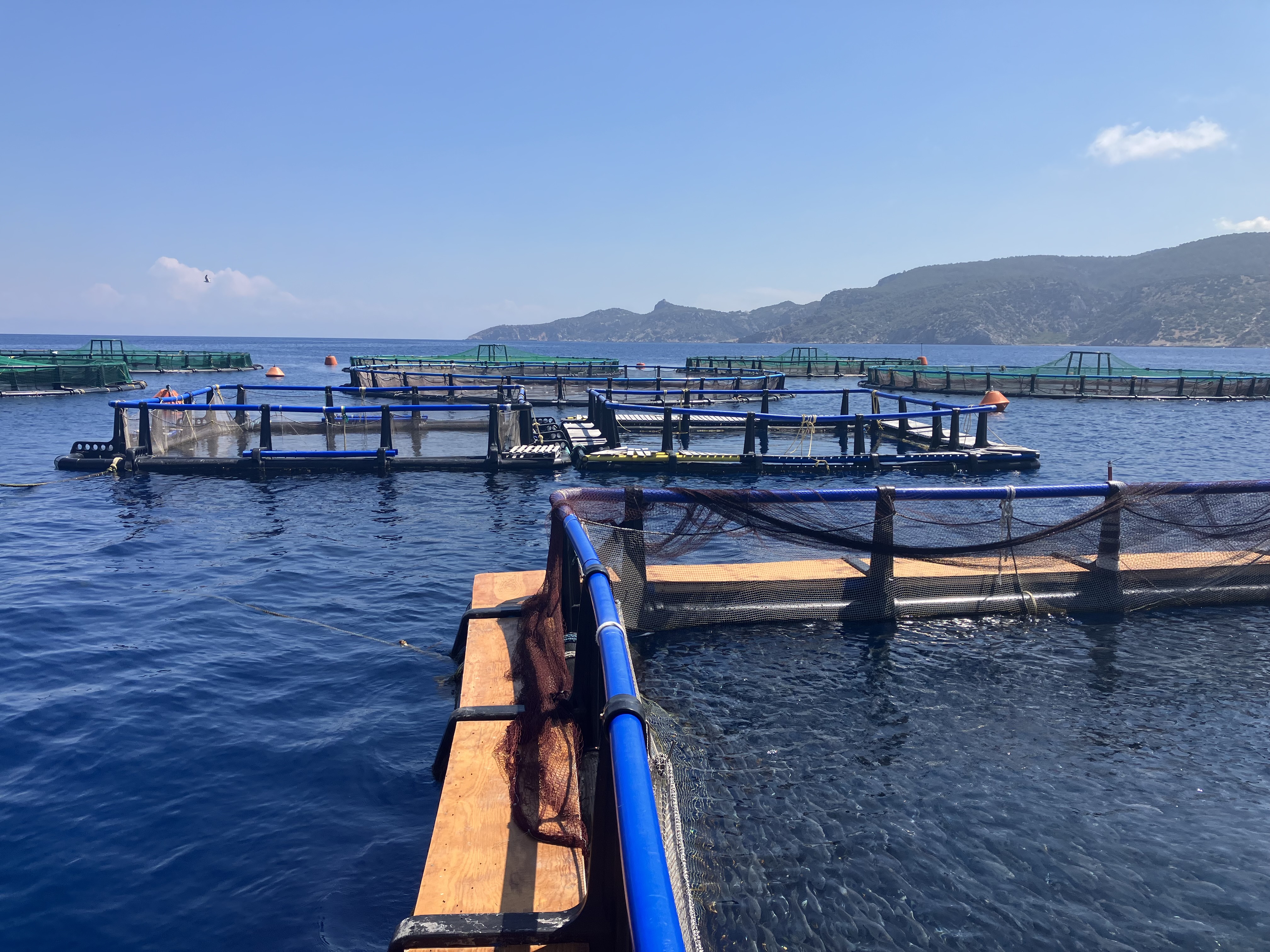

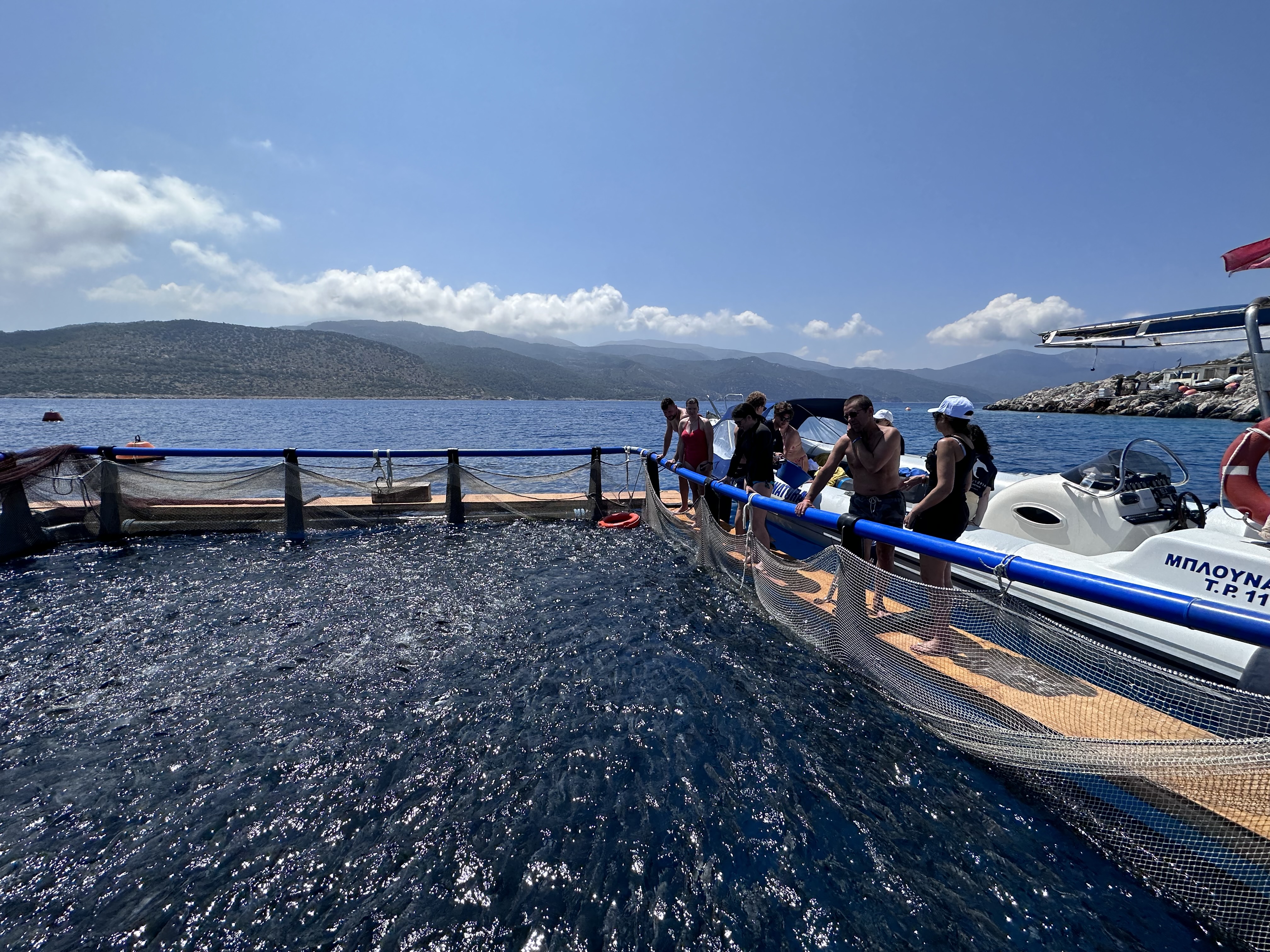


While offering these excursions, Lamar S.A. is also looking to diversify by providing services other than fish production. Together with the Hellenic Centre for Marine Research, it gathers data on water quality parameters around the farm. These data are incorporated into aquaculture management programmes and shared for free with universities and research institutions. Lamar S.A. is also aiming to turn its farm into a Marine Protected Area (MPA). This can provide ecological benefits and drive the sustainable development of aquaculture and tourism, enabling them to grow together, while MPAs have a huge role in protecting biodiversity and sustaining livelihoods. Anastasios Baltadakis, an aquaculture research and development consultant at Lamar S.A., told me about the need for small-scale fish farms to diversify, and how playing a role in different fields from fish production to marine research makes Lamar S.A. a shining example –or in his words, a lighthouse — of sustainability.
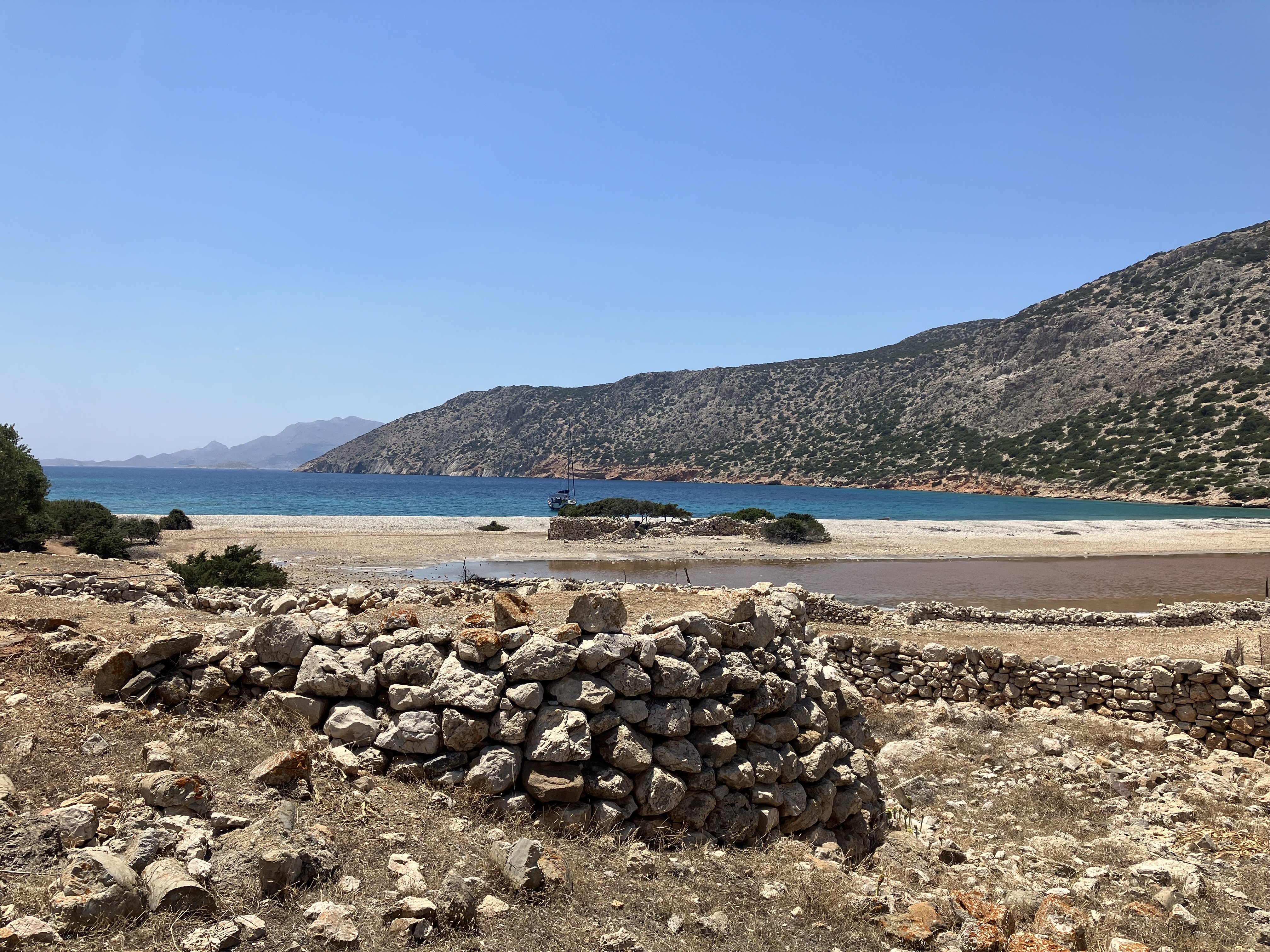
This type of partnership is a great way to enhance public understanding of aquaculture, and it made me think about what the sector can do to develop innovative ways of telling the public what fish and shellfish farming are all about. In Rhodes, tourists can clearly see aquaculture’s benefits, how sea bream and sea bass are farmed, and the impacts on the surrounding environment. Inviting tourists to fish farms in this way is also beneficial to aquaculture. It can encourage the promotion of best practices for offshore management, the adoption of ecosystem-based approaches and steps to increase the resilience of the ocean. Visitors also learn about broader topics, such as the importance of responsible aquaculture, the conservation of marine biodiversity, and how co-existing and growing with tourism is important for aquaculture’s sustainable development. The Rhodes excursion was an opportunity for me to see up close the type of aquaculture setup that exists on the island, what the technology and feeding systems are like, and taste farmed fish, which we did on a beautiful uninhabited island after the farm tour. It was also a chance for the fish farm staff to interact with the public at large, to meet people who may not know what fish farming is about or who may have concerns, and show them everything that happens on a fish farm.



Public, or consumer, understanding is key to achieving the full benefits of aquaculture and seafood farming. However, research shows that aquaculture literacy among the public is low, for example in the US. That influences how people understand, support, and make decisions about farmed seafood products. Most of them may encounter information that can be out of date, inaccurate or incomplete, which is why a trusted science source or community member that can share accurate information can be pivotal in increasing aquaculture and sustainable seafood literacy. In the US, the National Oceanic and Atmospheric Administration (NOAA) has a host of initiatives that are aimed at telling people about the science and latest advancements in aquaculture and its multiple benefits. One is the aquaculture literacy initiative. Work happens through the Coastal Ecosystem Learning Centres (CELC) Network, a consortium of 25 aquariums and marine science education centres across North America. With millions of people visiting CELC institutions every year, aquariums can provide them with the latest information on sustainable aquaculture while learning about community needs and perceptions.
Another great US example is the Maine Oyster Trail, where the public can join farm tours, shucking lessons and community events to learn more about Maine’s coast and oyster regions as well as how oysters in the area are farmed. Participants can also use a trip planner to find different experiences along the Maine coast. The goal of the Maine Oyster Trail is to highlight local oyster farms and provide authentic experiences to tourists. It also works closely with oyster farmers to better understand their operations and provide the tools and support that they need to explore new business opportunities through tourism.
With aquaculture getting such a mixed reception, I find that there is still so much misinformation and a lack of knowledge among people, and that if initiatives like excursions to fish farms were more widely available, there could be some significant impacts. When it comes to sustainability, fish welfare, or environmental and social impacts, consumers these days want, or even insist, to know more about what they are eating. But right now, they don’t know how much innovation, knowledge and skill goes into the different aspects of aquaculture from feed to health, genetics and more.
However, as I discovered in Rhodes, people are interested in hearing the facts. This is really exciting, and aquaculture must access those facts and share them. Excursions to fish farms are an ideal opportunity. There is nothing like being able to see a farm for yourself, from the quantities of fish that are produced, to how the fish are fed, to how smoothly run a fish farm can be. Seeing this really highlights how aquaculture can offer different solutions and be a significant part of the blue economy.
It would be great to see more thoughtful and productive conversations between consumers and aquaculture stakeholders. These types of conversations are vital for the future of aquaculture but with examples such as the excursions in Rhodes, I think the sector is on the right path. With more people becoming aware of aquaculture’s benefits and importance and, in turn, hopefully more supportive of it, we could see even more opportunities and exciting developments.

 bonniewaycott.com