Category Archives: Uncategorized

January 2016: Thailand Diving

Friday January 29th – Monday February 1st, 2016

They say that beauty is in the eye of the beholder, and this could not be more so for the underwater habitats and inhabitants of Thailand’s seas. Vast, eerie, beautiful, breathtaking and even magical, Thailand is home to thousands of marine species. A closer look reveals delicate structures, textures and vibrant, perfectly placed colours.

Phuket is often referred to as the Pearl of the South and for good reason. The crown jewel of the Andaman Sea is the gateway to dive sites such as the Similan Islands and Richelieu Rock whose year-round tropical climate and crystal clear waters draw divers from far and wide. For me, spending a few days here on my first ever liveaboard couldn’t have been a better way to start 2016.

The Similan Islands are some of Thailand’s most popular dive sites, and we spent a couple of days exploring everything they had to offer. With a giant stride entry into the water at our first site Anita’s Reef, we came across brain, honeycomb and stag coral erupting out of the rocks like perfect marine sculptures, while in amongst these works of art were nudibranchs, crabs and starfish. Schools of butterfly fish seemed involved in a feeding frenzy, along with gigantic numbers of yellow snapper. Soon I found a mantis shrimp protecting its lair with typical ferocity. The mantis’s bright colouring is the perfect fit for islands like the Similans, and if there’s a more photogenic creature in the oceans, I’m yet to snap it. Coral groupers surrounded large coral-encrusted boulders and bluefin trevally decorated the reef. The iridescent blue water washed over large stands of soft coral, and the simple colour contrast was breathtaking.

Further west of the islands, the underwater scenery is just as good with great visibility in the aquamarine waters. Oriental sweetlips, clown triggerfish and dogtooth tunas can be found swimming past the reef crevices, while batfish compete with sweetlips for the attention of cleaner wrasses. As turtles flapped by, the site made me appreciate how prolific sea turtles are in the region, and for macro lovers this area is a joy, as a wealth of subjects provide an eclectic image-making experience.

Soon we were heading north to Koh Bon, about 20km north of the Similan Islands and featuring one of the only vertical walls in Thailand. The main dive site is on the southwestern point with a step-down ridge that reaches just over 40m. The eastern side is where most divers enter the water to encounter dense and vibrant coral reefs full of movement, beauty and light. Swimming by with our torches at hand, there almost seemed to be a change in soft corals and the density of certain fish species. We found a small rise of coral heads with various fish flitting about, and sea whip branches and gorgonian sea fans providing a small vertical accent to the site. I followed the wall south and came across longnosed emperor fish, rainbow runners, bluefin trevally, anemone crabs and even an octopus trying to hide itself in a hole not quite big enough for the purpose.

Twenty-five kilometres north of Koh Bon is Koh Tachai, famous not just for common species of corals and fish, but also for larger animals such as rays, leopard sharks, nurse sharks and turtles. Whale sharks and manta rays are also known to make an appearance. Unfortunately we were out of luck with those, but nevertheless had a great time thanks to the healthy corals and plentiful reef life like colourful crinoids and masses of butterfly and angelfish. Giant trevally contrasted with sun and whip corals flailing in the slight current, and there were macro subjects to delight any diver: shrimp, sea slugs and small gobies, white-banded cleaner shrimps and anemone crabs. We also encountered big eye jacks patrolling the area, while small groups of longfin batfish shimmered in the blue and laconic sea turtles appeared to graze nearby. The scenery below the water took our breath away – giant morays and lots of yellow back fusiliers left an impression.

Our final site before heading back to Phuket and the mainland was Richelieu Rock, an open sea pinnacle 45km off the Andaman coastline. The pinnacle rises from 50m to the water surface, with limestone boulders here and there providing a haven for marine life. It’s a bit of a lone outpost, with tidal currents causing upwellings of plankton and attracting life from far and wide. Beginning our descent, blackfin and yellowfin barracuda glinted in the sunlight and we soon came across impressive growths of sponges, sun corals and all manners of life. Groupers and the odd cuttlefish congregated and passed by while the area was highlighted by batfish and hawksbill turtles of various sizes.  We also spotted ornate ghost pipefish, cleaner pipefish and even a tigertail seahorse or two. The shallow parts of the pinnacle are wondrous dives in their own right, and this trip made it clear why Richelieu Rock is among the world’s best dives. In fact, such a great diversity of dive sites and the special creatures found on them makes the Andaman Sea a fantastic long weekend getaway with very rewarding diving.

Practical Information

  • We booked our flights with Singapore Airlines, flying via Singapore to Phuket, arriving in Phuket around 17:00 in time for an evening pick up.
  • We booked our trip in Japan with an English-speaking dive guide who works at Kozushima’s dive shop Nangoku.
  • Further information on the liveaboard trip is available in English from West Coast Divers who run the trip on the boat MV Pawara. West Coast Divers are a dive centre in Phuket. http://www.westcoastdivers.com
  • A delux cruise aboard the MV Pawara for 4 nights and 4 days costs upwards from THB 25,700.
  • The staff from West Coast Divers pick customers up at Phuket airport or hotels depending on customer itineraries. The drive from the airport to the harbour (Tablamu Pier) is about an hour and a half.
  • Upon boarding the boat, customers are offered a welcome drink and there is a short explanation of the boat and its safety features, captain and crew introductions and a welcome dinner (buffet with a range of seafood, meats, vegetables, rice etc). The dinner is also slightly Western-style, with less spices etc. The boat then sets sail for the Similan Islands, arriving the next morning, after a ceremony on board to pray for good luck.
  • Day 1 at the Similan Islands includes 3 day dives and 1 sunset or night dive.
  • Day 2 is at the Similan Islands and Koh Bon, 3 day dives and 1 night dive.
  • Day 3 is at Koh Tachai and Richelieu Rock, 3 day dives and 1 night dive.
  • Day 4 is at Koh Bon or Boon Soong Wreck, 2 day dives. After this, the boat heads back to Tablamu Pier, and customers are driven by mini bus back to Phuket.
  • The boat contains a large saloon, dive deck, spacious sundeck and upstairs area for sunbathing and sleeping.
  • Extra charges include the Similan Island National Park entry fee (1,800BHT), equipment rental full set (2,000 BHT for 4 days), torch for the night dives (100 BHT per dive) and dive computers (300 BHT per day).
  • All cabins include drinking water, 2 beach towels and 2 small towels, soap and shampoo, hair dryer, blanket, safe box, life jackets and international electric sockets. Wifi is very limited!
  • Tea, coffee, drinking water, cookies and fresh fruit are available at any time.
  • We arrived in Phuket after the trip in the early evening, and stayed for one night at the Phuket Airport Hotel (http://www.phuketairporthotel.com) which had a free bus to the airport, Western-style breakfast for a small extra charge, swimming pool, spacious comfortable rooms and restaurants nearby.

 January’s dives

Friday January 29th, 2016

Dive No: 213, Anita’s Reef, Entry time: 07:57, depth: 23.8m, dive time: 51 mins, exit time: 08:48, water temperature: 29C, water visibility: 15-20m, start pressure: 200 bar, end pressure: 50 bar, used a 4kg weight belt, 5mm wetsuit, jacket BC, nitrox (29%), 12L aluminium tank. Saw sandy partner gobies, pinkbar partner gobies, parrotfish, common cleaner wrasse, clown fish, spotted hawkfish, yellowback fusiliers, coral groupers, trumpet fish, garden eels and freckled garden eels


Dive No: 214, West of Similan Island #7, Entry time: 11:32, depth: 28.0m, dive time: 46 mins, exit time: 12:08, water temperature: 30C, water visibility: 15-20m, start pressure: 200 bar, end pressure: 30 bar, used 4kg weight belt, 5mm wetsuit, jacket BC, nitrox (29%), 12L aluminium tank. Saw: banded coral shrimp, Valentin’s toby, triggerfish, trevallies, sandy partner gobies, parrotfish, sea turtles, yellowback fusiliers, coral groupers, trumpet fish, undulate moray


Dive No: 215, Elephant Head Rock, North of Island #7 and South of Island #8, Entry time: 14:56, depth: 29.9m, dive time: 46 mins, exit time: 15:44, water temperature: 31C, water visibility: 15-20m, start pressure: 200 bar, end pressure: 20 bar, used 4kg weight belt, 5mm wetsuit, jacket BC, nitrox (29%), 12L aluminium tank. Saw: mantis shrimp, ribbon eel, barracudas, turtle, sea cucumbers, starfish, blue sea star, giant clams, red spotted coral crab, masked porcupine fish, triggerfish, sea bream, parrotfish, yellowback fusiliers and oriental sweetlips


Dive No: 216 (night dive) Donald Duck Bay: Entry time: 18:53, depth: 11.7m, dive time: 44 mins, exit time: 19:40, water temperature: 29C, water visibility: 10-15m, start pressure: 200 bar, end pressure: 100 bar, used 4kg weight belt, 12L aluminium tank, nitrox (29%), 5mm wetsuit. Saw: baby squid, porcupine fish, porcelain crabs, spotfin lionfish, cardinal fish, goat fish, coral crabs.


Saturday January 30th, 2016

Dive No: 217, North Point, North of Island #9, Entry time: 07:23, depth: 30.1m, dive time: 47mins, exit time: 08:14, water temperature: 29C, water visibility: 15-20m, start pressure: 210 bar, end pressure: 50 bar, used 4kg weight belt, jacket BC, nitrox (29%), 12L aluminium tank and a 5mm wetsuit. Saw: pygmy seahorses, rays, fairy basslets, barracudas, wrasses, blennies, spotted hawkfish, ember parrotfish, bluebarred parrotfish, Indian mimic surgeonfish, scribbled filefish, masked porcupine fish


Dive No: 218, Koh Bon, Entry time: 10:45, depth: 22.2m, dive time: 53 mins, exit time: 11:38, water temperature: 29C, water visibility: 15m, start pressure: 200 bar, end pressure: 30 bar, used 4kg weight belt, jacket BC, nitrox (29%), 12L aluminimum tank, 5mm wetsuit. Saw: trumpet fish, leopard shark, undulate moray, cornetfish, cardinal fish, blue-and-gold fusiliers, longfin banner fish, yellow sweepers, ember parrotfish, bluebarred parrotfish, surgeonfish

Dive No: 219, Koh Bon, Entry time: 14:08, depth: 24.7m, dive time: 50mins, exit time: 15:00, water temperature: 31C, water visibility: 15-20m, start pressure: 210 bar, end pressure: 40 bar, used 12L aluminium tank, 4kg weight belt, jacket BC, nitrox (29%) and a 5mm wetsuit. Saw: giant morays


Dive No: 220, Koh Tachai, Entry time: 17:38, depth: 22.3m, dive time: 42mins, exit time: 18:22, water temperature: 29C, water visibility: 10-15m, start pressure: 200 bar, end pressure: 30 bar, used 12L aluminium tank, 4kg weight belt, jacket BC, nitrox, 5mm wetsuit. Saw: giant trevally, barracudas, yellowback fusiliers


Sunday January 31st, 2016

Dive No: 221, Richelieu Rock, Entry time: 07:23, depth: 28.8m, dive time: 57 mins, exit time: 08:20, water temperature: 28C, water visibility: 15-20m, start pressure: 200 bar, end pressure: 30 bar, used 12L aluminium tank, nitrox (29%), 4kg weight belt, jacket BC, 5mm wetsuit. Saw: cuttlefish x 3, harlequin shrimp, napoleon wrasse, eels, crown of thorns starfish, coral banded cleaner shrimp, clown fish, yellowback fusiliers, humbug damsels

Dive No: 222, Richelieu Rock, Entry time: 10:18, depth: 28.6m, dive time: 48mins, exit time: 11:10, water temperature: 30C, water visibility: 15-20m, start pressure: 200 bar, end pressure: 50 bar, used 12L aluminium tank, nitrox (29%), 4kg weight belt, jacket BC, 5mm wetsuit. Saw: yellow tigertail seahorse (hippocampos comes)


Dive No: 223, Koh Tachai, Entry time: 14:31, depth: 22.8m, dive time: 46mins, exit time: 15:07, water temperature: 30C, water visibility: 15-20m, start pressure: 200 bar, end pressure: 40 bar, used 12L aluminium tank, nitrox (29%), 4kg weight belt, jacket BC, 5mm wetsuit. Saw:

Dive No: 224, Koh Tachai, Entry time: 17:23, depth: 21.6m, dive time: 46mins, exit time: 18:09, water temperature: 30C, water visibility: 15m, start pressure: 190 bar, end pressure: 40 bar, used 12L aluminium tank, nitrox (29%), 4kg weight belt, jacket BC, 5mm wetsuit. Saw: redcoat squirrel fish


Monday February 1st, 2016

Dive No: 225, Boonsoong Wreck, Entry time: 07:25, depth: 18.1m, dive time: 55mins, exit time: 08:20, water temperature: 29C, water visibility: 5-10m, start pressure: 200 bar, end pressure: 90 bar, used a 12L aluminium tank, 4kg weight belt, 5mm wetsuit, nitrox (29%), jacket BC. Saw: cuttlefish schools, stingrays, emperor angelfish (juvenile), scorpion fish, honeycomb morays, bigeye snapper, lattice spine cheek, stonefish, yellowback fusiliers, longfin batfish, chromodoris annulata (nudibranch), chromodoris obsoleta (nudibranch), chromodoris fidelis (nudibranch)

Dive No: 226, Boonsoong Wreck, Entry time: 10:28, depth: 18.2m, dive time: 53mins, exit time: 11:23, water temperature: 29C, water visibility: 5-10m, start pressure: 160 bar, end pressure: 30 bar, used a 12L aluminium tank, 4kg weight belt, 5mm wetsuit, nitrox (29%), jacket BC. Saw:


December 2015: Miyagawa Bay, Kanagawa, JAPAN

Saturday December 5th, 2015

The waves gently wash against the side of the boat as we arrive at our dive site. The water seems clearer than I was expecting, with small shoals of tiny fish circling near the surface.  As I descend they’re barely visible through the thick blur of thermocline, but looking more closely they’re picked out sharp against the sun piercing through the water.  There aren’t all that many of them but the small swirling shoal is a welcome and unexpected sight here at Miyagawa Bay.

With its clusters of rocky structures, outcrops and boulders, Miyagawa Bay has been worn down by the action of the waves. It’s a convenient little diving area close to Tokyo, with a series of rock formations waiting to be explored, waters full of soft coral, various species that cover the rocky walls, anemones that fight for space and dives that are packed with colour.  The macro life here is particularly excellent.

We began with the dive site Kasagone, dropping into the water beneath a distinctive cliff-face rock formation.  I descended past a huge rock and a small chamber that opened out into a corridor with its walls almost devoid of life. My light cast eerie shadows along the walls and my splashing about caused a resident eel to look up and hide at the very back of its den.  Swimming past the rock and down to about 15m, I swam straight down a steep rocky wall and, following my guide, ducked beneath some boulders in search of any macro life I could find.  Half-lined cardinal fish flitted about in the blue close by as I followed the boulders around, eventually reaching an area at 16-19m that resembled nothing more than a sandy carpet, with more boulders and rocks dotted here and there. Settling in, I noticed that the site was covered with impressive growths of sponges, soft corals, gobies, nudibranchs and macrolife aplenty.  A black sided pipefish hovered in a tiny crack in one rock, while seductive seahorses, nudibranchs and determined not-to-shift frogfish immediately tempted away the close-up photographers in our group.  I was blown away by the seahorse and able to get very close for a few photos. Hanging out by the rock and taking in its colour and markings as it swayed to and fro in the mild current was simply stunning.

Our next site, Tobine, proved to be just as exciting.  Starting at 10m down a series of rocks, we descended slowly towards a swim-through tunnel carved out of rock and covered with substantial growth including soft coral and sponges.  Moray eels and pipefish hid between the rocks, some with their cleaner shrimp companions, but we’d come here to find harlequin shrimp.  Our guide shone a light into a small cave-like opening and sure enough, there he was, white and blue in the torchlight, watching us sternly as we took turns moving closer for a few photos. There were gorgonians, whip coral and fans everywhere at Tobine, while nudibranchs combed the rocks, a range of them munching on seafans and other growth along the rocks, and the odd two or three sat in gaudy splendour.  This is also a site where you can spend frustrating minutes attempting to find and photograph the small and shy wire coral goby as it sways here and there in the swell. There is a lightly encrusted layer of marine life over the rest of the rocks, with the occasional fish grazing on the growth and cleaning it up.  Before ascending, we popped out on a sandy plateau at the 20m mark and looked up at the quirky, distinctive rocky topographies.  Visibility was around 10-15m, enough to make out the impressive structures rising up into the blue. Nudibranchs, soft coral and even a few sea goldies distracted me as I made my way to the surface.

Visibility here is rarely crystal clear but it can vary tremendously.   Above all, however, prepare yourself to be blown away by the macrolife that has colonised the area. You’ll see a huge amount of nudibranchs, shrimps and tiny critters — surprising for a dive site so close to Tokyo. Everything is in profusion, abundance or even superabundance.  If you want leisurely dives at no more than 20m and plenty of photo opportunities, Miyagawa Bay won’t disappoint.

Practical Information

  • We took an early morning train (Keikyu Line) from Tokyo’s Shinagawa station at around 7:34AM and arrived at Misakiguchi station around 08:50AM.  A single ticket from Shinagawa costs 926yen and the journey takes around an hour and 15mins.
  • We were met at the station by staff from Nana Diving Shop (http://www.nana-dive.net) and taken to Miura Dive Center, a relatively old building at a harbour. The first floor is a communal area (wetsuits allowed), while the second floor consists of a series of tatami rooms where customers can get changed and leave clothes.  The building is quite old and run down but very spacious.
  • Next door to the building are a few showers (ask the staff for shampoo and body soap, otherwise bring your own including a towel) and free tea is available from the dive staff.
  • After changing into your wetsuit or drysuit upstairs, come down to the communal room and leave a small bag including towel, water, sunscreen and anything else you might need in between your dives.
  • The boat is small with room for about 20 divers to sit next to each other.  There is no shade.  Customers set up outside the shop next to the harbour and put their gear on once they are on the boat.
  • The dive sites are no more than 5 minutes away from the harbour.  On clear days you can see Mt Fuji from the boat as well!
  • All entries are backward rolls, and the descent is along a fixed rope.  Ascent is up a ladder.
  • After a briefing at around 09:50AM, the boat leaves for the first dive around 10:00AM.  It then leaves for the second dive around 11:45AM – 12:00PM and returns at 1:00PM in time for customers to get changed, shower and wash gear.
  • Around 2:00PM the staff drive you to one of the local seafood restaurants for lunch. Raw tuna, rice, miso soup and beer are all available. Lunch is also a chance to fill in logbooks and go over the day’s dives.
  • After returning to the dive centre to put gear away, the staff drive customers back to Misakiguchi station around 3:00PM.
  • Nana Diving Center is based in Hayama, slightly north of Miyagawa Bay.  Beach and boat dives are available in the Hayama area, while boat dives only are available at Zushi and Miyagawa Bay.
  • Two boat dives at Miyagawa Bay cost 13,000yen including tanks, guide and weights.

December’s dives

Dive 1: Kasagone: dive number: 215, depth: 19.5m, dive time: 48mins, entry time: 10:19, exit time: 11:07, water temp: 19C, water visibility: 15m, Start pressure: 190 bar, end pressure: 40 bar, used a 10L steel tank, 5mm wetsuit, 3mm hood/vest and 3kg weight (backplate only).  Saw neoclinus toshimaenis, Japanese seahorse, lion fish, banded coral shrimp, half-lined cardinal, banded gobies, black sided pipefish hovering in rock, chromodoris orientalis (white nudibranch), hypselodoris festiva (blue nudibranch), jorunna parva (nudibranch), splitlevel hogfish and frogfish.

Dive 2: Tobine: dive number 216: depth: 18.1m, dive time: 46mins, entry time: 12:19, exit time: 13:06, water temp: 17C, water visibility: 15m, start pressure: 200 bar, end pressure: 50 bar, used a 10L steel tank, 5mm wetsuit, 3mm hood/vest and 3kg weight (backplate only).  Saw harlequin shrimp, frogfish, glossodoris rubroannulata (nudibranch), glass fish, parrotfish, damselfish, threespot dascyllus, goniobranchus tinctorius, yellow chromis and sea goldies.


November 2015: Coral Conservation in Ishigaki, Okinawa, JAPAN

Friday November 6th – Tuesday November 10th, 2015

Earlier this year, I was asked by NHK if I would be interested in going to Okinawa’s Ishigaki Island for their travel programme Journeys in Japan, seeing for myself the underwater environment and hearing about efforts to cultivate and protect the coral reefs.

I have dived in Japan for many years, but the warm turquoise ocean off Ishigaki is particularly breathtaking.  Indeed, it’s only fitting that the waters off Shiraho, a village we spent much time in during the filming, are known by two different names; the Sea of Treasure, due to its vast range of marine life, and the Sea of Survival, highlighting its struggles against threats such as climate change and human activity.

Shiraho village looks out over a 12km stretch of coral reef.  The local community’s culture and livelihood have been intimately connected to the sea through festivals, fishery resources and religious rituals, and coral has long been used for food and building materials.  However, increased runoff from red soil from construction sites and the influx of household elements into the sea have increased the burden on the marine environment. Of particular concern has been the effects of the newly-constructed Ishigaki airport which opened in 2013.  Despite government information that marine life is not affected, many at Shiraho are doubtful. Farming along the nearby Todoroki river has also had a negative impact, as well as the increasing number of typhoons.

“The coral deterioration here has definitely been severe,” said Masahito Kamimura of WWF (World Wildlife Fund) Japan who spent a great deal of time with us during filming.  He also explained that the spectacular Shiraho waters are home to the third-largest reef system in the world in terms of coral, with the world’s oldest blue coral and over 300 species of fish — all the more reason to offer protection.

In the mid 1980s, the WWF established the Shiraho Coral Reef Conservation and Research Center, or Shiraho Sangomura (Shiraho Coral Village), which Mr Kamimura is in charge of today.  Recently he has been working to champion a model of ecotourism and has established a separate community-based preservation organisation involved in the restoration of traditional fishing tools to prevent coral damage and the establishment of tourism guidelines.  Another program has been launched to plant shell flower, or getto, a species of ginger (Alpinia speciosa) to stop red soil from flowing into the sea.  People in the area have since developed a floral water spray for room fragrance using this plant, and part of the proceeds are put towards coral conservation. Steps are also being taken to restore a traditional fishing technique in which rocks are piled up in walls on the shore or shallow areas of the reef to use the tides to catch fish.  The rocks’ crevices provide an ideal habitat for many organisms, so the technique is being studied once again for possible revival.

During my journey I also visited Shiraho Sangomura‘s Sunday morning market, a weekly event that fosters local industries that use traditional handiwork to produce products such as ornaments made from coral and shellfish, and handkerchiefs dyed with natural materials.  I also saw the getto plant, sampled some rice balls wrapped in its huge leaves and came across some essential oils made from it.  Nearby is a small coral farming centre that grows coral fragments in tanks and plants them back in their natural environment.  Most impressive was the farmers’ efforts to regularly tend to each fragment.  After months of care and maturation the fragments are taken back to the sea and carefully installed. Soon they are taking hold in the reef, forming a new foundation to support the rich bounty of marine life.

Then there’s the diving!  During my time in Ishigaki I was filmed underwater with some spectacular coral and marine life.  There are few sights more awe-inspiring for divers than watching manta rays perform their graceful somersaults and glide majestically through the water, or feel as though you are flying over carpets of healthy-looking coral.  Learning about the island’s conservation efforts gave me much food for thought.  Although I’ve dived off Ishigaki a few times, I’m sure that I and my dive gear will be seeing this island again.

*You can watch my journey to Ishigaki Island on NHK World’s Journeys in Japan, which will be shown on Tuesday December 15th.  More details to follow soon! http://www3.nhk.or.jp/nhkworld/en/tv/journeys/index.html


October 2015: Koishihama Bay, Iwate Prefecture, JAPAN

Monday 5th October, 2015

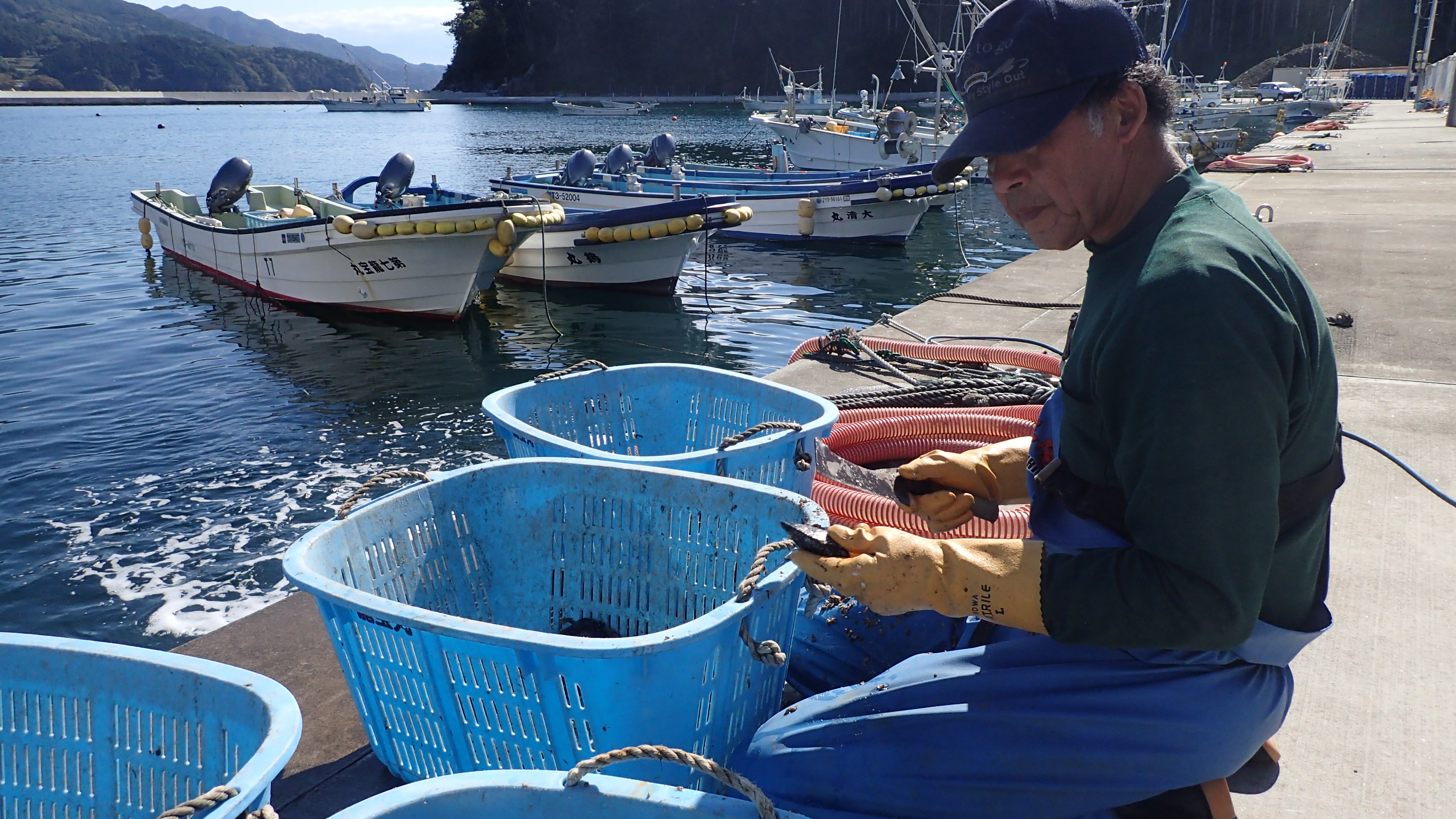
It’s 1AM, and a group of fishermen prepare to go scallop farming off Koishihama Bay near Ofunato in Tohoku’s Iwate Prefecture.  They spend about 3 hours at sea and return to the port by 4AM, scrubbing and cleaning the scallops, so that by 6AM the shellfish are packed up and ready to be transported across Japan for sale.

It’s been a little over four and a half years since the March 11th disaster destroyed Koishihama’s scallop farming industry, but thanks to local people’s efforts things are now up and running, as fishing boats haul in large catches of Koishihama Hotate, a scallop raised artificially in the area. The scallops, farmed where the Oyashio and Kuroshio currents meet, are known for their thick, tough texture and sweet flavour. Scallop aquaculture began in Koishihama about half a century ago.

This month I returned to Tohoku for a few days to join Sanriku Volunteer Divers in inspecting Koishihama’s underwater scallop farm.  After a 5-min boat journey out into the bay, we began our descent into the cold and murky water.  Visibility wasn’t the best, so we stayed close to a fixed rope as we swam to around 5m.  I seemed to be descending into an area devoid of life that opened out into more and more deep blue water, although the water was clear enough to make out some rock formations below and an impressive drop away into the blue.  My light cast eerie shadows over the rope, highlighting clusters of sea squirts and mussels as well as tiny feeding fish and little critters.

Just then, a row of ropes began to emerge in the distance, like a huge curtain that seemed to spread for miles and miles.  Rising above a vivid backdrop of deep blue, every facet of this grand structure seemed to be covered in something.  The sea was teeming with a few shoals of feeding fish as we began our journey forward. Small jellyfish slowly wafted by next to us, lighting up in our torches.

We’d arrived at Koishihama’s underwater scallop farm, each rope encrusted with healthy-looking scallops and sea squirts, with bits of kelp and seaweed swaying gently in the mild current.  These filter feeders growing into the current were more impressive than other growths I’d seen before.  Gliding weightlessly through the water, we spent 30mins swimming through the structure and floating next to it, using our torches to see whether the scallops were opening and closing, whether they looked healthy and whether any had died and dropped off the ropes.  We were also on the lookout for debris such as nets, wires or plastic bags that had become entangled with the ropes, removing these as we went on our journey. At just over 20m, it’s all too easy to forget how you deep you are here as you become engrossed in the work.  Ascending to the surface later on, my torch caught on some small sea cucumbers and scurrying shrimp-like critters as I passed by.

The tsunami on March 11th swept away the young scallops and the rafts at the farm here, and only 2 of the 40 fishing boats in the bay survived.  Today, 16 of the 17 scallop-farming families in the area have resumed work, and the first scallops were shipped in September 2012. Close to the bay, the Sanriku Railway has reopened, and Koishihama Station’s waiting room contains a huge collection of scallop shells that people have hung over the years with written messages and prayers for good luck. Sanriku Volunteer Divers are also optimistic with the recent completion of a small office next to Koishihama Station, and work in progress to build a bigger dive shop and headquarters further inland.  Going forward, the group is hoping to turn their volunteer work into more of an eco tourist attraction, and to create opportunities for people to learn about the natural environment of Sanriku through recovery efforts.

As for the scallops, they were definitely thriving, and tasted delicious after the dive.

Practical information

  • To get to Koishihama from Tokyo, take the Tohoku Shinkansen to Shinhanamaki (this journey takes about 2.5 to 3 hours, single ticket around 13,000yen).  At Shinhanamaki, change to the JR Kamaishi Line and take an express to the final stop, Kamaishi (1.5 hours, single ticket 1,660yen).  From there, take the Sanriku Railway Minami-Rias Line towards Sakari and get off at Koishihama Station (35 mins, single ticket 770yen).
  • I stayed at the Hotel Tsubaki (http://hoteltsubaki.com) in Ofunato, Iwate Prefecture.  It’s a newly-refurbished Western-style establishment with baths, showers and toilets in each room, towels, hairdryers, shower gel and shampoo, a communal bath on the ground floor, and a Japanese-style breakfast all for 6,200yen a night.  Dinner is also available at an extra cost.  Bicycles can be hired, but the town of Ofunato is a little far on foot, so a car is recommended. Taxis can be arranged from the hotel.
  • Ofunato has a range of places to eat, from Japanese-style dishes to more Western meals but with local ingredients and a Japanese feel.  There are a couple of convenience stores in the town and a decent-sized supermarket.
  • Contact Hiroshi Sato at Sanriku Volunteer Divers (http://sanrikuvd.org, Japanese only) or myself for further information on volunteering, and making the necessary arrangements. Pickups are also available from Shinhanamaki. The group charges 5,000yen for one fun dive, including tanks, weight belts and guide.

October’s dives

Dive 1: Koishihama Bay: dive number: 195, depth:18m, dive time: 32mins, entry time:14:26, exit time: 14:58, water temp: 18C, water visibility: 5m, Start pressure: 190 bar, End pressure: 50 bar, used a 10L steel tank, 5mm wetsuit, 3mm hood/vest, 3kg weight (plate) and 1kg extra weight in pocket.  Saw…scallops!

August 2015: Bluefin Tuna at the Kinki University Fisheries Laboratory, Kushimoto, JAPAN

*Articles on the story below are due to appear in Intrafish Media’s Fish Farming International magazine (http://fishfarminginternational.com/fish-farming/farm-focus/) and the UK’s The Fish Site (http://www.thefishsite.com) in October. The Laboratory’s work will be covered in more detail, accompanied by plenty of quotes from Professor Sawada and Professor Kato. A big thank you to both Professors for taking the time to show me around! 

Friday August 21st, 2015

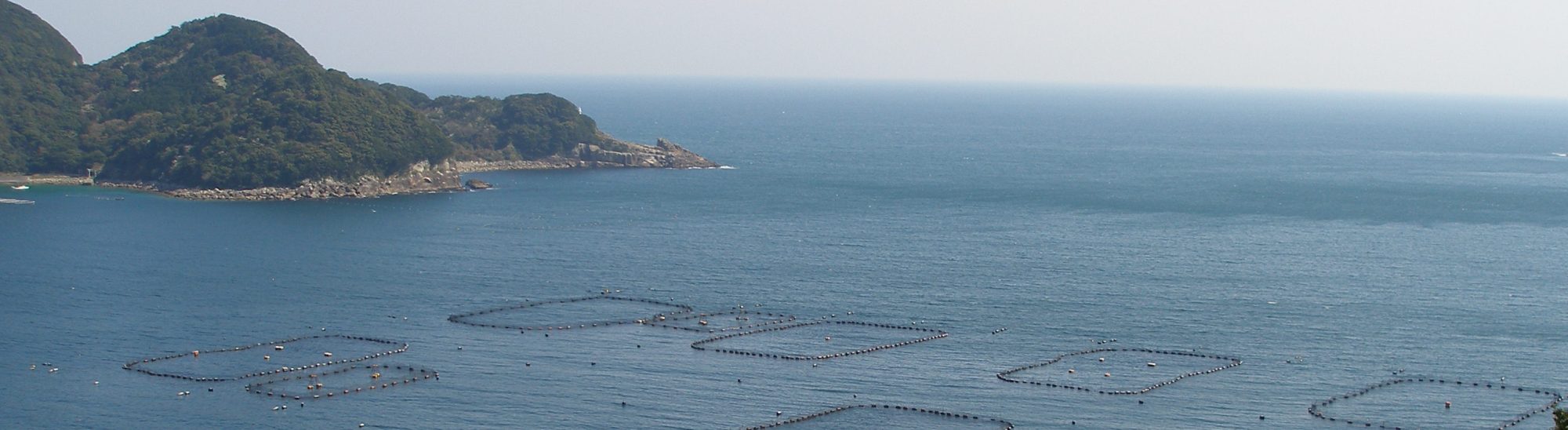
In August 2015, I was honoured to visit the Fisheries Laboratory of Kinki University in Kushimoto, Wakayama Prefecture and see its farming operations for myself.  The Laboratory has become known for its work to address the problem of rapidly declining wild tuna populations and in 2002 became the first in the world to cultivate completely farm-raised Pacific bluefin tuna. 

Cultivate the seas!” It was under this philosophy that the Fisheries Laboratory of Kinki University began. After Japan’s defeat in the Second World War, Koichi Seko, the first president of the university, believed Japan would have no future unless people cultivated the seas and more seafood was produced, so he founded the Laboratory in 1948 by first establishing a seaside research facility in the town of Shirahama in Wakayama Prefecture. Bluefin tuna farming began in 1970 with the fishing of small juveniles off the prefecture’s coast, and in 2012, 70,000 – 80,000 young fish were successfully produced.

During my visit I spoke to Professor Yoshifumi Sawada, Director of the Laboratory’s Oshima Experiment Station, and Professor Keitaro Kato, deputy head of the Laboratory’s Shirahama Station, who explained the concept of “full-cycle aquaculture,” in other words “raising artificially hatched larvae to adults, collecting their eggs and hatching them to create subsequent egg-laying generations.” We covered vast areas ranging from circular cages on the surface of the water that are used to grow the tuna, to the pros and cons of fishmeal and alternative diets such as those including plant protein.  We also discussed biosecurity, disease prevention and touched upon collisions, which is apparently just as serious a problem as disease.  The large size of tuna — they can grow up to 350kg — can get the fish into trouble with fast-moving tuna-on-tuna collisions inside large farming pens.  These collisions can sometimes have fatal consequences.

Sawada and Kato also described the many challenges and obstacles, including research into alternative feeds to reduce the amount of fishmeal and make operations more sustainable.  One of their very first challenges was to increase survival rates from harvested eggs to hatchlings, and preventing death among the larvae also requires further research. Despite these however, Sawada is confident that their work will contribute to reducing pressure on natural tuna stocks.  “Thanks to our control over all aspects of the bluefin tuna lifecycle,” he told me, “we can offer a stable supply of tuna without depending on fish stocks in the wild.”

The Laboratory’s work is being funded via a business model in which farmed tuna is sent to restaurants owned by the Laboratory in Tokyo and Osaka.  The profits are then used to fund further research and development. Sawada and Kato’s team is also working on getting its farmed population up, and mapping the entire DNA of tuna through blood samples to isolate the best DNA characters for disease resistance, growth and sex identification.

As global populations of bluefin tuna continue to decline because of worldwide demand, the Laboratory’s work couldn’t be more welcome, but only time will tell whether farmed tuna is the way forward.

August 2015: The Kooza River, Kushimoto, Wakayama Prefecture, JAPAN

Saturday August 22nd 2015

Due to the popularity of ocean diving freshwater is often overlooked, but Kushimoto in Wakayama prefecture is home to one particular river where all kinds of freshwater adventures can be had.  The Kooza River provides some fantastic dives with super clear water, incredible landscapes and a range of cool critters to discover, not to mention the added bonus of not having to wash any gear or camera equipment after leaving the water. It may not be well known as a diving spot but the Kooza River has very easy diving in a great location.  It offers many interesting species to search for below the water, and plenty to keep non-divers occupied — think swimming and BBQs by the river bank!

Heading into the water can be a shock at first as the water can feel quite cold, but the drawcard for divers is the unexpected abundance of stones and pebbles and a huge shallow area (no deeper than around 5m) that seems to stretch for miles. Heading across to the other side of the river, you soon arrive at some huge rocks and boulders. The bottom is covered in more tiny pebbles, a few green plants and a thin layer of sediment and organic materials, and it soon becomes clear that the Kooza River really does have it all, from tiny macro miniature delights like small crabs to clear water teeming with fish life.  There are great rocky slopes and plenty of macrolife beneath them, which would satisfy any freshwater diver.

In flat calm water, basking in sunshine, we dropped down onto the series of stones and pebbles to explore further, while river fish that appeared to be sweetfish glinted in the sunlight near the surface.  Huge healthy-looking shrimp emerged from their lairs in the rocks, looking around with curiosity, while crabs hid in the nooks and crannies, sometimes with small goby-like fish resting close by and darting out of sight at the slightest provocation.  We were spoiled with a good few photo opportunities, and spent ages hovering over the carpet of pebbles snapping everything and anything we could find.  The highlight of the dives was the sheer number of pale chubs, a common fish in Japan’s rivers.  With distinguishing features such as long ventral fins and protruding mouths, pale chubs are said to be related to carp and have good jumping skills, which allow them to grab bugs hanging around near the surface of the water.  They’re also said to be highly active and are tenacious survivors.  During mating season, the male’s stomach turns pink and its back turns blue. We were extremely fortunate to witness the pale chub’s egg laying, and thanks to the shallow depth, managed to spend hours lying over the pebbles taking photo after photo.

Because of a lack of tides and currents divers of all levels can enjoy the Kooza river, but as visibility can sometimes turn poor, things such as a dive light and proper finning techniques (so as not to disturb the bottom) should be taken into account.  Freshwater tends to be cold, so make sure you have the right kind of exposure suit for the water temperature.  Otherwise, the Kooza river is a refreshing and very enjoyable site with many favourable aspects such as great water clarity, abundant shallow formations with ample ambient light, a range of diverse and dramatic topographies and the well-protected quality of the area itself.

Practical Information 

  • I flew to Nanki Shirahama from Tokyo’s Haneda airport with JAL at 07:25AM arriving at Shirahama around 08:40AM.  I was then met by a representative from Kinki University and driven to Kushimoto for work purposes. A single plane ticket costs around 30,000yen.
  • I was dropped off at JR Kooza station next to Kushimoto and stayed at the shop Dive Kooza (http://dive-kooza.com/koza.html) which has bunk beds, showers, toilets, towels, hairdryers, shampoo and body soap available. A night’s stay costs 2,000yen.  It’s extremely comfortable, with a big indoor space to write up log books, have a coffee or relax and go over photos or books on marine life. You can also connect a computer to their bigger screen when looking at your photos. There are areas to sit outside if the weather is nice, and a convenience store a short walk away for food, drink, snacks and other daily items. Right next to it are places to wash, dry and hang equipment, and a parking area for vehicles. Cameras/lens can also be hired.
  • The Kooza River is about 30mins away by car from Dive Kooza.  Divers set up at the shop and carry their gear to the riverbank on arrival.
  • One dive costs around 7,000yen (two boat dives with Dive Kooza come to around 14,000yen).
  • Anyone wishing to stop on the way to buy snacks etc can do so en route.
  • I travelled back to Tokyo by train, starting at JR Kooza station and ending at JR Shirahama station.  The journey on a local train (there were less trains due to a typhoon) took about 1.5 hours.  From JR Shirahama station there is a fast train direct to Shin Osaka station that takes about 2.5 hours and costs around 5,600yen for a single ticket.  The bullet train platform is just upstairs, from which there are regular trains to Tokyo for around 14,000yen for a single ticket.  Journey time is around 2.5 hours.
  • A weekend of diving in Kushimoto can be arranged through David Graham at Kansai Divers (http://www.fourthelement.jp/KansaiDiving/). Check out their Facebook page as well. Tours can be arranged with Dive Kooza and non-Japanese speakers are also welcome!

August’s dives 

Dive 1: Nukumi (The Kooza River): dive number: 193, depth: 5.3m, dive time: 41 mins, entry time: 10:20, exit time: 11:01, water temp:23C, water visibility 5m (max depth), start pressure: 180 bar, end pressure: 100 bar, used a 10L steel tank, 5mm wetsuit, 3kg back plate, 1kg extra weight in pocket (more buoyant in freshwater), 3mm hood/vest.  Saw sweetfish, pale chubs, cyprinid fish, amur gobies, pond loaches, shrimps and crabs.

Dive 2: Nukumi (The Kooza River): dive number: 194, depth: 5.5m, dive time: 42 mins, entry time: 11:12, exit time: 11:50, water temp: 23C, water visibility: 5m (max depth), start pressure: 100 bar, end pressure: 50 bar, used a 10L steel tank, 5mm wetsuit, 3kg back plate, 1kg weight in pocket (more buoyant in freshwater), 3mm hood/vest.  Saw sweet fish, pale chubs, cyprinid fish, amur gobies, pond loaches, shrimps and crabs.