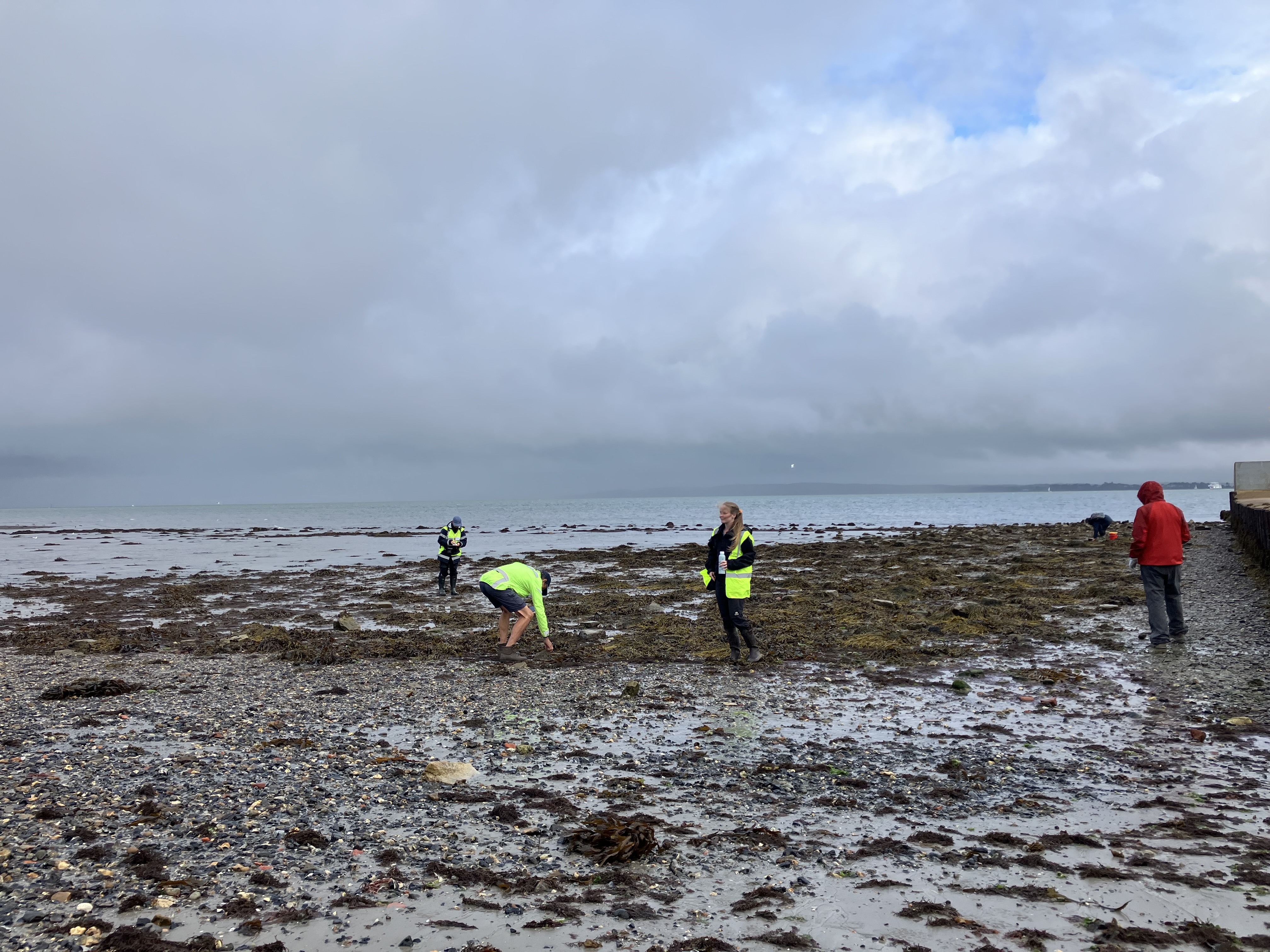
Back in September, my husband and I joined an intertidal survey with the Hampshire and Isle of Wight Wildlife Trust. With a huge interest in marine life, and aquaculture and fisheries a key part of my work, I was really excited for the occasion. Our task was to join a team of other marine enthusiasts in Keyhaven to help spot and identify as many plants and animals as possible at low tide.
For those not familiar with Keyhaven, this fishing hamlet lies at one end of a mile-long, shingle bank called Hurst Spit, which runs south, dividing the Solent waters to create a calm lagoon on the eastern side. It’s fronted by the Keyhaven marshes, a low-lying area of wetland grasses.
Before we started, Caitlin, our organiser, gave a short briefing with instructions on how the survey would unfold and how to record our findings. Caitlin and her team also gave us all the equipment we needed, from ID guides, clipboards, and species identification books, to pens, pencils and even gloves. Everything was explained clearly in a fun and engaging way. We were then put into groups and given positions – one photographer and the rest of us identifiers. After that we were good to go, and set out on the short walk from the car park to the sea.
The low tide was the perfect time for volunteers to gather and comb the area for a species count. After splitting the shore into three zones – upper, middle and lower — using coloured buckets, we started our search on the upper shore, taking our time as we made our way towards the sea (lower shore), and recording everything we found from barnacles and sea anemones to tiny crabs and spongy seaweed, taking pictures to allow others to clearly identify our findings. We were blessed not only with Caitlin’s extensive knowledge but also with fellow volunteer Helen’s vast experience and tools, including a magnifying glass and a collection of small dishes so we could have a good look at really tiny species. With my phone in one hand and a couple of ID guides in the other, I found myself crouching beside tide pools, taking photos and talking to the other volunteers about what the different species might be. It felt like a treasure hunt guided by science, and that’s what this kind of volunteering does – it teaches you to look closer, slow down and really see what’s out there.

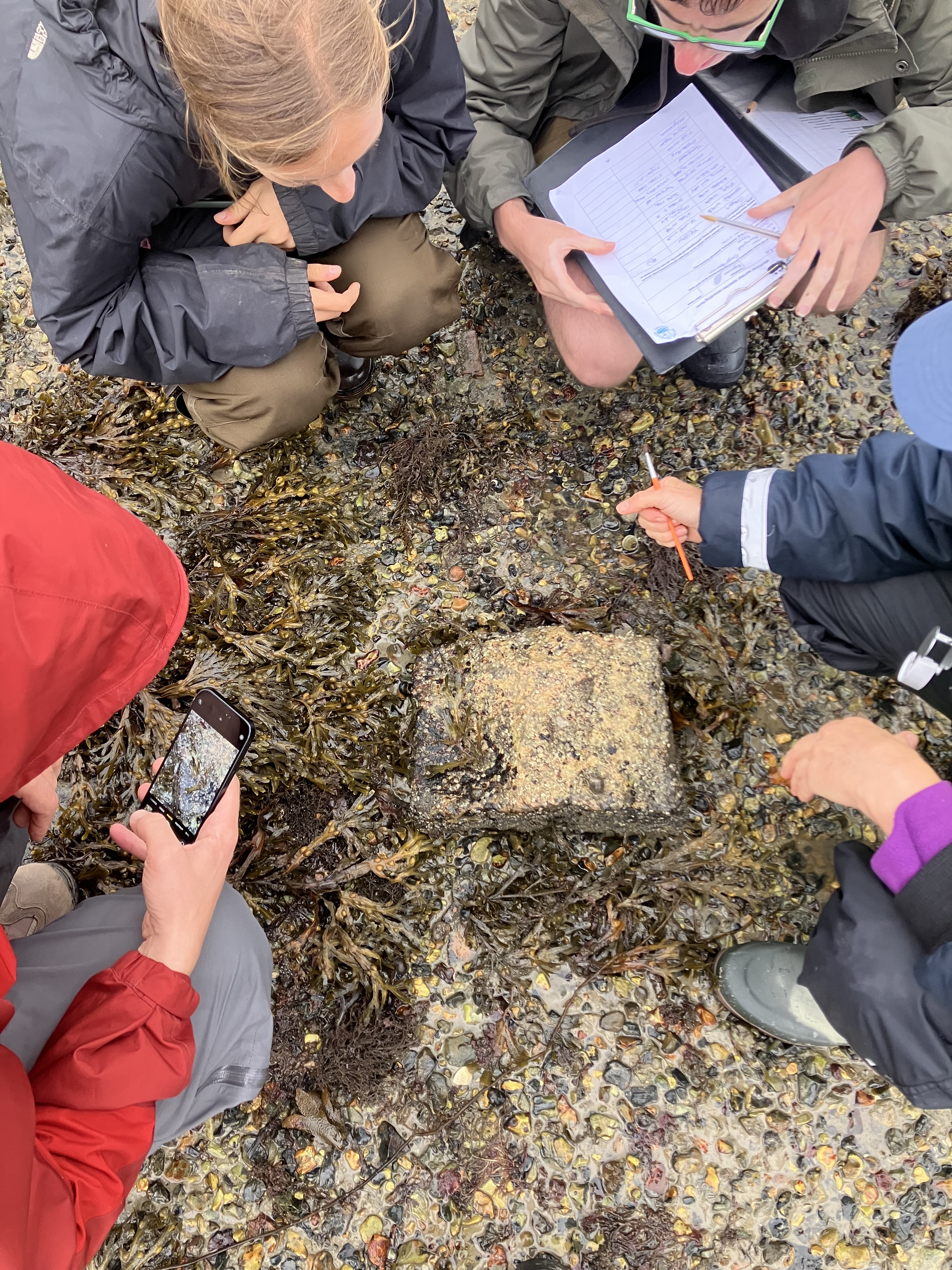

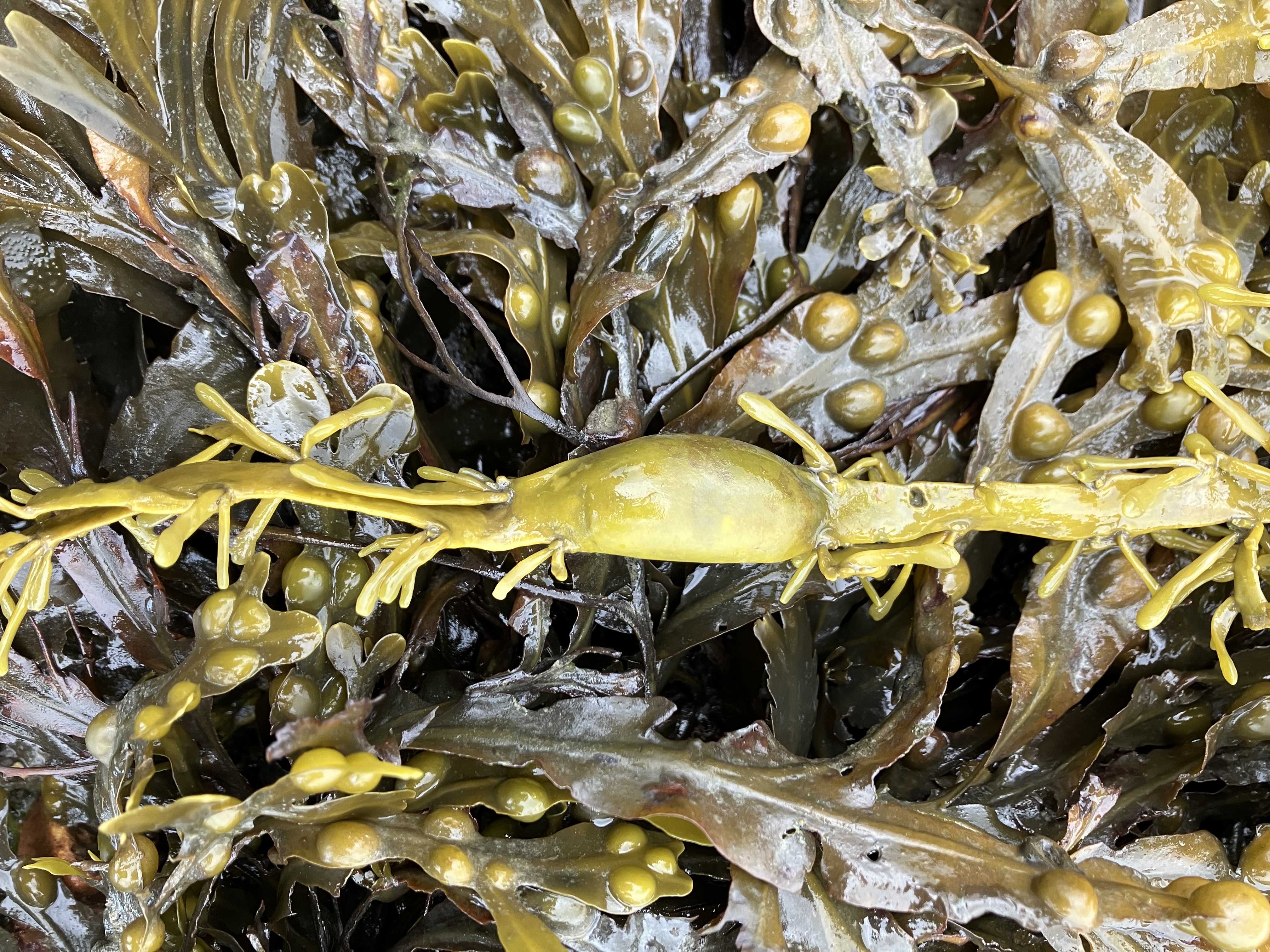
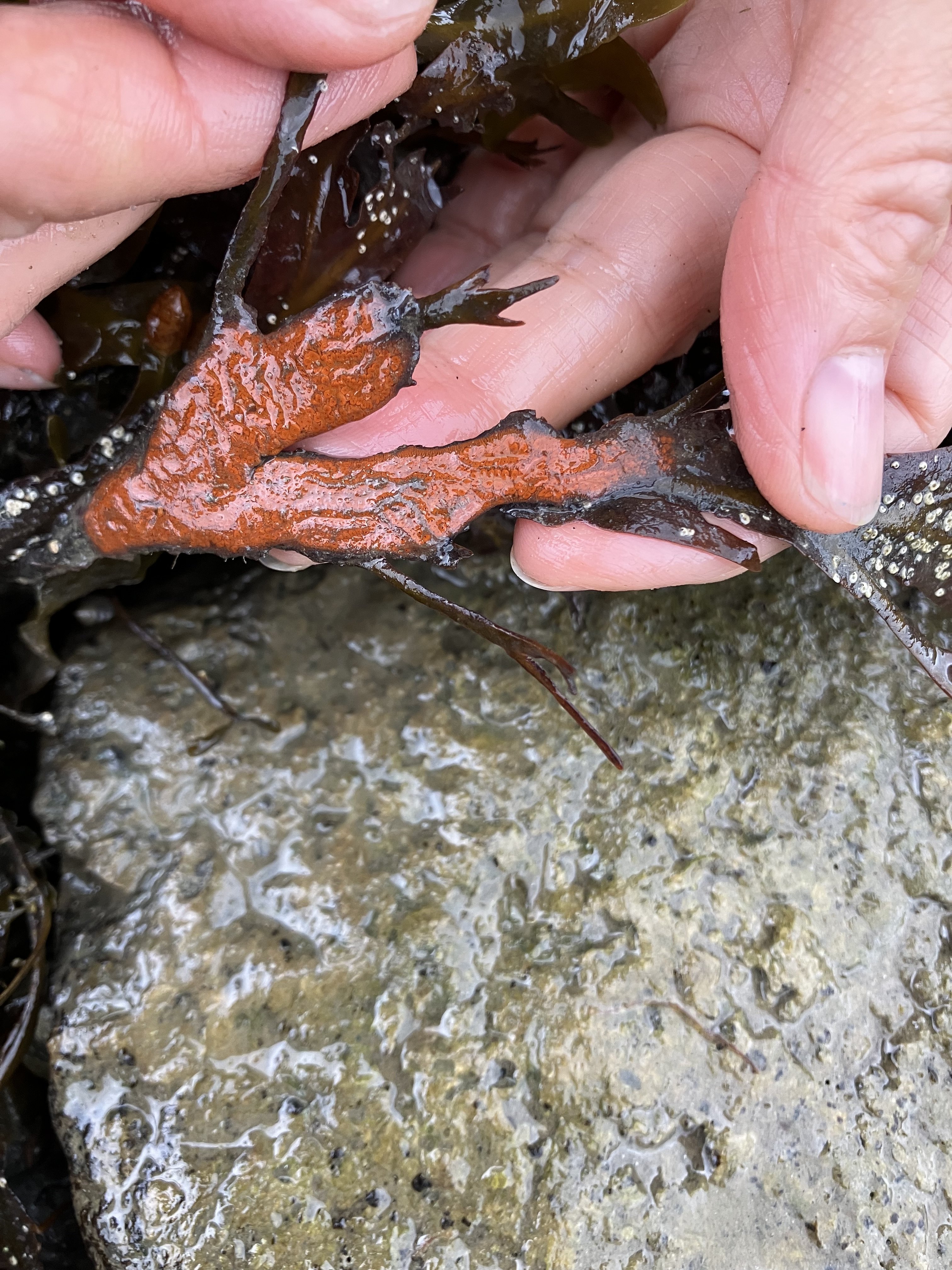
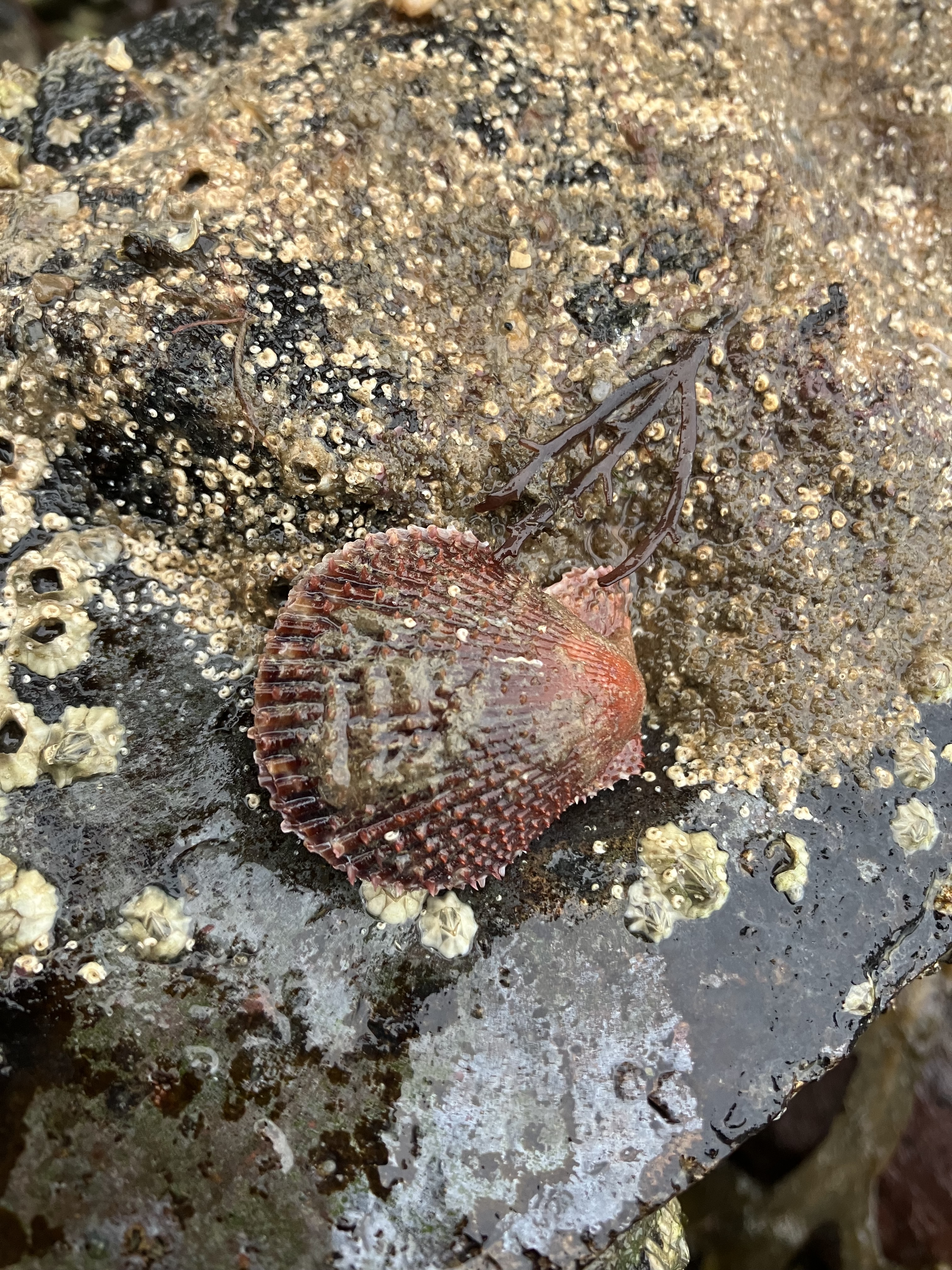
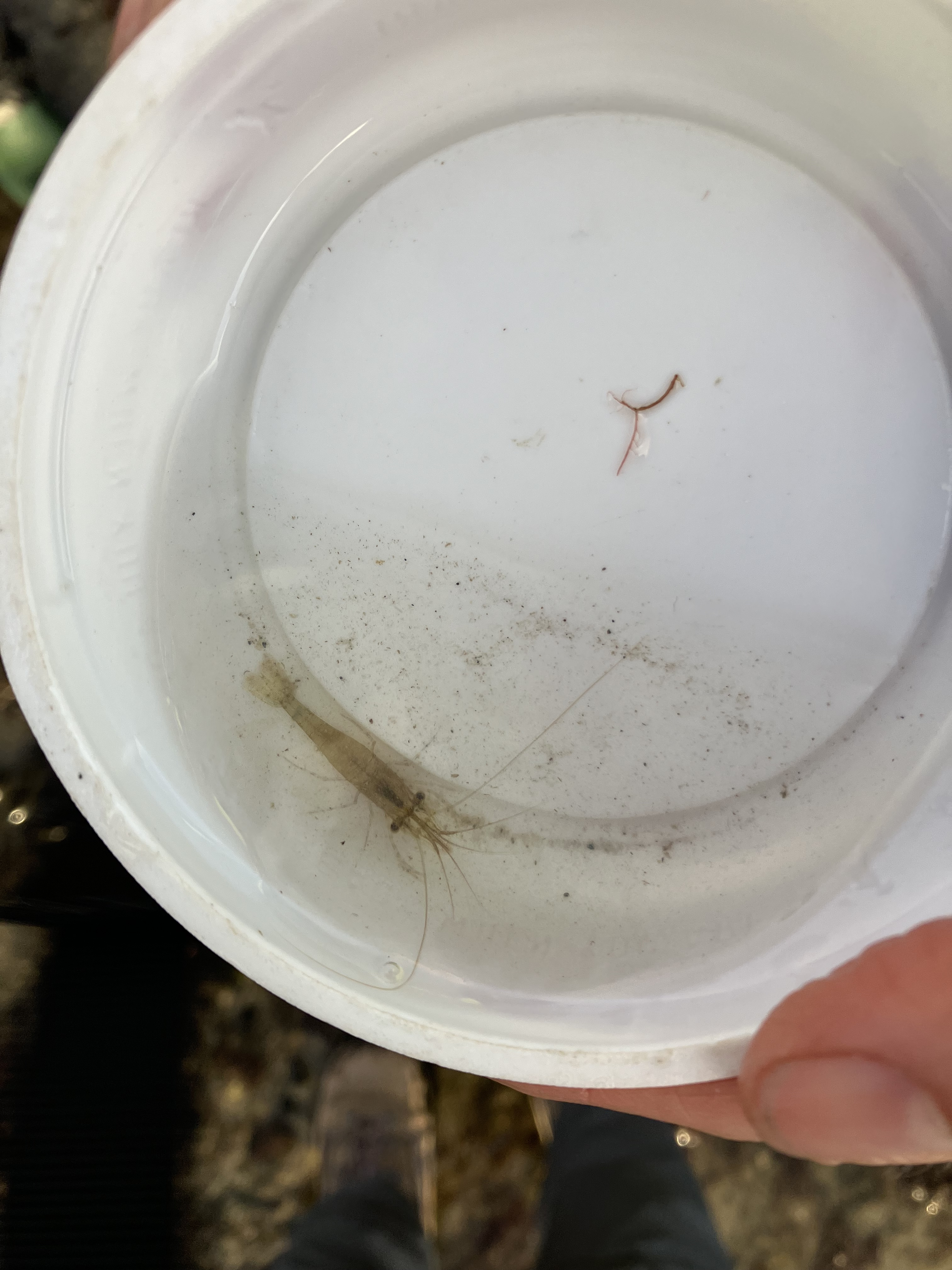
As the survey continued, the findings got more and more exciting. A hooded prawn, brittle star, scallop, hairy hermit crab…all new finds were photographed and shared with as many volunteers as possible. Excited voices overlapped as different seaweeds were compared, crabs and shellfish identified, and unexpected finds celebrated. There was a really nice sense of shared discovery throughout, moments of joy, curiosity, collaboration, and the thrill of turning over a rock to reveal something new.
One of the best things about intertidal surveys is the sense of connection and understanding among the volunteers. It’s really enjoyable and also rewarding – surveys like this help scientists monitor the health of our marine ecosystems. By tracking which species are present and where, we can also help scientists better understand how things like pollution, climate change and invasive species may be affecting our coasts, and of course we can learn something new too. It’s real science, and we can be a part of it. There are also no expectations — no experience is required, everyone is friendly and welcoming, and there is always someone around to answer questions. I had a fantastic time identifying different species, taking photographs, and getting to know the other volunteers and their backgrounds. Intertidal surveys are a great way to explore our local coast, learn more about the wildlife there and add to our understanding of this important habitat.
Next time you’re walking by the sea, take a closer look – you might just find your new favourite hobby!
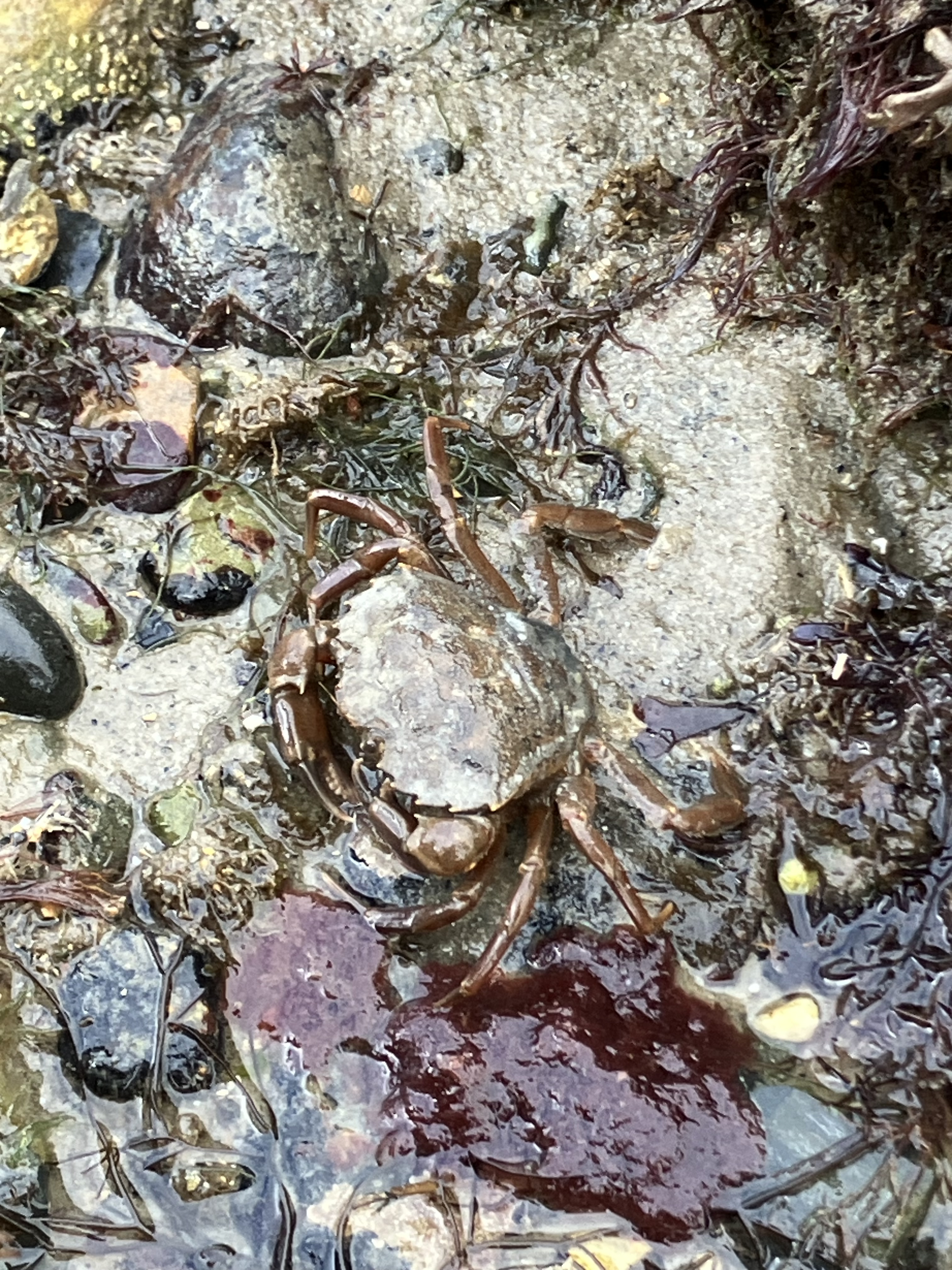


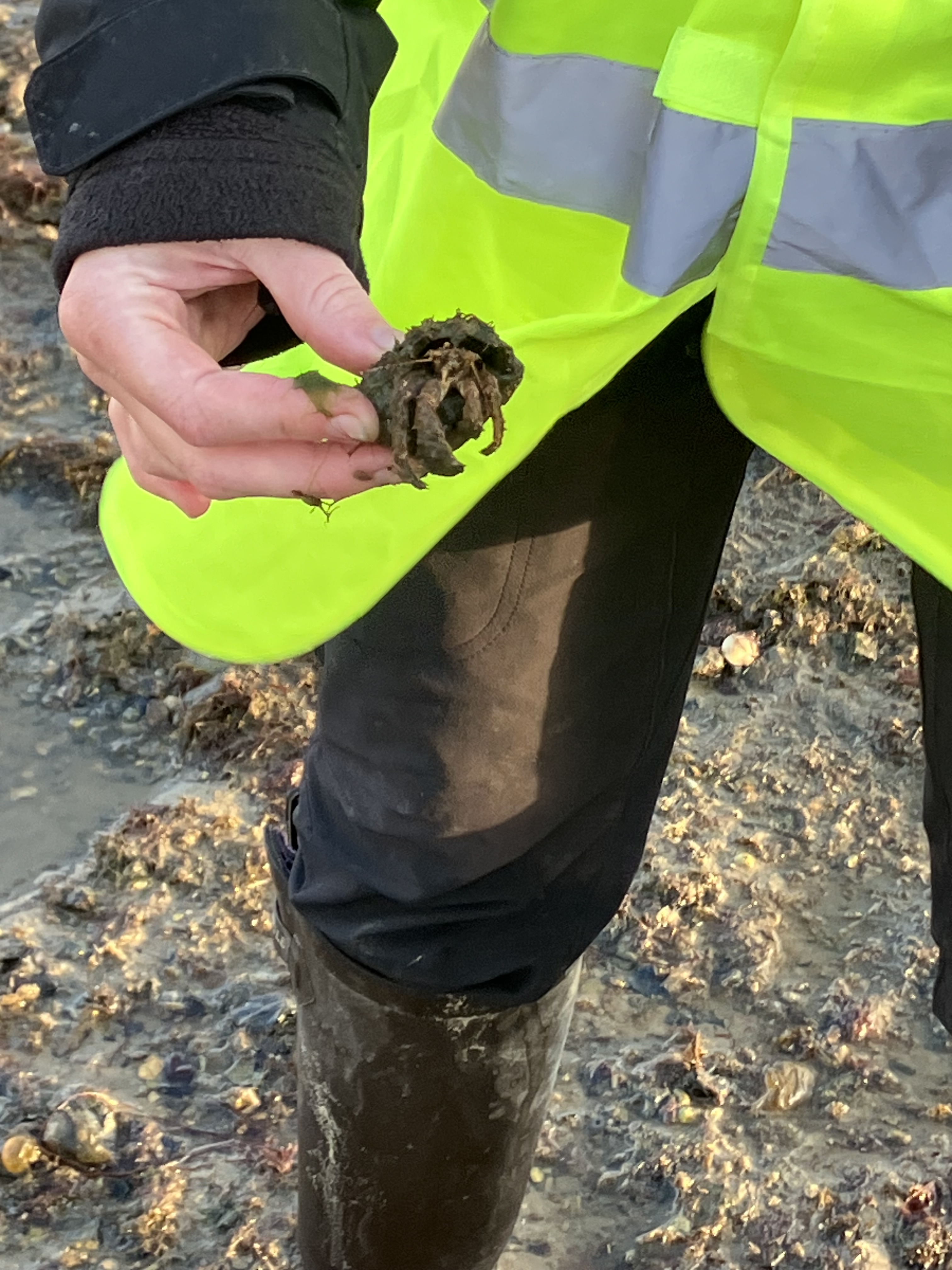


 bonniewaycott.com