Tag Archives: marineenvironment

Low Tides, High Impact: Surveying the seas off Keyhaven

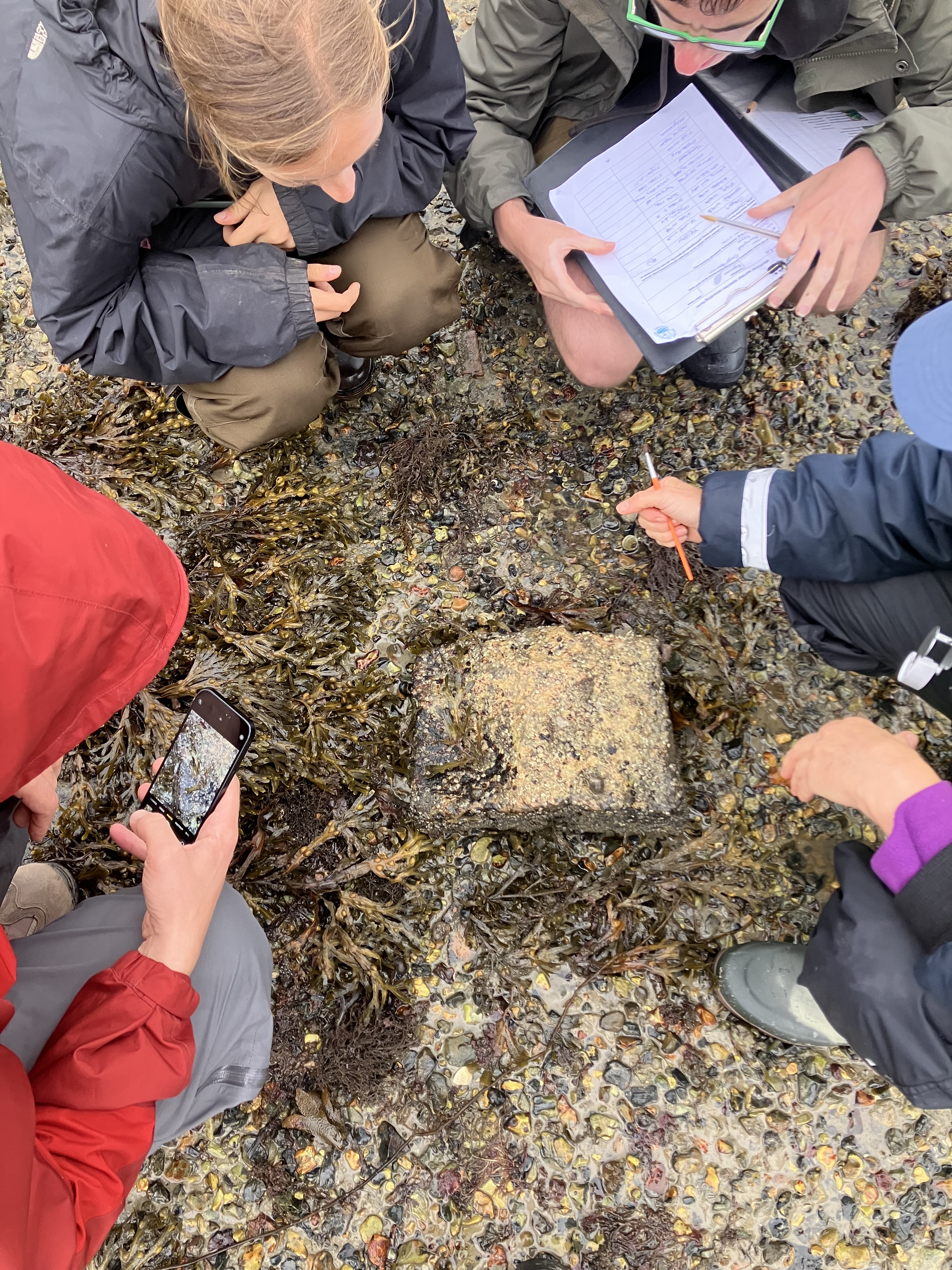
Back in September, my husband and I joined an intertidal survey with the Hampshire and Isle of Wight Wildlife Trust. With a huge interest in marine life, and aquaculture and fisheries a key part of my work, I was really excited for the occasion. Our task was to join a team of other marine enthusiasts in Keyhaven to help spot and identify as many plants and animals as possible at low tide.

For those not familiar with Keyhaven, this fishing hamlet lies at one end of a mile-long, shingle bank called Hurst Spit, which runs south, dividing the Solent waters to create a calm lagoon on the eastern side. It’s fronted by the Keyhaven marshes, a low-lying area of wetland grasses. 

Before we started, Caitlin, our organiser, gave a short briefing with instructions on how the survey would unfold and how to record our findings. Caitlin and her team also gave us all the equipment we needed, from ID guides, clipboards, and species identification books, to pens, pencils and even gloves. Everything was explained clearly in a fun and engaging way. We were then put into groups and given positions – one photographer and the rest of us identifiers. After that we were good to go, and set out on the short walk from the car park to the sea. 

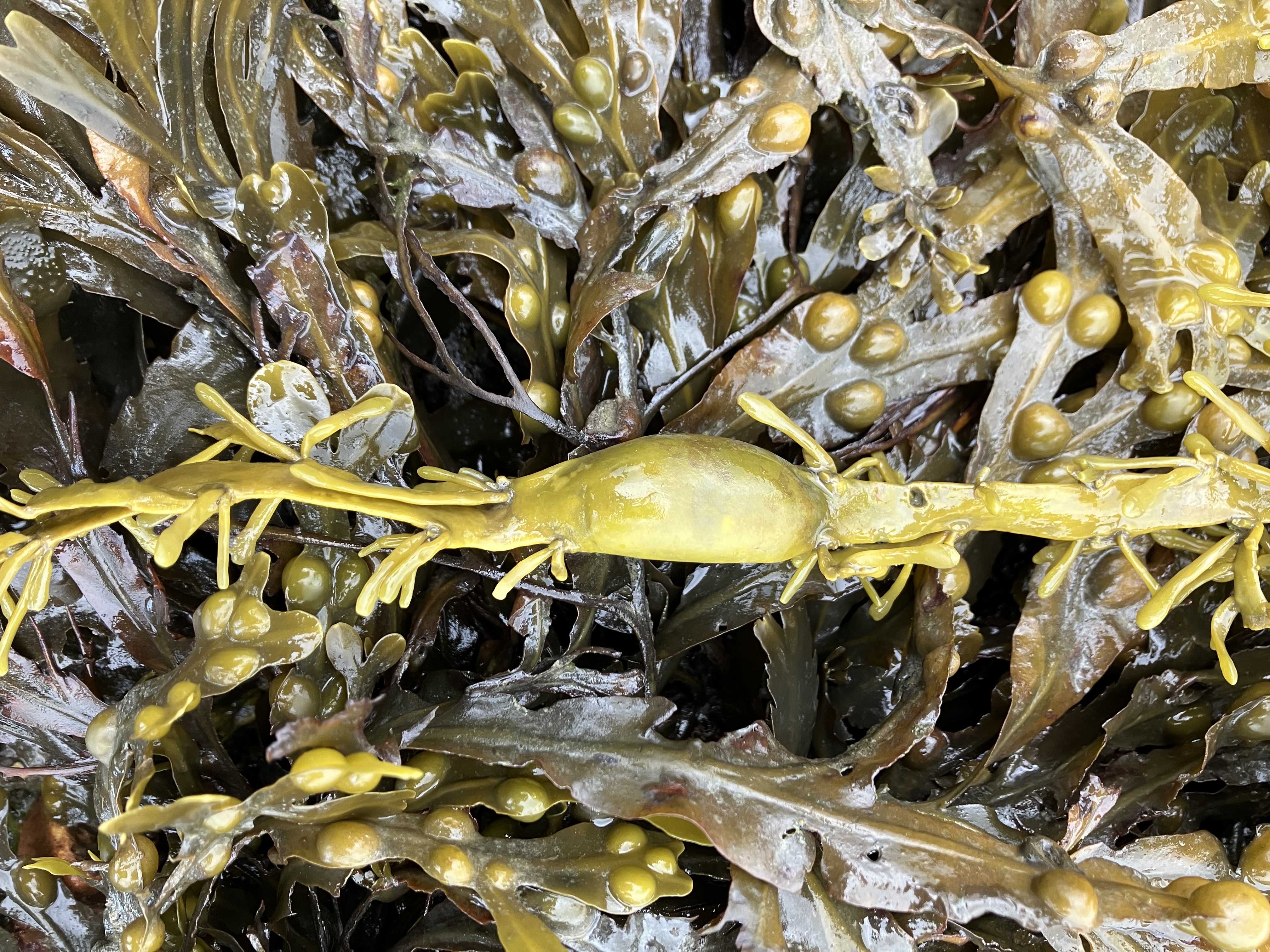
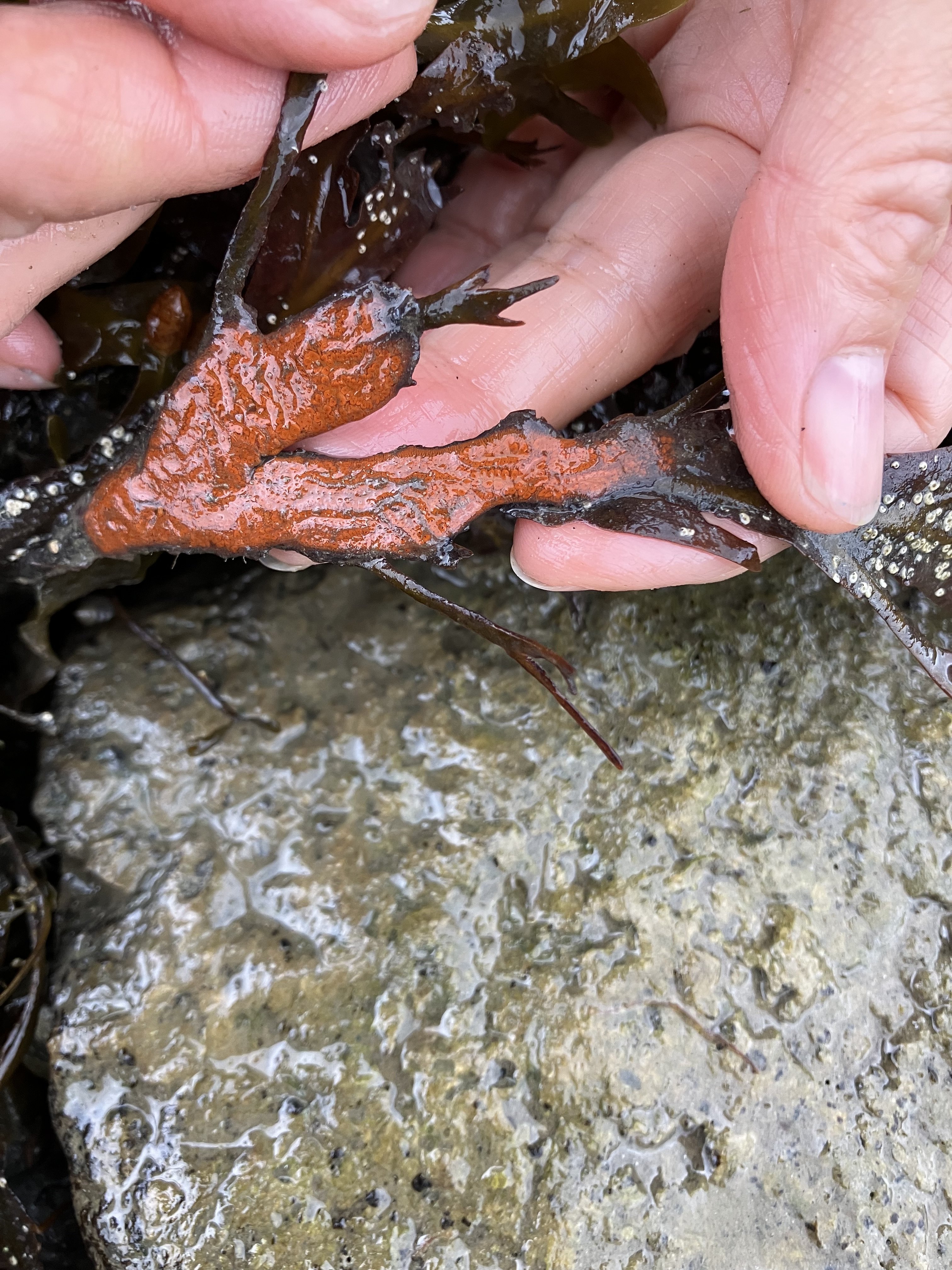
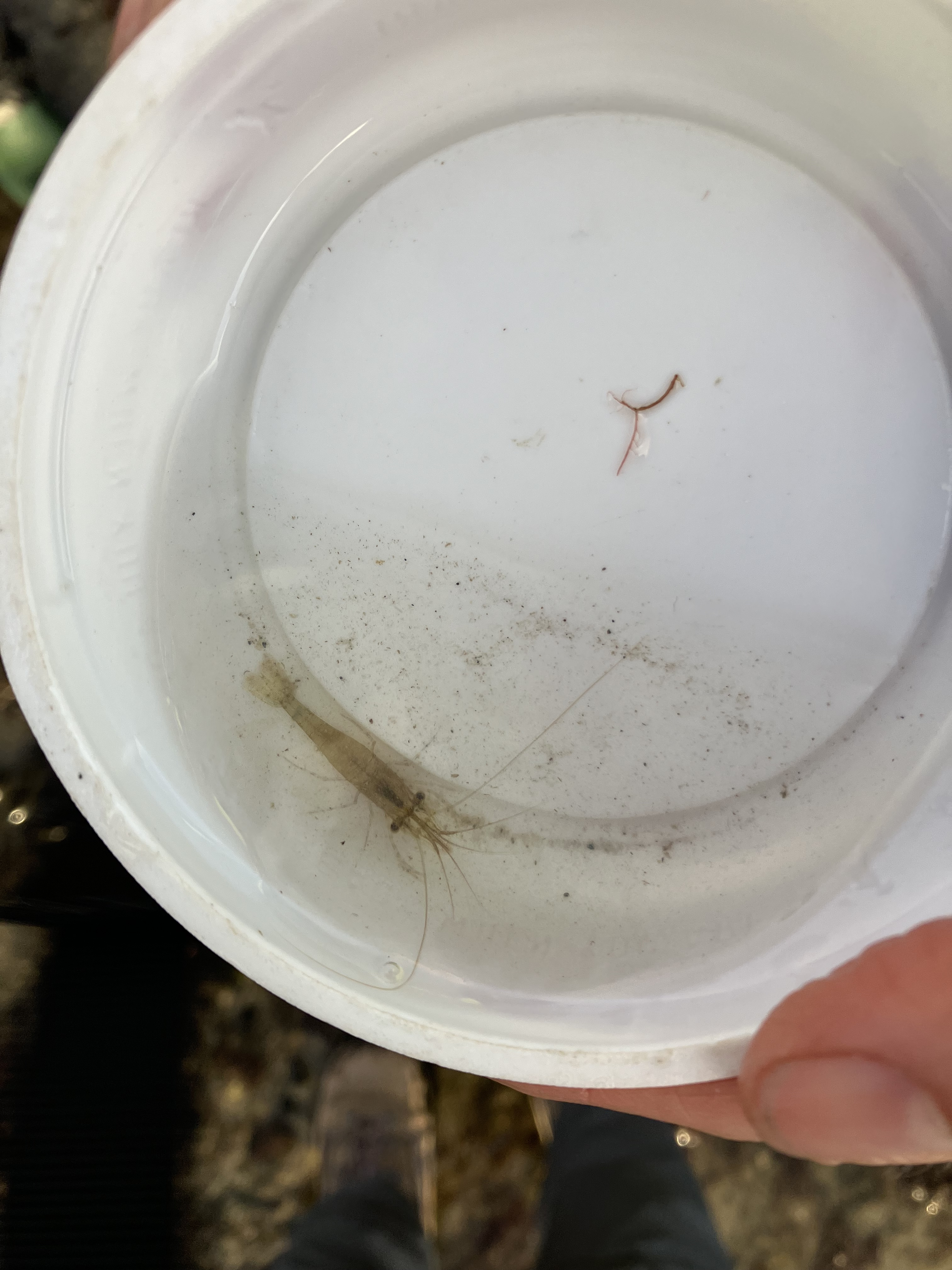
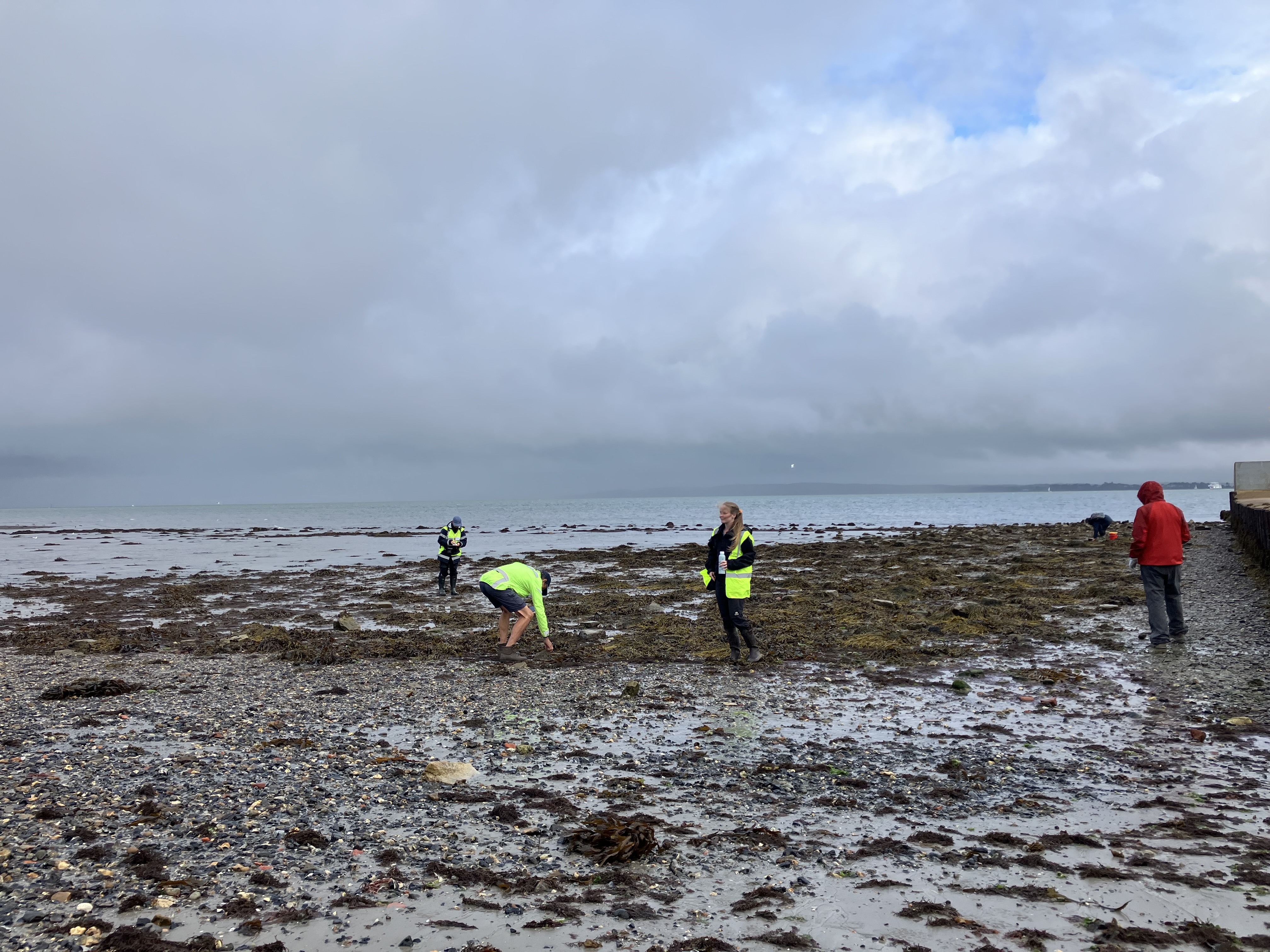
The low tide was the perfect time for volunteers to gather and comb the area for a species count. After splitting the shore into three zones – upper, middle and lower — using coloured buckets, we started our search on the upper shore, taking our time as we made our way towards the sea (lower shore), and recording everything we found from barnacles and sea anemones to tiny crabs and spongy seaweed, taking pictures to allow others to clearly identify our findings. We were blessed not only with Caitlin’s extensive knowledge but also with fellow volunteer Helen’s vast experience and tools, including a magnifying glass and a collection of small dishes so we could have a good look at really tiny species. With my phone in one hand and a couple of ID guides in the other, I found myself crouching beside tide pools, taking photos and talking to the other volunteers about what the different species might be. It felt like a treasure hunt guided by science, and that’s what this kind of volunteering does – it teaches you to look closer, slow down and really see what’s out there. 
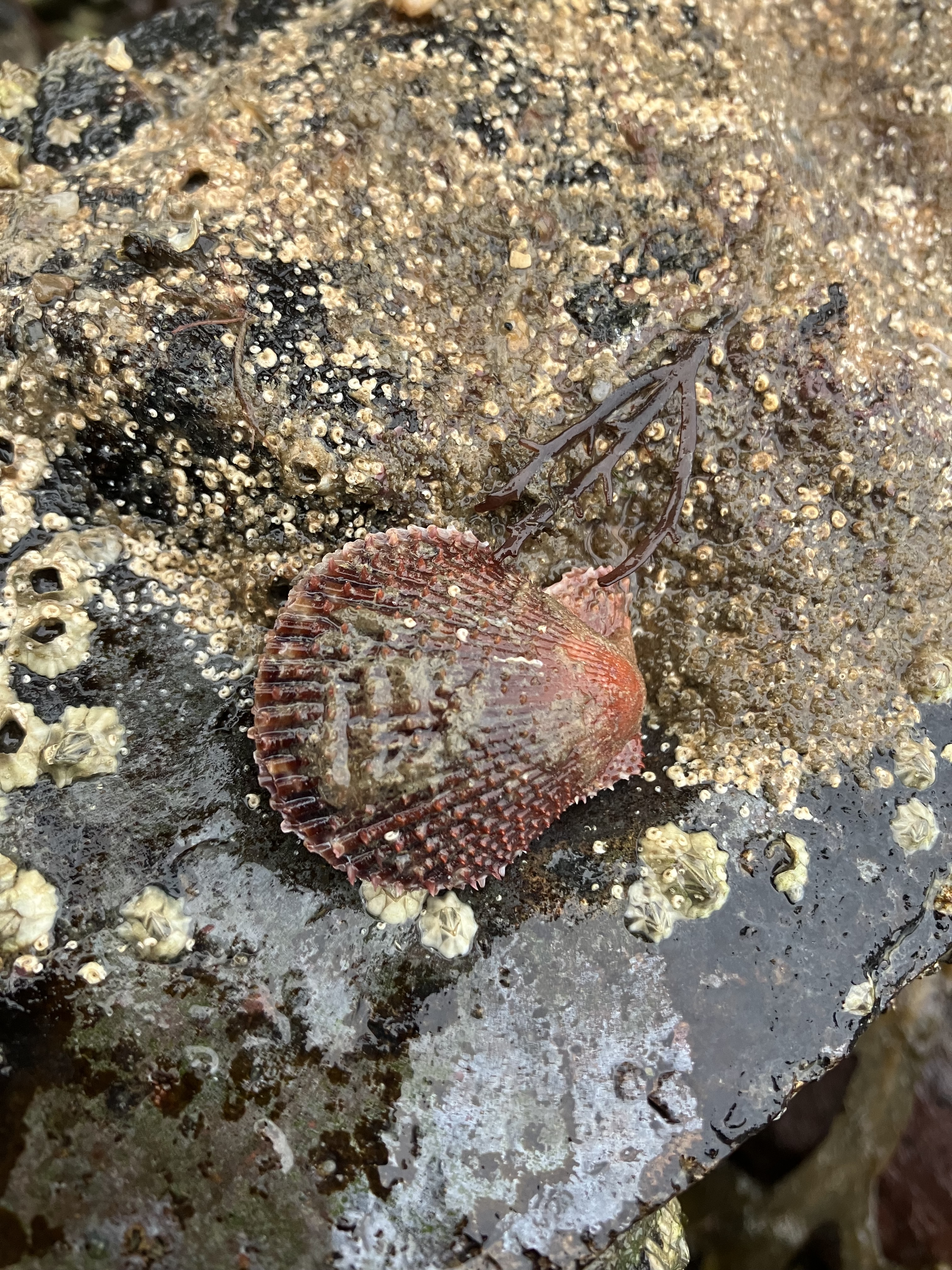
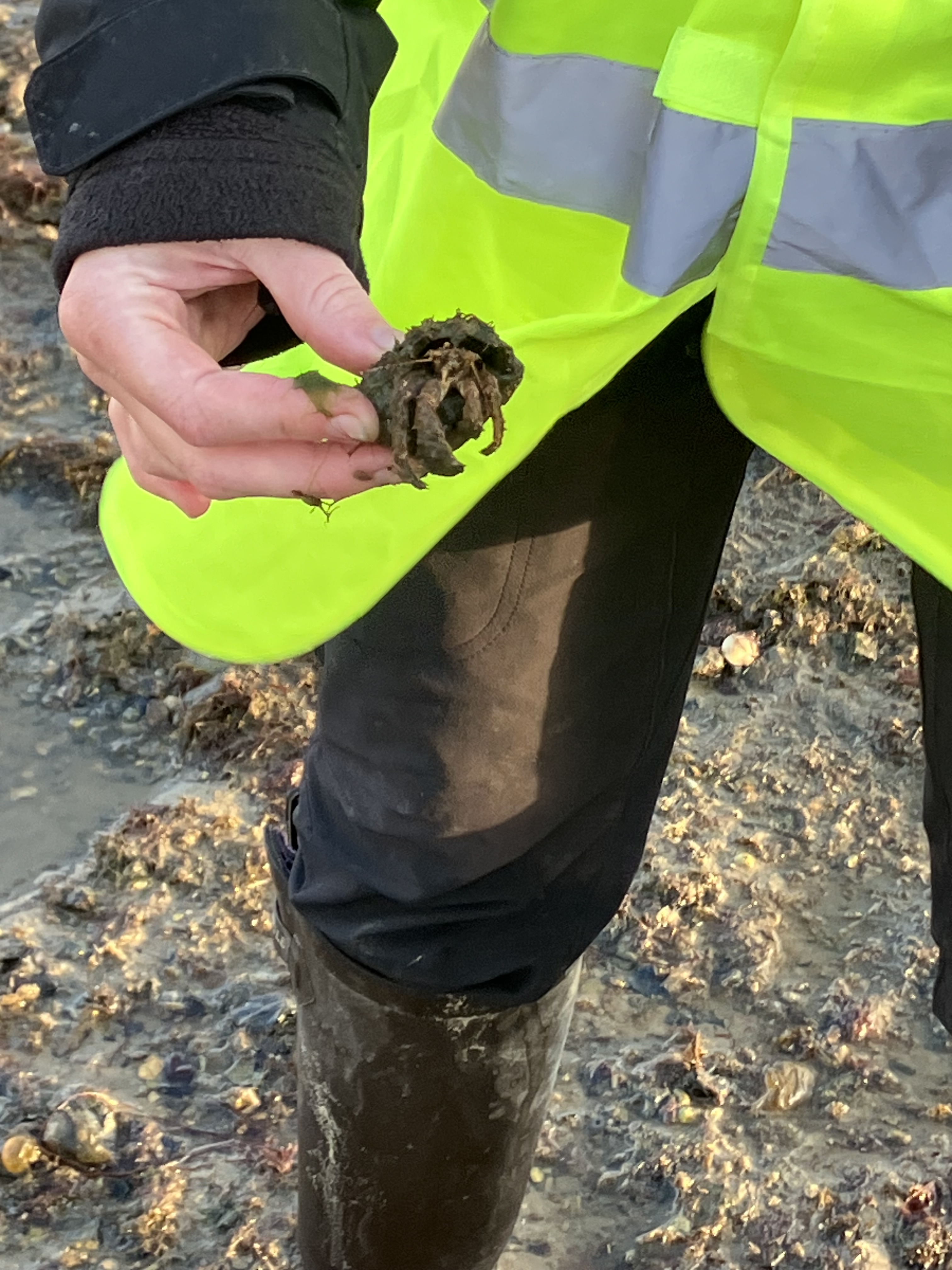
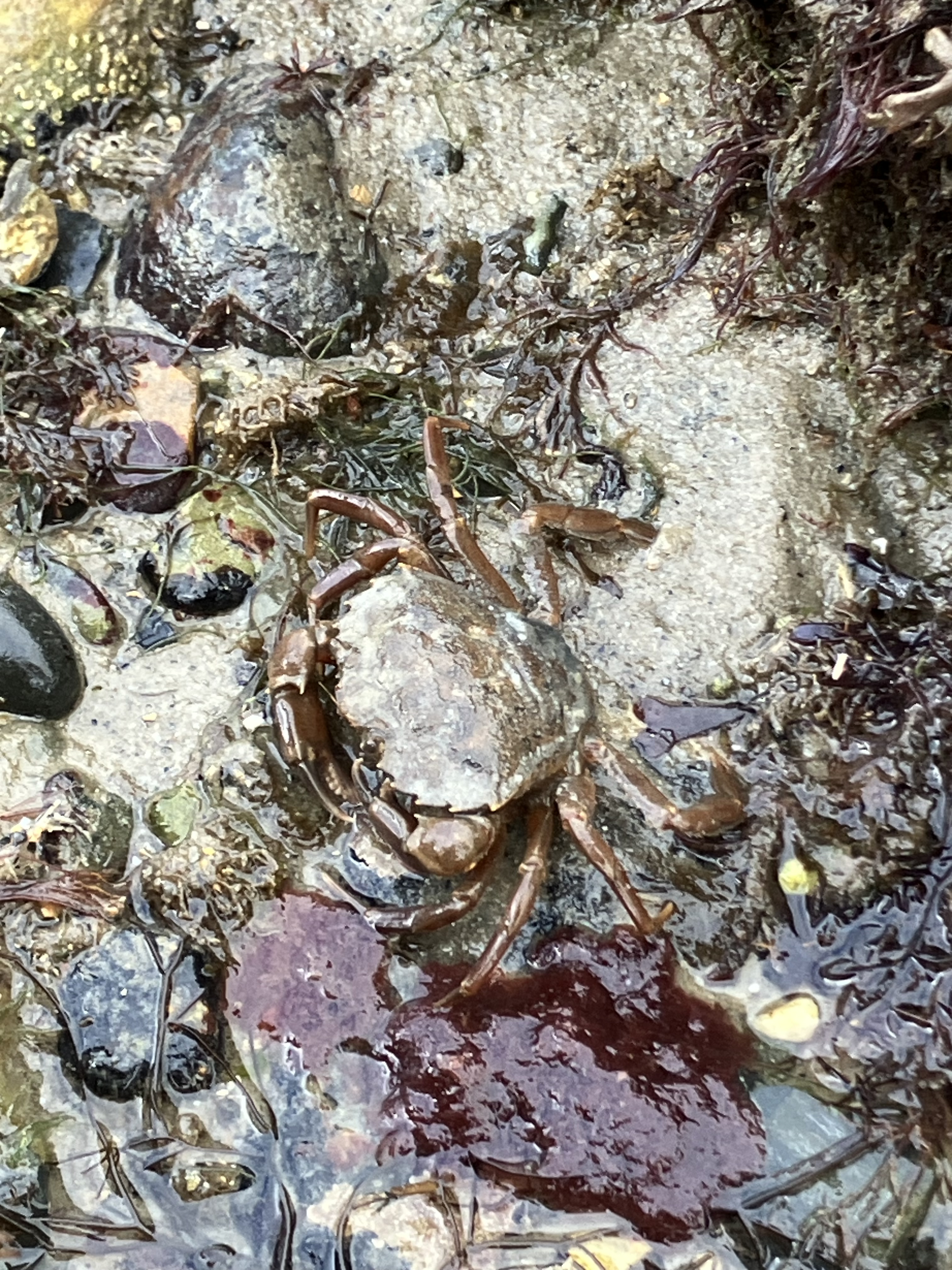
As the survey continued, the findings got more and more exciting. A hooded prawn, brittle star, scallop, hairy hermit crab…all new finds were photographed and shared with as many volunteers as possible. Excited voices overlapped as different seaweeds were compared, crabs and shellfish identified, and unexpected finds celebrated. There was a really nice sense of shared discovery throughout, moments of joy, curiosity, collaboration, and the thrill of turning over a rock to reveal something new. 

One of the best things about intertidal surveys is the sense of connection and understanding among the volunteers. It’s really enjoyable and also rewarding – surveys like this help scientists monitor the health of our marine ecosystems. By tracking which species are present and where, we can also help scientists better understand how things like pollution, climate change and invasive species may be affecting our coasts, and of course we can learn something new too. It’s real science, and we can be a part of it. There are also no expectations — no experience is required, everyone is friendly and welcoming, and there is always someone around to answer questions. I had a fantastic time identifying different species, taking photographs, and getting to know the other volunteers and their backgrounds. Intertidal surveys are a great way to explore our local coast, learn more about the wildlife there and add to our understanding of this important habitat.

Next time you’re walking by the sea, take a closer look – you might just find your new favourite hobby! 
Looking Back on Ocean

Since its release in May 2025, Sir David Attenborough’s new documentary, Ocean, has been generating discussions on a host of issues related to the plight of our seas. After watching it myself, I can see why it’s provoked such a significant response. It’s a celebration of marine life and a stark reminder of the threats facing the ocean today.

The aims of Ocean are clear – to protect the seas and send a message of hope. The documentary does an impressive job of demonstrating how almost every marine ecosystem is capable of regenerating in months or years. The messaging on the ocean’s resilience, capability for abundance and capacity to bounce back is encouraging. Ocean is also beautifully shot, with incredible scenes of kelp forests, coral reefs and brutal images of bycatch. Like many of Attenborough’s documentaries, I really enjoyed this footage, which captures the beauty and rich diversity of the seas so well while describing the far-reaching effects of losing both and the importance of taking steps to move in the right direction. Attenborough also says that knowledge is important for change. Ocean offers viewers a lot of important information that gives them plenty to think about and discuss.

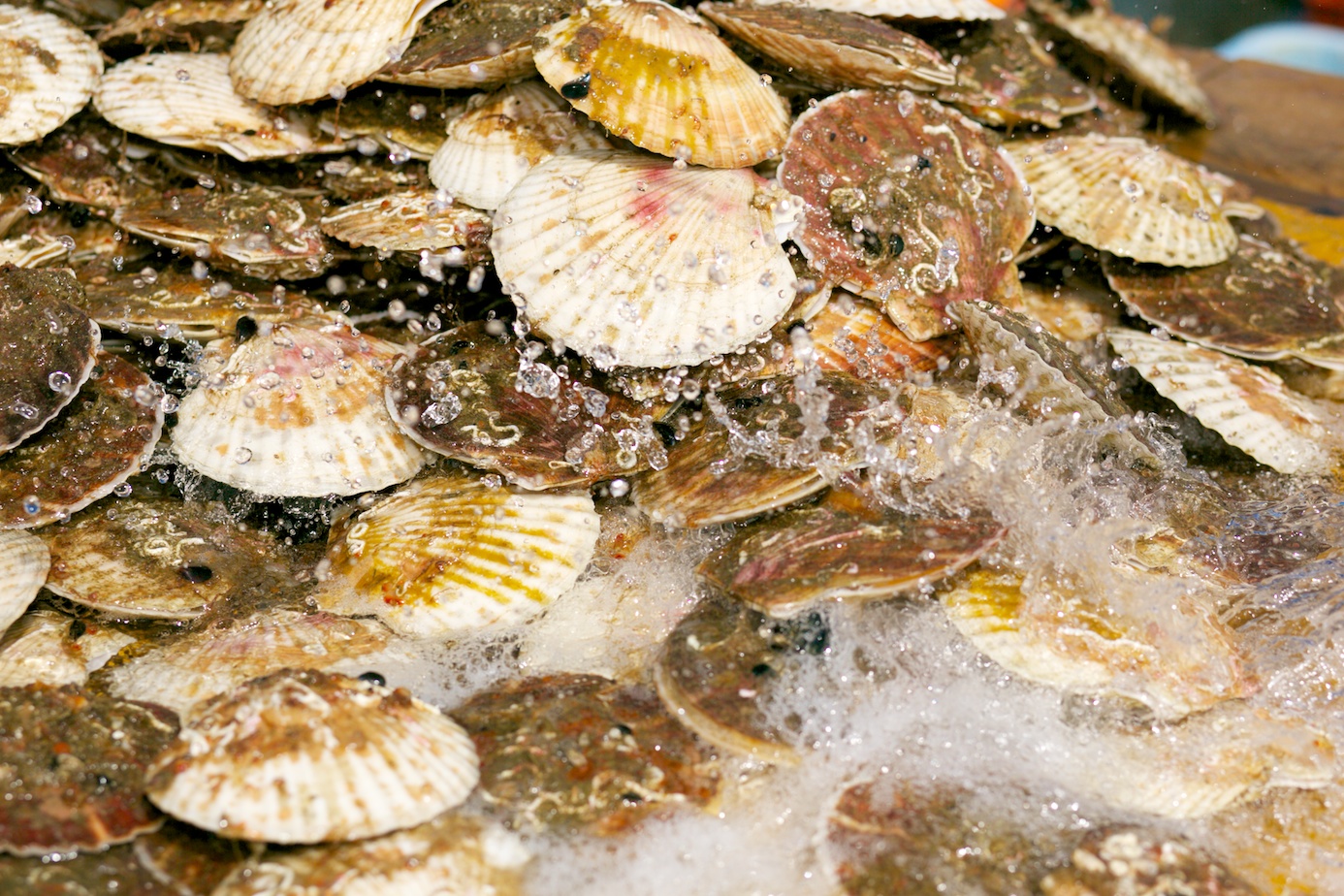
One issue that the documentary hones in on is the destruction caused by bottom trawling. Footage of the practice and its effects are shocking. There is also a focus on scallop dredging and bycatch-heavy hauls where the bycatch is simply discarded. It’s a dark visual representation of commercial fishing, and the message behind it is powerful. As discussions over the documentary continue, there will undoubtedly be significant impacts on consumer trust towards seafood and public perceptions of commercial fishing.

There is no doubt that this kind of destruction needs to be highlighted, and Ocean raises key questions about how certain fishing methods are carried out and where they occur. However, the portrayal of bottom trawling and scallop dredging could benefit from additional context, and it was a shame that no fishermen or fisheries scientists were featured. Ocean makes many important points about the need to protect the sea and its fish stocks, and the debate around marine protection is essential. However, there was no mention of the people who work on fishing vessels every day or an introduction to the latest research by fisheries scientists. There was also no mention of the many important advances in sustainable fisheries management and fishing practices that are happening today. Through my work, I have come across an array of efforts from seasonal closures, gear modifications, gear that is designed to reduce seabed contact or minimise bycatch, monitoring systems on board vessels, and the use of AI to ensure that the ocean and its inhabitants are free from dangerous items like ghost gear. These are all evidence of a strong commitment to try and improve sustainability and establish well-managed fisheries. 

The UK public body Seafish says that in the UK, bottom trawling is managed as part of a broader fisheries management framework to ensure that impacts on fish stocks and marine ecosystems are avoided, mitigated or remedied. Seafish offers information on temporary, seasonal or permanent closures of fishing areas if there are concerns over marine conservation, and highlights the role of trawl fisheries in supporting coastal communities and fishing on grounds that have been fished for generations. Earlier this month, the UK also outlined plans to ban bottom trawling in more Marine Protected Areas (MPAs) to protect habitats and support important marine species such as lobster, clams and langoustine. Meanwhile,  The International Council for the Exploration of the Sea (ICES) also monitors bottom trawling worldwide and publishes independent assessments of the impact on seabed habitats. 

The UK is also aware of the issues surrounding scallop dredging and is working towards better management in this fishery. Two years ago, consultations were held on a king scallop fisheries management plan in England and Wales. Stakeholders discussed the introduction of dredge restrictions to protect scallop stocks, reduce any impact on the seabed and other marine species, and ensure the scallop industry’s future economic security. There was also a desire for king scallop stocks to be better understood, to identify interactions with the wider marine environment.

Professor Ray Hilborn, a marine biologist and fisheries scientist at the University of Washington, shared his opinion on Ocean in his latest newsletter, which I read after viewing the documentary. He pointed out that although unregulated fishing is a threat to marine ecosystems, so too are climate change, pollutants, plastics and terrestrial runoff of nutrients. He also explained that bottom trawling occurs only in a small portion of the global ocean, almost exclusively confined to continental shelves, and in countries with the largest amount of continental shelf — Russia, Canada, the USA, Australia and the Antarctic – the proportion of area trawled is very small. Most bottom trawling also occurs over more resilient environments such as sand, mud and gravel, he said, rather than more sensitive areas such as deep-sea coral or sponge beds. In fact, research shows that benthic communities in more resilient environments recover quickly, especially when trawling is well-managed. 

Hilborn concluded by stating that fishing of all forms, including trawling, can be done sustainably, ensuring food production for future generations. 

The UK and US are just two tiny examples of awareness towards the negative impacts of bottom trawling and scallop dredging. There are many more examples and viewpoints, and other nations are pursuing their own measures and working towards global agreements on marine conservation. This is more important than ever in light of this year’s UN Ocean Conference.

It’s worth highlighting that Ocean doesn’t say that commercial fishing as a whole is bad. The documentary is beautiful but devastating, and a reminder to all of us in the seafood sector, whether it’s fisheries or aquaculture, to think further about how we can take even more effective steps than the ones we are taking now. It’s exciting to see, once again, the attention given to critical issues that the ocean is facing. But at the same time, it’s important to remember that scientists, the fishing industry and more have been working hard for many years to improve fisheries and build something more sustainable. Like SeaspiracyOcean is a great opportunity for healthy, open discussions on fisheries, regulation and environmental protection, where all stakeholders can come together in a collaborative way.