Category Archives: Uncategorized

April 2014: Unmanned Dive Boats: What Happens If They Disappear

Towards the end of my dive, I slowly began to sense that something wasn’t right. I’d been underwater for about 45 minutes and had less than half a tank of air. During our briefing we had agreed to ascend along the anchor line, and I knew from the depth I was at that we should have been able to see our boat. However, there was no boat in sight, and no anchor line. Our guide first ascended by himself, came back down and immediately told us to come up. By that point it had become obvious that our dive boat was no longer attached and had drifted away.”

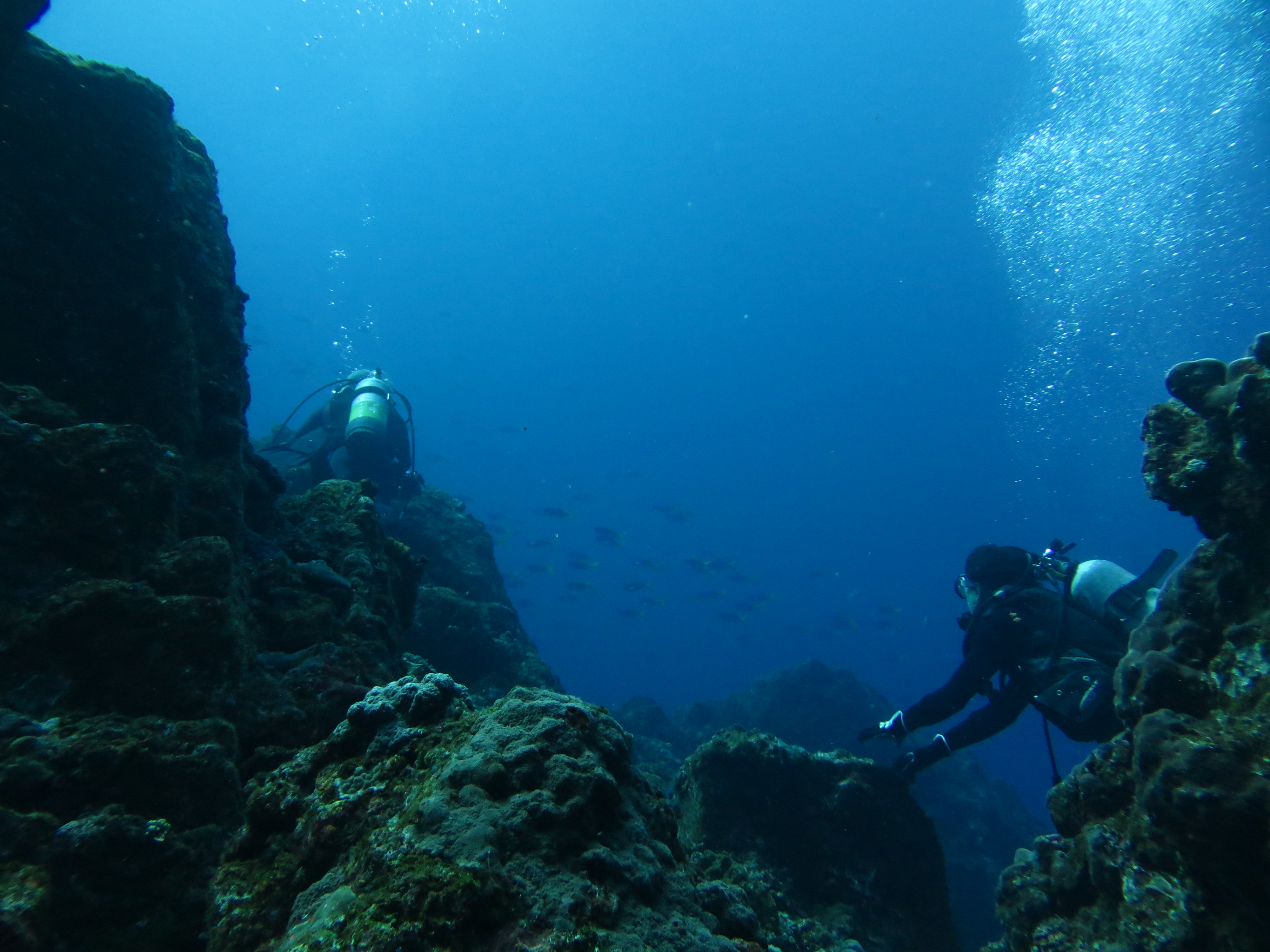
This happened during a dive in April off Okinoerabu in Kagoshima prefecture. The actual location was a point named Oyabiccha, known for a series of boulders that stick out for miles and are an extension of the Okinoerabu mainland. While we were in the water, our boat had come loose from its mooring and disappeared.

Back at the surface, we were able to swim to shore for about 15 – 20 minutes. Landing on the rocks with all our gear was awkward, but everyone in the party managed it. From there we were able to wait for our dive guide who went back to port, returned with his van and drove us to the dive shop. Meanwhile the unoccupied boat had been found adrift a short distance away and was retrieved about two hours later.

On this occasion we were lucky; nobody was lost or hurt, there was no current or high waves and the boat was undamaged. Unfortunately this is not always the outcome for those diving from private or unmanned boats. It’s still unclear why our boat broke its anchorage, but there are a number of possibilities. A change in wind or current could have pulled it in a different direction, or the anchor line could have been cut as a result of careless placement.

Diving from a private boat must involve the skills of captain and dive master, with one person on board being responsible for the boat and the other deciding where to dive and the type of dive that will be done. The most important rule of diving from a private boat is to always leave a responsible person or people on board when divers are in the water. That person should be able to operate the boat, use the radio and respond to emergencies. A dive boat should never be left unattended.

Despite these basic rules however, it appears that unmanned boats are surprisingly common in Japan, particularly in the remote islands of Kagoshima Prefecture and Okinawa. Dive shops in these regions tend to be run by families or are short-staffed so boats are often left unmanned as a way of reducing costs. Some shops in areas that only attract a small number of divers cannot afford to hire a boat captain (who is often a local fisherman on such remote islands).

PADI Japan is aware of this fact and the risk of unmanned boats drifting away but if it’s not possible to hire anyone extra, a boat should be equipped with at least two anchors, additional ropes and anything else that will help secure it. If you discover that your boat is unmanned and you are not sure about it, you can choose not to dive. In Japan divers seldom do this. Instead they simply follow the guide, and often, during a dive briefing for example, they are so caught up in hearing about the dive site and what they might see, that the boat is the last thing on their minds. But if you are unsure about anything, whether it’s the boat or something else, you can cancel your dive.

If you decide to go ahead and your boat is unmanned, it’s also important to understand that no matter how calm the conditions are when you enter the water, it is always possible that you could become separated from your boat. Visual and audible signalling devices are crucial because the key to getting rescued is to be as visible as possible. One of the best tools to use is the surface marker buoy or SMB, the bigger the better, with a highly visible colour. Sounds from horns and whistles have a greater range than the human voice and can be quite effective, while strobes and lights, with an LED light source, will shine for a good while.

*The school where this incident occurred is called Sea Dream (http://seadream.ti-da.net/) based on Okinoerabu Island in Kagoshima Prefecture. What happened was a simple mistake: there is no suggestion that Sea Dream is habitually careless or less competent than dozens of other small dive schools in remote parts of Japan. But mistakes of this kind should not be ignored. As divers know, they can have tragic consequences.


April 2014: Okinoerabu, Kagoshima Prefecture, Japan

IMG_1097 IMG_1113 IMG_1119 IMG_1129 IMG_1153 IMG_1199

Friday April 18th – Monday April 21st

The peaceful coral island of Okinoerabu forms part of the Amami Island group in Kagoshima prefecture.  Although it’s only about 56km and home to about 16,000 people, it’s an almost undiscovered place with a great many points of interest and full of opportunities for snorkeling and diving, during which you can float by and watch fish of all shapes and colours, sea snakes, turtles, sea cucumbers and starfish.  These are some incredible sights in some of the most beautifully coloured blue water.  Okinoerabu is also known as The Island of Flowers and Limestone Caves because as well as vast gardens of coral, it’s home to over 300 limestone caves.  A 1.2km section of the caves are open to the public and inside you can marvel at the breathtaking stalactite and stalagmite formations during a guided tour which is well worth looking into after a couple of days in the water.

The water temperatures off Okinoerabu range from 21C – 30C with visibility around 20 – 40m.  Diving is available year-round, and if you’re lucky you can sometimes spot migrating dolphins and whales early in the year, while numerous reef fish and sea turtles abound in the spring and summer months.  For macro fans, sea slugs are abundant. Since the diving here is not as popular or well known compared to more famous destinations like Okinawa, the coral is in excellent shape.

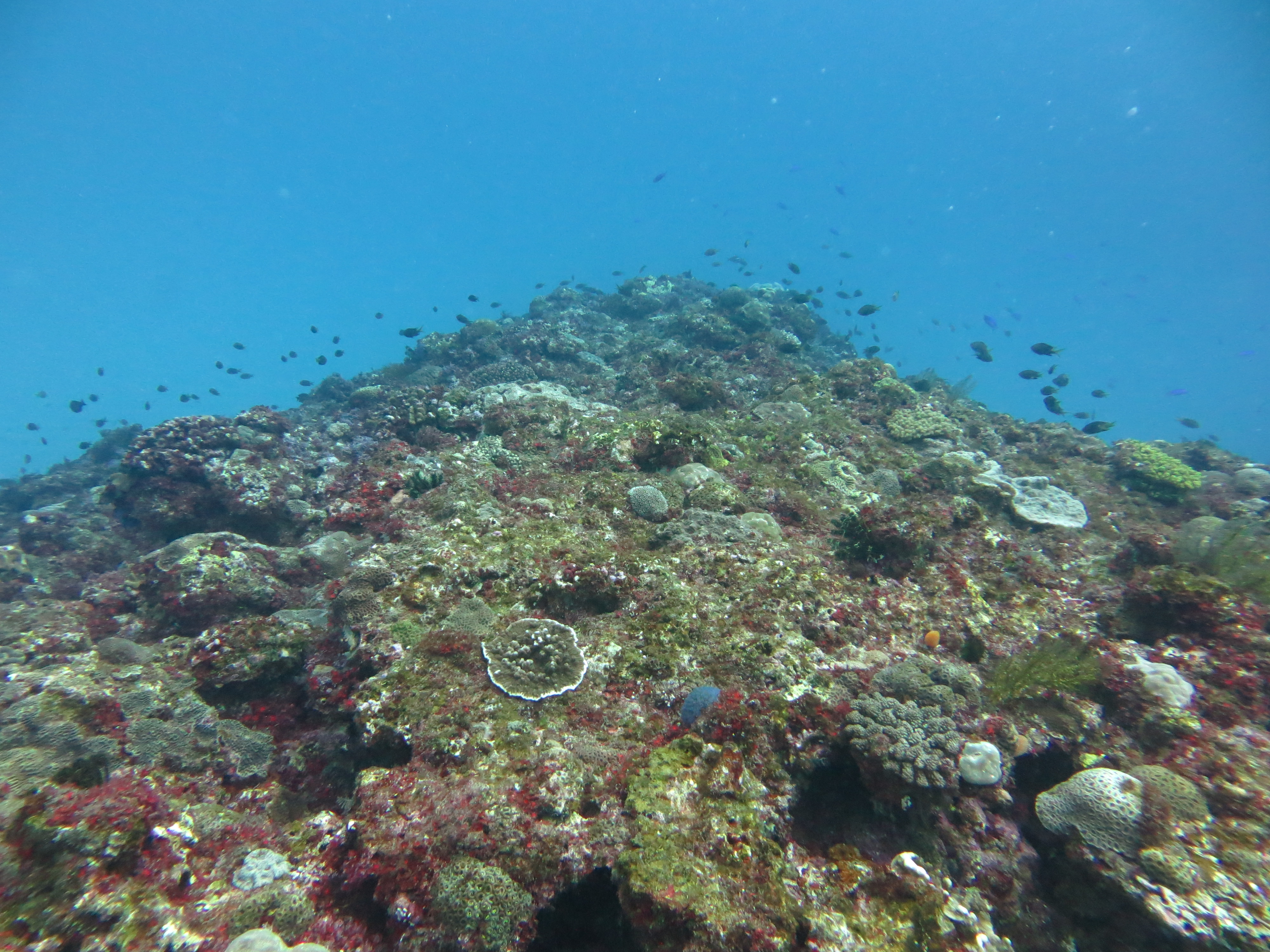
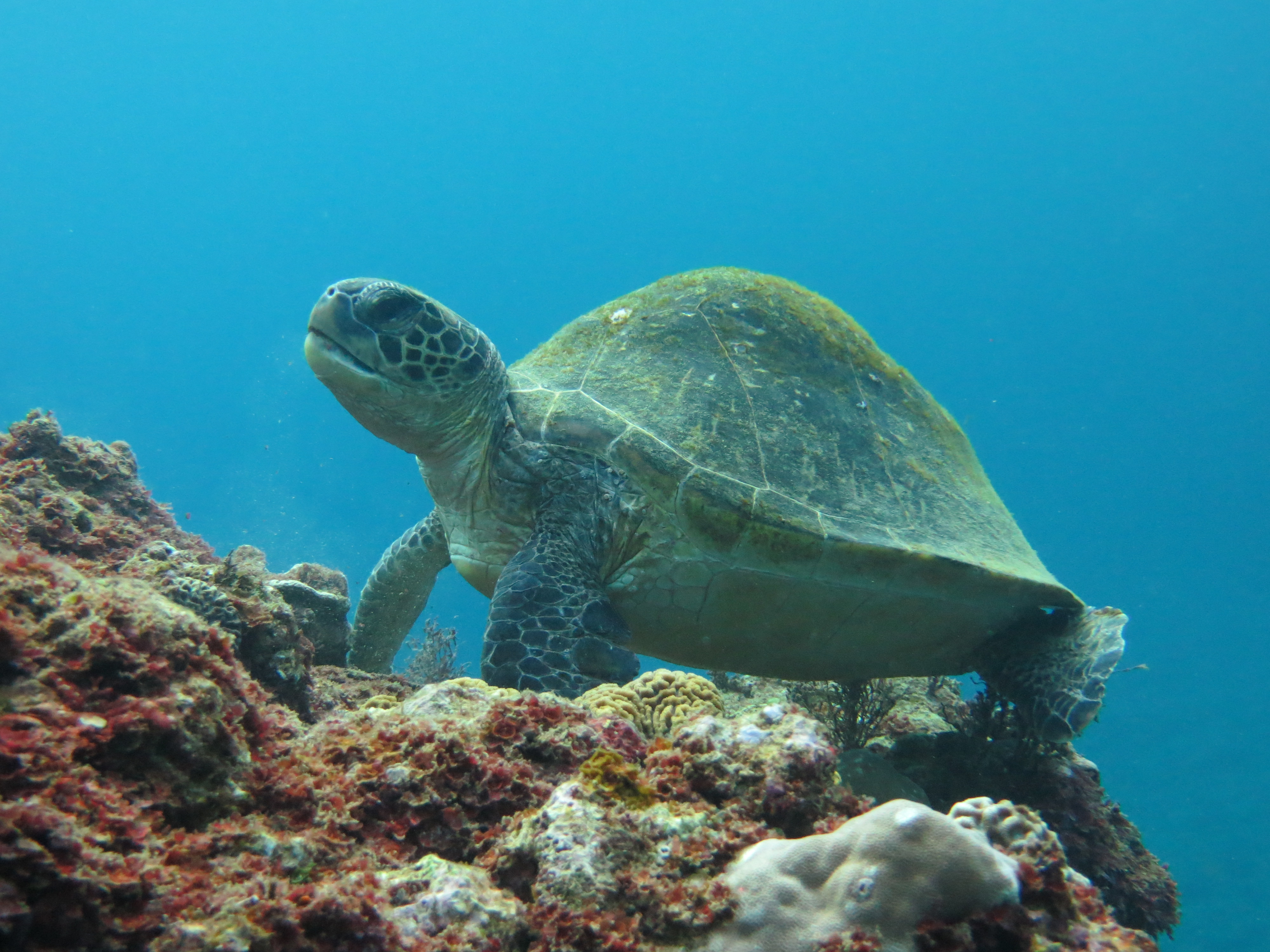
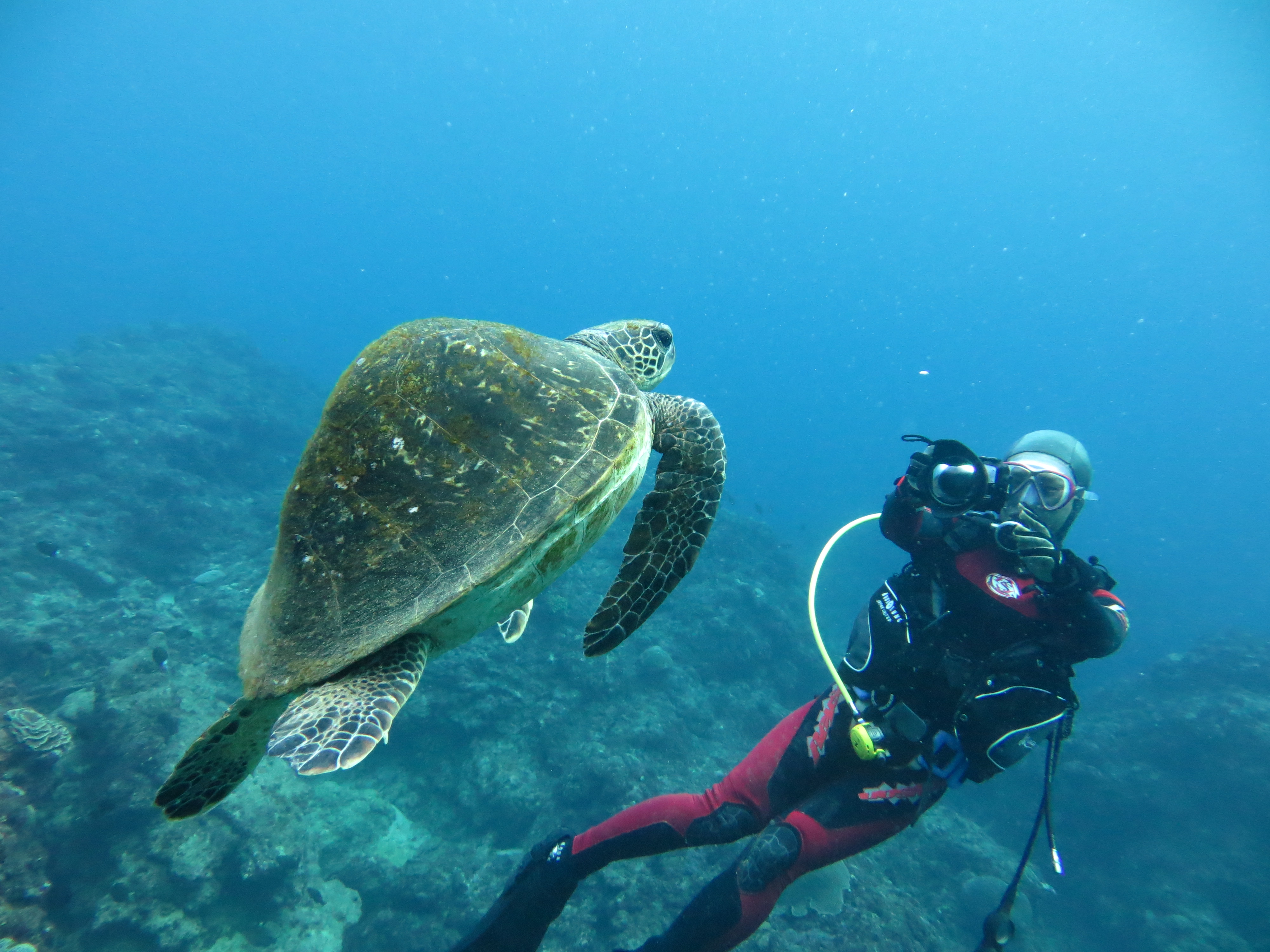
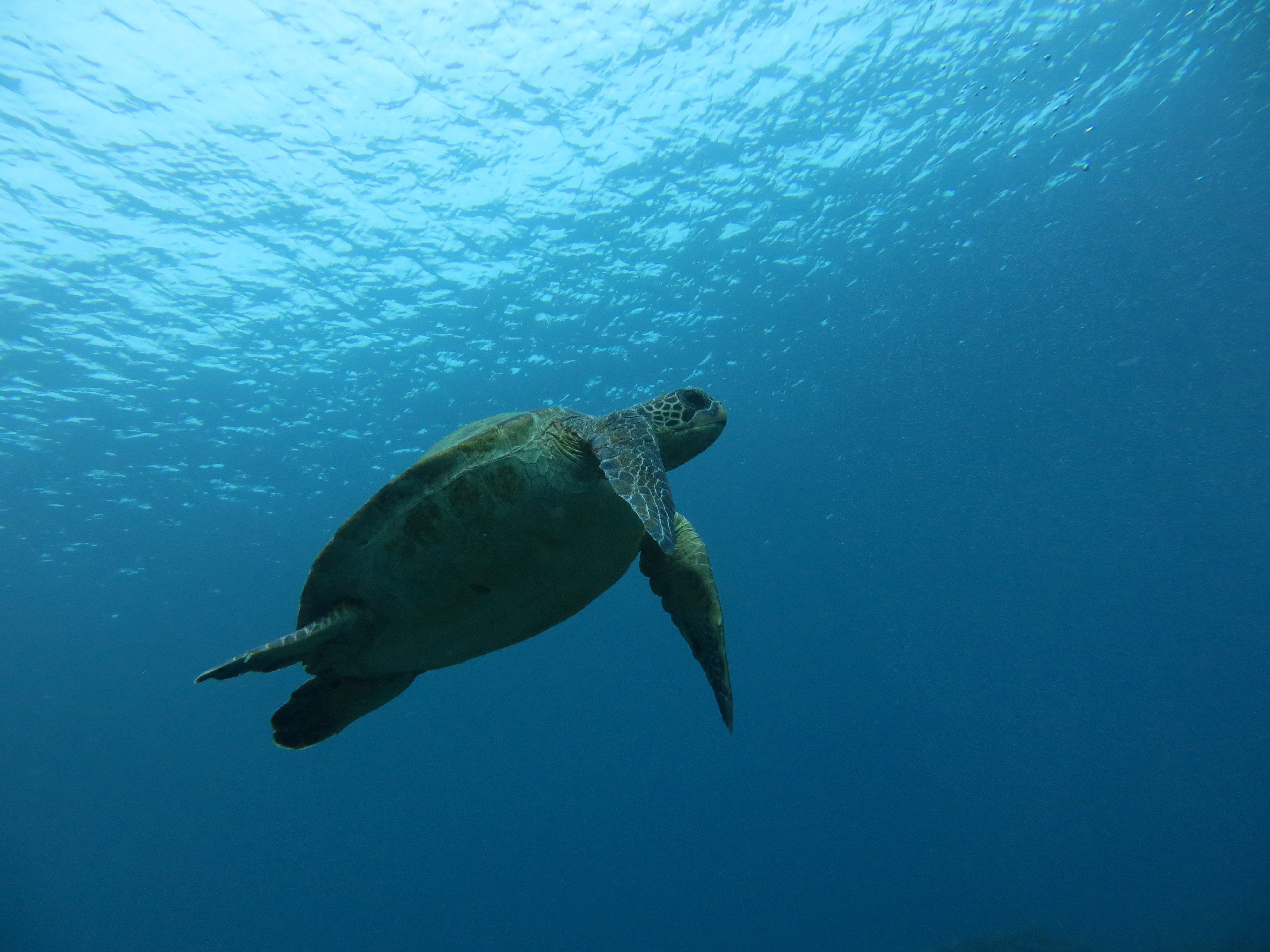
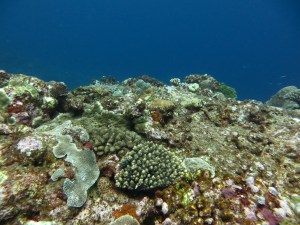
Kaito: This site begins with a carpet of rocks to descend onto at 8m. Immediately we encountered a huge turtle that seemed relatively tame and was happy to spend time close to us as we took photos. We then descended to 17m by swimming through passageways carved between the rocks. The walls of the passageways offer even more life – they are covered in corals, sponges and gorgonians and it was a slow relaxing dive to 17m as we looked for macrolife such as anemones, soft coral, hiding shrimps and sea slugs, all of which were most plentiful between 10-15m. It’s also nice to simply drift here, let the water carry you and marvel at the coral carpet below that appears around 17m and looks perfectly healthy to boot. Schools of fish also accumulate at this spot, sometimes in considerable numbers but the real draw here is where the turtle was, while other species such as trumpetfish, anthias and hawkfish are close by, all of them great for up-close-and personal interactions.

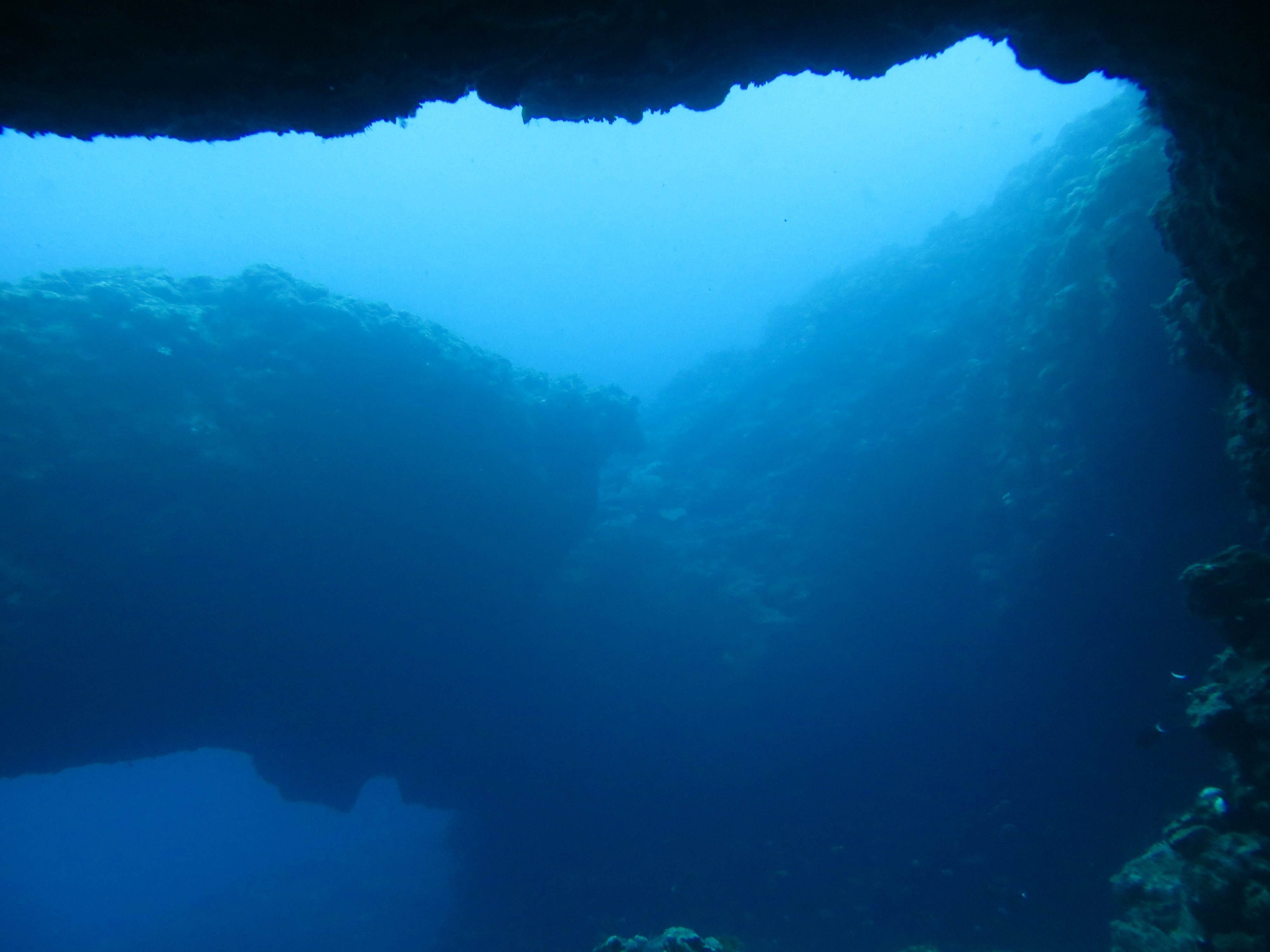
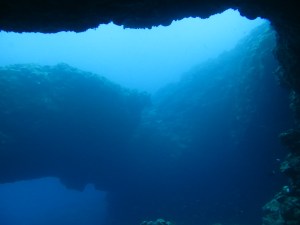
Futago no Arch: Translated as the Twin Arch, this is one of the highlights of Okinoerabu. After descending to around 8-10m, we immediately came to a huge hole, or tunnel, which we entered and began descending slowly, stopping on the way to inspect the walls around us. Don’t dismiss this area. It may be slightly dark but it’s a natural amphitheatre, filled with nudibranchs, shrimp and plenty of tiny fish, crabs and sea squirts. A torch is an absolute must. The tunnel takes you to around 24.5m and turning left at the bottom you can swim through two archways as the sun shines through, providing good light for photos. With the rocks to your left, the ascent begins and this is where marine life has taken over, living in luxury in the shallower depths. It’s where turtles roam free and the fish flitter in and out through the coral. We saw magenta dottybacks, anthias fish, orange cup coral, hawkfish anthias and banded coral shrimps.

Santa no Okurimono: This quaint little spot begins at 8m after a rope descent. We swam over a series of huge boulders, all teeming with coral. They then merge into one at around 25m and from here you can spend time ascending and inspecting the impressive volcanic geology that surrounds you. Parts of the rocks have been colonised by hundreds of sea sponges and tiny anemones and huge schools of fish can accumulate here if you are lucky. It can be a daunting spot – the current is sometimes strong and unpredictable, while looking over some of the rocks you see nothing but deep drop offs that descend into nowhere. When the current is mild, there is a small tunnel at 15-16m that will take you into another world of macrolife. The area is also famous for tornadoes of bigeye trevally that sometimes appear if luck is on your side.

Yaguna Drop: This site is most suited to beginners and it’s possible to have a relatively slow and easy underwater experience. Swimming down to about 12m we then moved straight ahead over coral formations and huge boulders but remained at 12-15m for most of the dive where we used lights to look for any kind of macrolife we could find. Two types of turtle swam above us while a tuna showed up from the deep blue. Spend some time observing the anemones because as well as clown fish they also house an incredible range of crabs and shrimps, most notably a pregnant coral crab, black and red, protecting a large number of tiny orange eggs in its belly. I managed to get a good few photos before it scarped back into the coral and out of sight. The site is also home to a variety of butterfly fish such as spotband and pyramid butterfly fish to name a few.

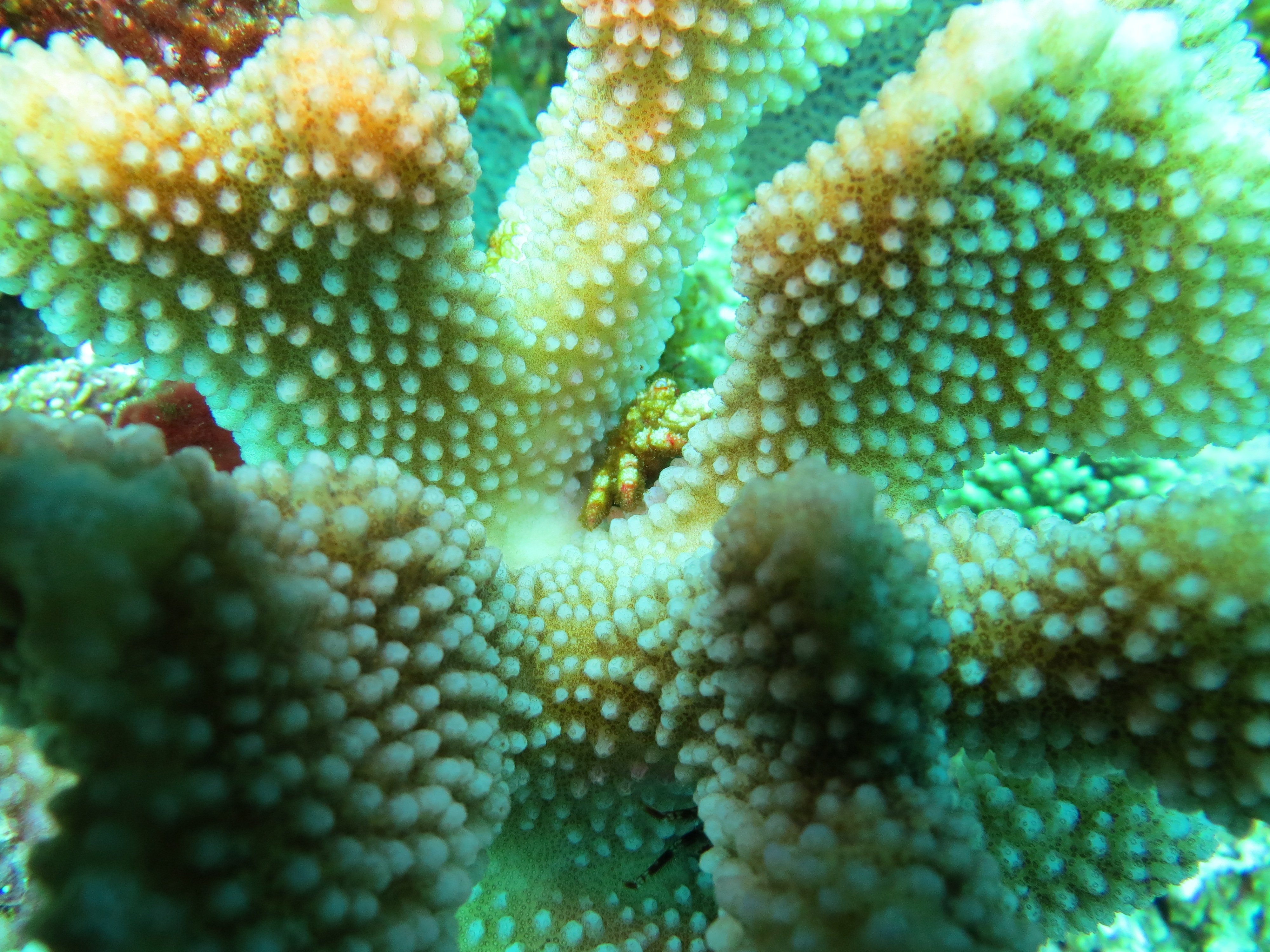
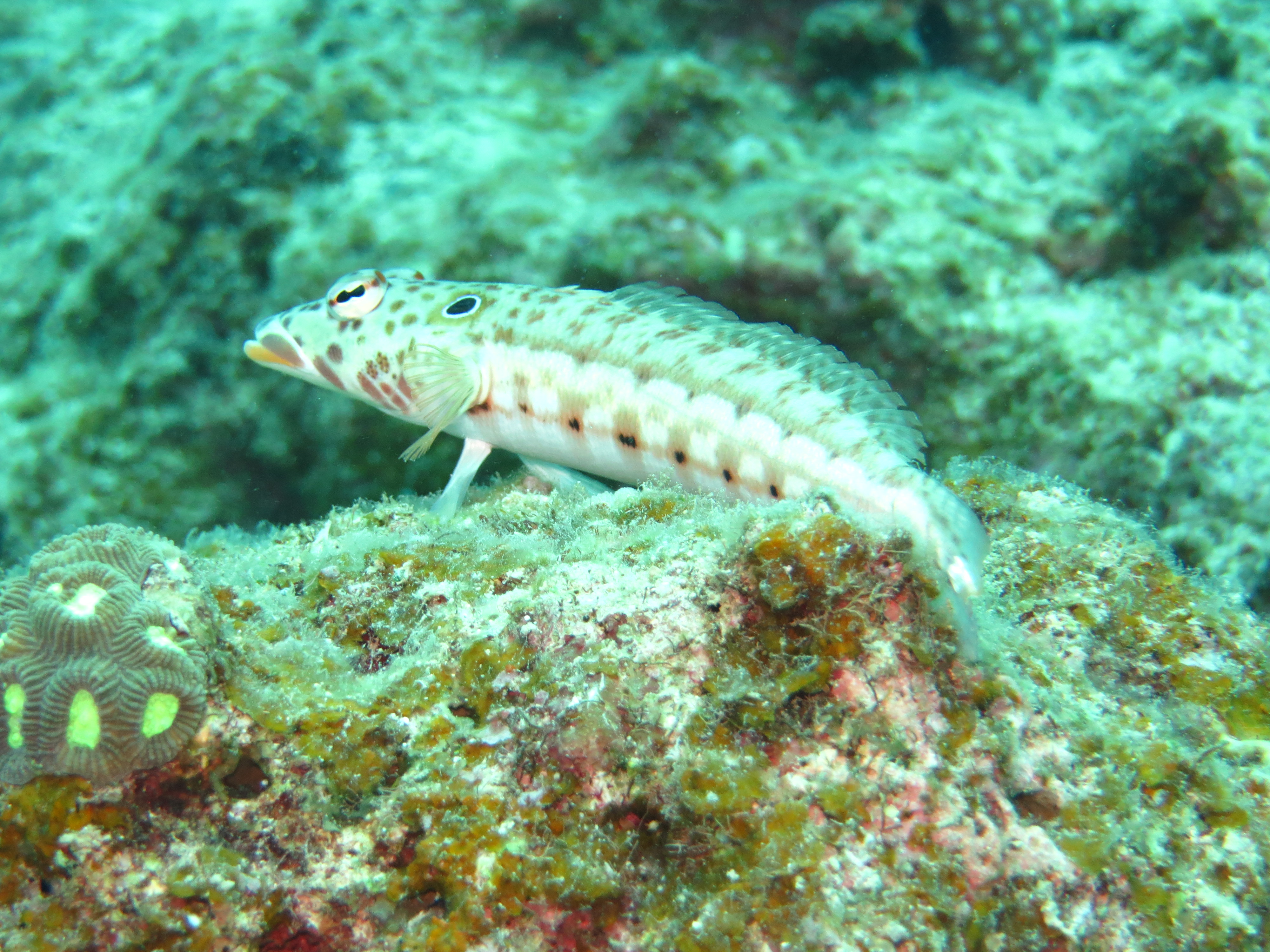
Oyabiccha: This site is a series of boulders sticking out for miles and extending out from the mainland. The best way to dive this spot is to choose one boulder, swim out to the tip and come back. The maximum depth at each is around 25m or so but we stayed close to the surface of the boulders at around 19m and swam over carpets of staghorn coral, some of which even contained squid eggs. Over the staghorn coral it feels like you are flying but further up towards the mainland you can spend time exploring the rocks and darker areas with a torch. Look out for red-speckled blennies that poke their heads out curiously towards you, and colonies of polites rus coral, series of branches and columns spanning over 5 metres across.

Incident: After one of our dives on the Sunday, we surfaced to find that our boat had drifted away either due to a sudden current or because it had not been anchored properly. The boat was unmanned, which is apparently common on islands south of Japan. Luckily we could see land and were able to swim for about 15-20mins to a cluster of rocks near the port. We clambered onto these and made our way to an area where we could unload our gear and wait for our guide to return with the van to take us back to the shop. The boat had been spotted and was found soon after. Luckily there was no current, we were close to land and nobody was hurt but in my next blog entry I will be highlighting this problem in more detail so please stay tuned.

Practical information

• I booked the Okinoerabu trip with Paradise Island Tours (http://www.pit-diving.com/travel/).
• JAL flights to Okinoerabu via Kagoshima leave from Haneda airport at 08:25AM, getting to Kagoshima at 10:25AM, leaving Kagoshima at 11:25AM, arriving at Okinoerabu at 12:55. Return flights to Tokyo via Kagoshima leave at 13:20, arriving at Kagoshima 14:40, before taking off for Tokyo at 16:10, arriving at 17:45. Other flight times are available.
• Hotel Azuma (http://www5.synapse.ne.jp/khotel-azuma/) came to pick me up at 13:00. The entrance/exit to the airport serves as a good meeting point.
• The hotel is old and a little run down. It’s an en suite room, basic and comfortable, with air conditioner, fridge, tea, television and good Internet access. There is a vending machine and small lobby with wifi. Guests can choose between a Japanese style breakfast (rice, miso soup, eggs, seaweed, pickled vegetables, green tea) or a Western style breakfast (toast with butter and jam, eggs, sausages, fruit etc) both of which are served between 7:30AM and 9:00AM.
• A short walk from the hotel is a street with a supermarket, traditional Japanese restaurant (izakaya), and a couple of souvenir stores. Not much happens here at night. Parallel to the street is the main road with a bigger convenience store selling daily necessities.
• If possible, arrange to stay at the Floral Hotel, a bigger and more modern resort than the hotel I stayed in. Further details here: http://web.travel.rakuten.co.jp/portal/my/info_page_e.Eng?f_no=27721
• Sea Dream, the dive school (http://www.okierabu.net/) came to pick me up at the hotel around 13:40.
• The school is about 30mins or so away from the airport. The shop is extremely comfortable with wooden tables and chairs, plenty of photos of marine life, reference books on fish, a machine that makes tea, coffee, espresso and cappuccino, and an outdoor deck with superb ocean views. At the back of the shop is a grassy car parking area and huge area to wash and hang equipment. There are 3 female showers (shampoo and shower gel provided) 3 male showers, both with excellent hot water and water pressure, and two toilets.
• All dives are off a boat. The school keeps one boat along the island’s north coast that can carry about 10 people. It’s small, but there is a roof at the front if you want to be in the shade and a small area on deck to set up equipment. Tea and sweets are available anytime, and plenty of hot water is prepared for divers to pour over themselves when they get out of the water.
• All entries into the water are backward rolls. Ascent is up a ladder.
• The total cost of the trip was about 106,000yen, including return flight, two boat dives on the Saturday and Sunday with tanks and weights (1,000yen extra for nitrox), 3 nights’ hotel stay with breakfast and all transport to and from the dive sites, hotel and school.
• When not diving, arrange a tour with Sea Dream to visit Okinoerabu’s limestone caves. The tour is about 2 hours and well worth it as the caves are fascinating to explore and the dive school will bring torches and arrange lighting so you can take some stunning photographs in the dark.

April’s dives

Dive 1: Kaito: depth: 17.5m, dive time: 35mins, water temp: 20.9C, used a 10L steel tank with EANx 32%, 5mm wetsuit, 3mm hood/vest and 4kg weights (3kg back plate and 1kg weight in side pocket of BC). Start pressure: 210 bar, End pressure: 100 bar. Saw a huge green sea turtle, anthias fish, yellow spotted chromis, slout chromis, redfin fusiliers, blackside hawkfish, dwarf hawkfish, guard crabs, sea slug Halgerda Diaphana, striped large-eye bream, oneband anemone fish, clownfish, shrimps, trumpet fish.

Dive 2: Santa no Okurimono: depth: 15.7m, dive time: 43mins, water temp: 22C, used a 10L steel tank with EANx 32%, 5mm wetsuit, 3mm hood/vest and 3kg back plate with no extra weights. Start pressure: 210 bar, End pressure: 50 bar. Saw big eye trevally and orange spotted blennies.

Dive 3: Futago no Arch: depth: 24.5m, dive time: 43mins, water temp: 21.2C, used a 10L steel tank with EANx 32%, 5mm wetsuit, 3mm hood/vest and 3kg back plate with no extra weights. Start pressure: 210 bar, End pressure: 40 bar. Saw sea squirts, magenta dottybacks, anthias fish, orange cup coral, hawkfish anthias, Diana’s hogfish, blue dragon, banded coral shrimps.

Dive 4: Santa no Okurimono: depth: 19m, dive time: 45mins, water temp: 21C, used a 10L steel tank with EANx 36%, 5mm wetsuit, 3mm hood/vest and 3kg back plate with no extra weights. Start pressure 220 bar, End pressure 80 bar. Saw green sea turtles, scalpel sawtail, bludger trevally, spotband butterfly fish.

Dive 5: Yagunya Drop: depth: 16.5m, dive time: 49mins, water temp: 22C, used a 10L steel tank with EANx 32%, 5mm wetsuit, 3mm hood/vest and 3kg back plate with no extra weights. Start pressure: 210 bar, End pressure: 120 bar. Saw green sea turtle, loggerhead turtle, dogtooth tuna, clown fish, pyramid butterfly fish, spotband butterfly fish, blackspotted puffer, orange clownfish, Coral crab Trapezia rufopunctata.

Dive 6: Oyabiccha: depth: 19.8m, dive time: 42mins, water temp: 21C, used a 10L steel tank with EANx36%, 5mm wetsuit, 3mm hood/vest and 3kg back plate with no extra weights. Start pressure: 210 bar, End pressure 90 bar. Saw bartail fusiliers, porites rus stony coral, pyramid butterfly fish, red speckled blenny.
 

April 2014: The Marine Diving Fair, Ikebukuro, Tokyo, Japan

IMG_1067IMG_1080IMG_1079IMG_1076IMG_1075IMG_1072IMG_1069IMG_1068

Friday April 4th – Sunday April 6th 2014

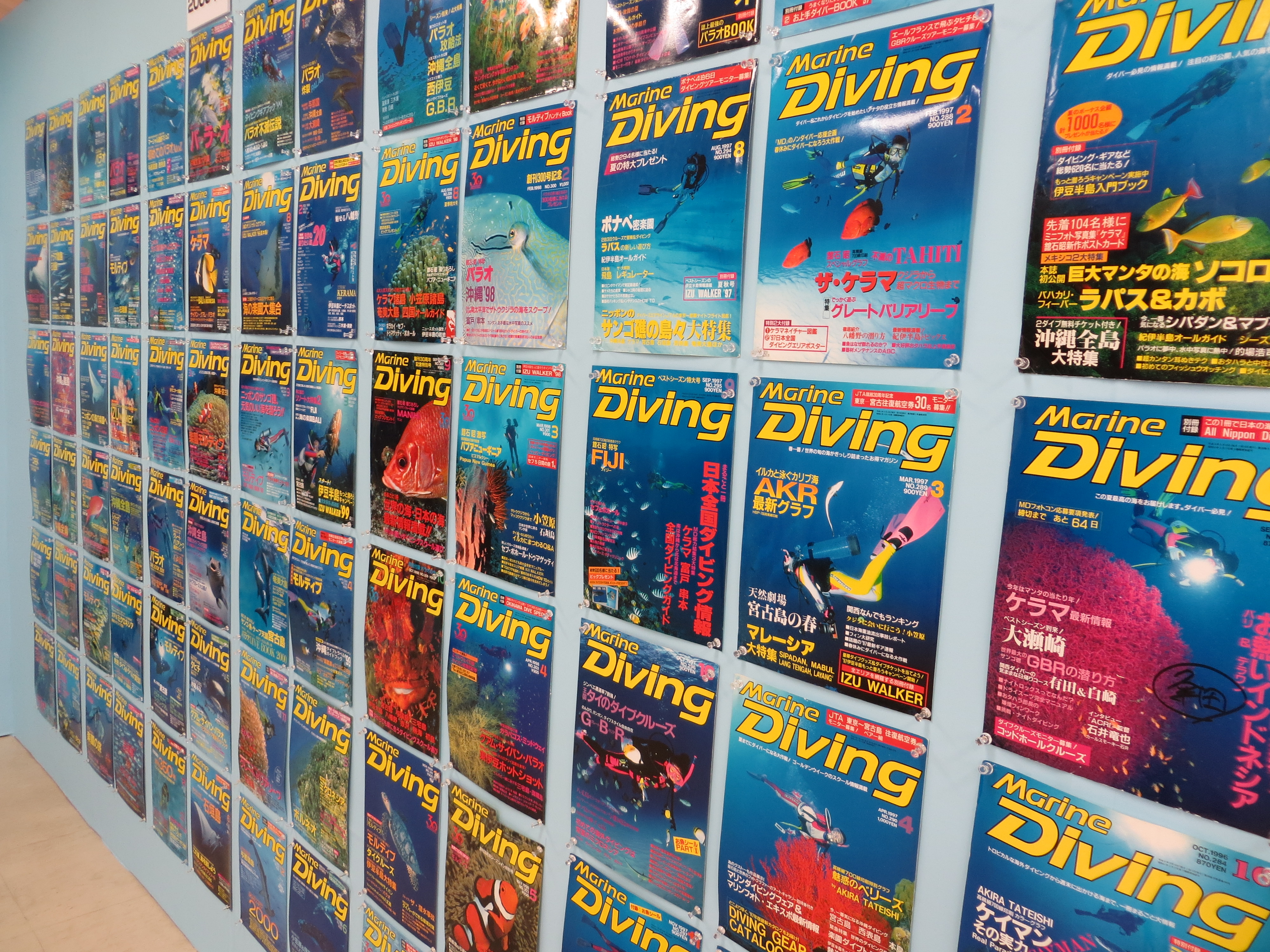
Last weekend I went to the Marine Diving Fair in Tokyo’s Ikebukuro district to hear the latest from the largest scuba diving exhibition in Japan. It features dive centres from other countries (mainly Asia) and is a great opportunity to find out more about possible dive sites, holiday destinations, pick up some dive gear in a sale or listen to short talks about underwater photography or dive-related medical issues.

Upon entering the venue I could feel the tension and excitement building among the many visitors and those who had come to represent their dive school or resort. Today was the culmination of months of preparation.  For the visitors, it was an opportunity to learn more, establish contact with the dive schools and decide on their next diving destination.  For the dive schools it was a chance to gain some new customers and present their services, goods and special offers.

First up, following on from last year, I spoke to Hiroshi Sato (with me in the above photo) who established Sanriku Volunteer Divers, a volunteer group that’s been diving almost every day clearing up areas affected by the March 2011 earthquake and tsunami. Hiroshi gave me his insight on how things are going:

Bonnie: How much of an increase has there been in the number of volunteers?

Hiroshi: We now have about 3,000, mainly from Japan and abroad such as the Maldives, Thailand and the US. Foreign volunteers learn about us through Facebook and stay about one week. Japanese volunteers tend to come from regions that have also experienced disasters such as Hiroshima (atom bomb) and Kobe (Great Hanshin Earthquake).

Bonnie: What is the sea like today compared to 3 years ago?

Hiroshi: Most large debris has been removed but smaller items still remain and there is always a lot to do. Some fisheries-related organizations have strict rules so it can be harder to clean some areas than others but on the whole work is progressing. As for marine life, visibility is excellent and you can see scallops, lumpfish, fat greenlings, eel grass and sea squirts.

Bonnie: What kind of activities are you doing now?

Hiroshi: As well as our regular diving, we help cultivate scallops, oysters, sea squirts and seaweed and conduct underwater surveys. There are tasks to do on land such as clearing debris and sorting anything we find underwater. We visit primary and junior high schools and use photographs to tell pupils about our activities and the condition of the sea. Some schools in the affected areas now have classes on reconstruction.  For adults, we hold seminars but there are also short talks in stations or department stores in big cities such as Tokyo and Osaka, and photo exhibitions.

Bonnie: Please tell me about your aims for this year and what the group will be doing.

Hiroshi: We want to widen the areas we work in and reach places that have not been entered into yet. We want to continue our record-keeping and tell people about our activities, but always with a feeling of gratitude. It’s important to always thank those who have expressed interest and are coming to help.

Bonnie: What’s been the most memorable thing for you during your work?

Hiroshi: I would say the bond that has been formed between the divers and fishermen. They get on extremely well. The fishermen say they went through a lot during the disaster but there have also been happy times.  By this they mean the number of people who have come from all over Japan and indeed elsewhere in the world, to help get things back on track.

I was impressed with just how far this group has come since March 2011.  Below are some shots taken recently by Hiroshi, showing what’s down below in the affected areas:

7H7A1446 7H7A5268 7H7A7197 7H7A7334 7H7A7339 7H7A9772 DSC_6973

Heading towards more sounds of laughter and talking, I met a dive school based on a tiny little island called Notojima off the Noto Peninsula on the Japan Sea Coast, another stretch of water in Japan that seems to be an upcoming hotbed of diving activity.  Notojima is famous for its aquarium which has about 500 species and over 40,000 sea creatures from all over Japan including ones that inhabit the Noto Peninsula Coast.  Compared to the Pacific, the water here is colder and fresher but is home to rich seaweed, kelp forests and a range of less tropical marine life.  Divers can also enjoy dolphin swims and fun dives during the winter as well.  Information was also available on another place further up the coast from Noto – Sado Island, where the best time of year to dive is said to be September and October because of the visibility (20m range) and sea temperature (about 22-23C).  Sea slug fans will apparently be very satisfied, while groups of Kobudai, or the Asian Sheepshead Wrasse, are often spotted as well.  An extraordinary pinkish-grey fish with large swelling-like protrusions on the ‘forehead’ and ‘chin,’ it is said to be extremely friendly and often swims close to divers.  Right now I don’t often hear about diving along the Japan Sea Coast but judging by the number of people at each booth this area will undoubtedly become more well known.  For those wanting warmer destinations, several schools from the Ogasawara Islands were out in force and now that Ogasawara is a World Heritage Site, there’s likely to be even more diving there in future.
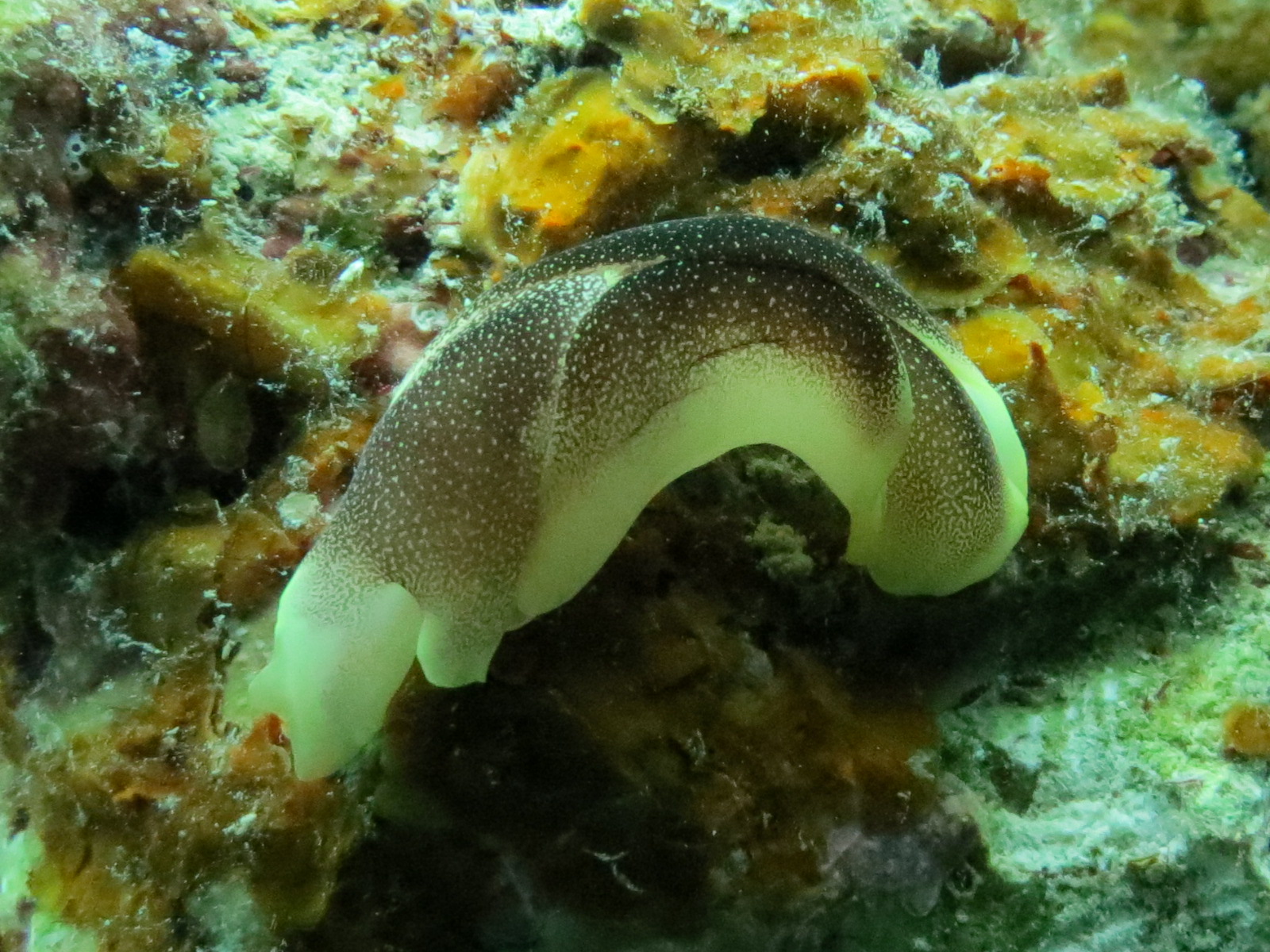


March 2014: The Yuzen (Wrought Iron Butterfly Fish)

IMG_1983

Because I was unable to dive in Japan this month due to being out of the country for a week, March’s entry is a bit of information about a fish endemic to Japan called the Yuzen, or Wrought Iron Butterfly Fish, found off the waters of Hachijojima and Ogasawara. 

Entering the dive site Nazumado on Hachijojima, an island 287km south of Tokyo, is always a difficult affair as the water is choppy and conditions are challenging. After gearing up at the car park, divers walk down a slippery slope, slowly enter the water holding a rope fixed to the ground and put on their masks and fins while the waves crash into the rocks around them. On their minds are not just the varied marine life and the many sea turtles below, but also the chance to see the Yuzen or Wrought Iron Butterfly Fish.

As the dive begins, they realize that the difficult entry was worth it. Soon they are at a huge rocky ledge called Umanone with an arch in the middle. It’s possible to swim through this arch and onto deeper depths, but a left turn around to the other side reveals another scene – rocks, deep crevices, cracks and wall formations that have built up over centuries, where moray eels roam in and out of random holes, red soldier fish hide away in dark corners, turtles swim overhead and green seaweed sway in the mild current. It is a mystical sight, buzzing with activity and plenty of marine life that is waiting to be explored. Grazing in the distance are the black and white Yuzen, taking their time hovering over the rocks and enjoying their latest meal. At first glance they are unlike other butterfly fish, dark and not particularly noticeable, but knowing that they are only found in Japan makes spotting them quite special.

The Yuzen are quite interesting. Thanks to their healthy appetite, they are capable of growing up to around 15cm in length. 10 or more individuals gather together to form large schools (a “wrought iron ball”) and one of their most noticeable features is their metallic black and white colour as well as the bright yellow tinge on their dorsal, caudal and anal fins.  Up close, their white colour is actually more silver and emits a soft shimmery tone. They are usually found between 10 and 20 meters in clear outer waters and tend to graze on benthic algae and invertebrates on rocky shoreline reefs.

The International Union for the Conservation of Nature (IUCN) has listed the Yuzen as Least Concern and states that there are no apparent threats to it.  It is spotted most often in the Izu Islands, Hachijojima and the Ogasawara (Bonin) Islands. Hachijojima, a small subtropical island with black sandy beaches, warm sea temperatures and diverse marine life, has an area of 72 kilometres and is also the second largest island in the Izu Island chain. It’s a hidden gem that is popular with divers around September and October as the sea is still relatively warm and there are a couple of long public holiday weekends in both months. The famous Kuroshio Current blesses the island with tropical waters year round. The Ogasawara Islands, meanwhile, recently became a UNESCO World Heritage Site and consist of 30 or so islands spread out over different locations in the Pacific. Underneath the beautifully clear water lie abundant coral reefs and even a couple of wrecks dating back to World War II.


February 2014: Tokunoshima, Kagoshima, Japan

IMG_0762 IMG_0771 IMG_0780 IMG_0800 IMG_0801 IMG_0804 IMG_0805 IMG_0821 IMG_0824 IMG_0830 IMG_0862 IMG_0885 IMG_0892 IMG_0897 OLYMPUS DIGITAL CAMERA

Friday February 21st 2014 to Monday February 24th 2014

Keep your eyes and ears peeled and you might just spot a turtle or hear the cry of a whale as you dive off Tokunoshima’s subtropical seas. Spanning 25km from north to south and 18km from west to east, this island, with a population of about 30,000, is not well known and often overlooked in favour of other destinations like Okinawa, but its natural underwater beauty really stands out – a prime example of Japan’s volcanic geology where huge flat rocks and coral lie in abundance.  Turtles are often spotted during dives and in February whales come close to the island, filling the ocean with their cries.  Here are some of the sites I visited during my trip.

Senma Bay is the island’s main spot for shore dives and most beginner-friendly although the bay is rocky and extra care is required during entry if conditions are slightly rough.  The gradual descent begins over a flat area of rock and table coral at about 4m.  An array of tiny colourful fish remains on guard, hiding cautiously and flitting in and out of the tiny dark holes.   Soon this scene disappears and below is a sharp drop with a sandy bottom in the distance at 16-17m.  The journey down there is a nice opportunity to see in more detail Tokunoshima’s rough and rugged underwater terrain and its inhabitants – linear blennies, parrot fish, turtles, semi circle angel fish and Moorish Idols that graze against the walls.   The rock formations are huge, rising above for miles and miles, full of small openings, cracks, crevices and concealed spots, ideal for divers who like tunnels, arches and concealed areas.  Swimming through narrow passageways with sandy bottoms is a great way to enjoy the slow ascent but don’t forget a torch as you never know where the next lionfish or nudibranch might be hiding.

The journey around Blue Hole Oki begins with a backward roll and an immediate descent down an anchor rope to around 10m.  A carpet of rock and flat coral lies below and deeper down, turns into bigger rocky ledges and formations with sandy areas in between.  Some of these are cliff-like with ridges and are ideal environments for turtles or squid to rest in and hide away. We were lucky enough to meet a big healthy-looking cuttlefish gliding past in his own little world.  Following the rocks further down to around 24m, we came to a cluster of medium-sized rocks and watched a school of bright blue-striped snappers that had set up home.  Close by, trumpet fish drifted by here and there, a white tip reef shark popped up to say hello and the odd sea snake glided curiously towards us. The ascent is a journey past some colossal boulders large enough to carry various coral species such as brain and table coral and shield lion fish, nudibranchs and yellowfin goatfish.

San is noted for a medium-sized rock that sits by itself on the sand at around 21m.  Turning left at 10m is a huge boulder caked in seaweed, starfish, nudibranchs and an array of sea anemones that house various kinds of clown fish.  This spot is also full of turtles.  The rock at 21m comes into view after a quick swim across the sand, revealing a riot of activity where divers can get up close to starfish, shrimps, parrotfish, bartail fusiliers, blennies, gobies and butterfly fish hiding in dark crevices or huddling against the small coral formations.  A big yellowtail, relaxed and curious, also appeared and followed us for a while before disappearing into the deep blue.  San is also one of many dive spots that are home to the endangered green turban shell.

Shiotobiya, only about 10mins away from land, consists of flat, small and medium-sized rocks strewn here and there.  At 17m is a sandy patch that is home to the jawfish, a comical and entertaining little creature with a large head, mouth and eyes relative to its elongated body.  It constructs burrows, spitting sand at anything that comes too close and curiously peering out to see what’s going on around it.  Macro lovers can lie flat and attempt to get some close up shots but this requires excellent timing as the jawfish darts out of sight immediately if it wants to.   Shiotobiya is also home to Yamachan, Tokunoshima’s famous green sea turtle that’s been around for over 10 years.  Tame and relaxed, he is known for his unusual mountain-like shell and is normally found swimming or grazing off the rocks at around 10-15m.  As this is a relatively shallow depth, the rest of the dive can be spent in the company of Yamachan, swimming with him and taking photos.

Divers don’t often get to visit Tonbara Iwa due to its strong unpredictable currents and location 30mins away in the open sea.  However, it is Tokunoshima’s most favourite and challenging point – three small offshore rock islands that are home to large tuna, giant trevally and other pelagic species.  Because of the slightly demanding conditions, divers must hold onto an anchor rope as they descend to around 20m.  Already the current picks up so most of the dive involves crawling slowly over huge tower-like rocks to a maximum depth of 30m.   Sometimes we found ourselves perching on rocks, peering down into the dark blue depths below so this site is not recommended to those with a fear of heights.  The shallower waters (around 20m) are filled with tropical inhabitants including starfish, redfin fusiliers, white tip reef sharks and large clown triggerfish.   Overall this site requires a fair amount of experience and preferably advanced open-water training.

Practical information

  • I booked the Tokunoshima trip with Paradise Island Tours (http://www.pit-diving.com/travel/).
  • JAL flights to Tokunoshima via Kagoshima leave from Haneda airport at 08:10AM, getting to Kagoshima at 10:10AM, leaving Kagoshima at 10:50AM, arriving at Tokunoshima at 12:00.  Return flights to Tokyo via Kagoshima leave at 17:25, arriving at Kagoshima at 18:25, before taking off for Tokyo at 19:10, arriving at 20:40.  Other flight times are available.
  • Kamui, the dive school (http://www.ms-kamui.com/) came to pick me up at 13:00.  There is a restaurant at the airport which is a good meeting point and lunch spot.
  • Diving equipment can be sent from Tokyo in advance for about 2,500yen It costs 3,000yen to rent a BC, reg and fins set for one day.
  • Kamui is on the opposite side of the island to the airport and the drive from the airport takes approximately 30 mins.  The shop is tiny and not much time is spent there as there are other shower and changing facilities depending on the dive sites you are using.
  • The owner of Kamui, Mr Suzuki, speaks English.
  • The main site for shore dives is Senma.  Nearby are two toilets and two showers (no hot water so the dive school provides a huge tub of it instead) and some steps to lay out gear and set up before walking into the water.   It is best to just rinse off as the school will drive you to another facility with 3 showers, hot water, shampoo, conditioner, hair dryer, mirrors, toilet and a machine to dry swimming trunks and bikinis.
  • The dive school’s boat can accommodate 16 people (15 divers and 1 crew).  There are no shower or toilets.  Divers sit along the sides and set up their equipment on board.  There is not much shade so take a hat!  Hot tea is provided.  All entries into the water are backward rolls.  Ascent is via ladder.
  • I stayed at the Hotel Lexton (http://www.nisikawa.net/lexton-t/) which is a comfortable western-style business hotel.  Breakfast is available at the restaurant next door called Joyfull.  Guests choose either a Western meal (toast, salad, sausages, ham) or a Japanese meal (rice, soup with pork and vegetables) and have unlimited drinks from the drink bar.
  • A short walk from the hotel is a small area called Kametsu with a sushi bar (with conveyor belt), a range of Japanese-style pubs (izakaya) and a couple of supermarkets.
  • The total cost of the trip was about 93,400yen, including return flight, 2 boat dives per day including tanks and weights, 3 nights’ hotel stay with breakfast and all transport to and from the dive sites and school.

February’s dives

Dive 1: Senma: depth: 17.2m, average depth: 8.9m, dive time: 42 mins, water temp: 22C, used a 10L steel tank, 5mm wetsuit, 3mm hood/vest and 4kg weight belt (no back plate).  Start pressure: 195 bar, end pressure: 70 bar.  Saw cuttlefish, a few green sea turtles and a huge sea snail.

Dive 2: Blue Hole Oki: depth: 24.1m, average depth: 11.8m, dive time: 41mins, water temp: 21C, used a 10L steel tank, 5mm wetsuit, 3mm hood/vest and 4kg weight belt (no back plate).  Start pressure: 195 bar, end pressure: 70 bar.  Saw a school of bluestripe snappers, yellowfin goatfish, green sea turtles, cuttlefish, whitetip reef shark and nudibranchs (phyllidiopsis fissuratus and chromodoris colemani).

Dive 3: San: depth: 10m, average depth: 6.8m, dive time: 42mins, water temp: 21C, used a 10L steel tank, 5mm wetsuit, 3mm hood/vest and 4kg weight belt (no back plate).  Start pressure: 200 bar, end pressure: 50bar.  Saw green sea turtles, clown anemone fish, great green turban, bartail fusiliers, purple queens, stout chromis.

Dive 4:  Shiotobiya: depth: 19.8m, average depth: 10.1m, dive time: 44mins, water temp: 21C, used a 10L steel tank, 5mm wetsuit, 3mm hood/vest and 4kg weight belt (no back plate).  Start pressure: 190 bar, end pressure: 70 bar.  Saw green sea turtles (Yama-chan), jaw fish, black banded sea snake, heard whale cries and bartail fusiliers.

Dive 5:  Tonbara Iwa: depth: 25m, average depth: 13-14m, dive time: 40mins, water temp: 22C, used a 10L steel tank, 5mm wetsuit, 3mm hood/vest and 4kg weight belt (no back plate).  Start pressure: 210bar, end pressure: 70 bar.  Saw white tip reef shark, giant trevallies, sea snakes, starfish, redfin fusiliers and yellowtail.

Dive 6:  San: depth: 21m, average depth: 10m, dive time: 45mins, water temp: 22C, used a 10L steel tank, 5mm wetsuit, 3mm hood/vest and 4kg weight belt (no back plate).  Start pressure: 210 bar, end pressure: 70 bar.  Saw green sea turtles, yellowtail, purple queens, clown anemone fish.

Dive 7:  Shiotobiya: depth: 19m, average depth: 8m, dive time: 40mins, water temp: 21C, used a 10L steel tank, 5mm wetsuit, 3mm hood/vest and 4kg weight belt (no back plate).  Start pressure: 200 bar, end pressure: 80 bar.  Saw green sea turtles, jaw fish, a beautiful transparent purple shrimp and clown fish.


January 2014: The Return to Ishigaki Island, Okinawa, Japan

IMG_0743 IMG_0741 IMG_0721 IMG_0713 IMG_0712 IMG_0699 IMG_0698 IMG_0694 IMG_0687 IMG_0685 IMG_0672 IMG_0671 IMG_0667 IMG_0658

Monday January 20th and Tuesday January 21st 2014

Behind a series of rocks and coral formations, divers wait patiently for the show to begin.  Within moments, a dark figure is spotted in the distance.  It drifts closer and closer, followed by another and then another.  They glide past and hover overhead as the divers look up in awe.  This is the scene at Manta Scramble, one of Ishigaki Island’s most famous dive spots where manta rays come to feed on plankton and be cleaned.

Ishigaki is perhaps most famous for these harmless giants that congregate in the surrounding waters.  The best time of year to view them is between June and November and although they are frequently spotted year-round in various other locations, I sadly didn’t encounter a single one on my return this time.  Still, there were other surprises in store – varied conditions and spectacular diving opportunities in the many bays and points.  3.5 hours from Tokyo’s Haneda airport, Ishigaki is part of the Yaeyama island chain, surrounded by shallow calm sea and a rich marine life.  It’s not heavily populated and the peace and quiet is a welcome change after a frenetic Tokyo.  I spent two days diving at the sites below and found that manta rays are not just what Ishigaki is all about.

Osaki Hanagoi Reef:  The hanagoi (anthias fish) gives its name to this dive site which reaches a maximum depth of about 20m.  Divers travel by boat for about 5-10mins and enter the water by backward roll where the journey begins at about 4m down.  It’s soon clear that the deeper you go, the more rocky and less coral-like the site becomes.  The best way to explore is to reach 20m and then slowly ascend, swimming back towards the reef and exploring the many rocks, walls and other formations along the way.  Near the surface, color seems to explode against the sunlight streaming through the water, while dark labyrinths of coral rise from the seabed providing an interesting contrast.  The ascent is quite good for finding tiny  critters such as nudibranchs, small crabs and shellfish while beautiful leopard morays, other types of eel and a few juvenile lionfish stare intently, peering out from the many cracks.  Anthias fish of course, but also mantis shrimps, blennies, gobies and pipefish come together to form clouds of colour shining against the sunlight while groups of bat fish keep a watchful eye on things.   On the final ascent, we encountered a group of 11 or so cuttlefish.  January is when they begin to spawn and divers do not deter them as they deposit their eggs on the coral just a few meters from the surface.  All this makes for an excellent photo opportunity.

Mash I and Mash II:  The word “mash” in both these sites comes from a couple of huge mushroom-like coral formations that lie a little below 10m.  The sites are ideal for beginners as they are shallow and most dives average between 6-8m so plenty of time can be spent underwater although controlled buoyancy is an absolute must.  Divers must take care not to disturb anything because below is an aquarium-like world.  What’s striking here is the range of coral – table corals, star and brain corals mix together forming a dense carpet stretching for miles.  Photographers will be delighted by the crystal clear water and good visibility.  Sea snakes, spotted at most dive sites, slithered in, out, and over the coral formations in search of food while a ray emerged from a sandy patch, shaking off its sand camouflage and disappearing into the distance.  The coral are also covered in an array of sea anemones that shield varying kinds of clown fish while the other tropical species such as spider crabs, trumpet fish and squart shrimps are bright, plentiful and very chilled out.

Practical information

  • I booked the Ishigaki trip with the dive school Umicoza (http://www.umicoza.com/english/)
  • JAL flights direct to Ishigaki leave from Haneda airport at 6:25AM, getting to the island around 10:00AM.  Return flights to Tokyo via Naha leave at 14:00, arriving at Naha at 15:00, before taking off for Tokyo at 16:00, arriving at 18:05.
  • Umicoza was there to meet me on arrival and drive me to the school.
  • Diving equipment can be sent from Tokyo in advance for about 2,500yen using Kuroneko Takkyubin.
  • Umicoza is about 30mins’ drive away from the city center and main port.  Walk through the main gate and on your left is an area to wash, hang/dry equipment, a private office and table to sit at and write up dive logs when the weather is nice.  Straight ahead are 3 shower cubicles (no shampoo, conditioner and soap provided) and a toilet, and on the right an area to fill tanks and hang BCs.
  • Behind the school is the owner’s home.  There is a large garden and another indoor area at the back full of marine-related photos, books, magazines, free tea and coffee and a kitchen where the owner’s wife cooks lunch (Japanese style and home made.  We had soba buckwheat noodles in pork and vegetable soup, with rice balls and pickled radish).
  • We drove from the school to the beach, parked the van and loaded the boat.  All dives in Ishigaki are boat dives.  The boat is very spacious with an outdoor area to set up equipment but it’s not sheltered – bring a warm coat if you can, along with some towels and sun cream.  Tea is available on board.
  • A tub of hot water is available for divers to pour over themselves when exiting from cold water.
  • All entries are backward rolls.  Ascent is via a ladder.
  • The school has a small white board which it uses to list information on the dive and the marine life seen.
  • I stayed at the Kabira Koen Chaya (inn) on Kabira Bay.  The place is old and run down, no WIFI (although there is free wifi a bit further up the road in an area with souvenir shops and cafes) but towels, shampoo and soap are available and the elderly couple running the place are really nice.  Breakfast and dinner are Japanese style – a good balance of rice, soup, fish and vegetables with green tea and water.
  • There is nothing to do in the Kabira area at night.  Being 30mins drive away from the city, it is best to rent a car if you are staying here.
  • The total cost was about 78,000yen including return flight, 3 boat dives including tanks, weights, all dive gear, two nights in the hotel with breakfast and all transport.
  • Umicoza will pick you up and drive you to the airport after your stay

January’s dives

Dive 1:  Osaki Hanagoi Reef: depth: 20m, dive time: 44mins, water temp: 23C, entry time: 12:05, exit time: 12:49, used a 10L tank, 5mm wetsuit, 3mm hood/vest and 4kg weights (no back plate).  Start pressure: 180 bar, end pressure: 40 bar.  Saw cuttlefish, anthias fish, banded sea snake, lionfish, nudibranchs and honeycomb morays.

Dive 2: Mash One: depth: 11m, dive time: 49mins, water temp: 23C, entry time: 13:34, exit time: 14:23, used a 10L tank, 5mm wetsuit, 3mm hood/vest and 4kg weights (no back plate).  Start pressure: 190 bar, end pressure: 80 bar.  Saw cuttlefish, yellow edged moray, giant moray, batfish, crown anemone fish, pink anemone fish and banded sea snake.

Dive 3:  Mash Two: depth: 8.5m, dive time: 45mins, water temp: 21C, entry time: 09:18, exit time: 10:03, used a 10L tank, 5mm wetsuit, 3mm hood/vest and 4kg weights (no back plate).  Start pressure: 190 bar, end pressure: 80 bar.  Saw brown banded pipefish, banded sea snake, stone fish, spider crab, anemone partner shrimp, squart shrimp, porcupine fish, nudibranchs and anemone fish.