Category Archives: Uncategorized

August 2015: Diving off Dogo, The Return to the Oki Islands

Monday August 10th – Tuesday August 18th 2015 

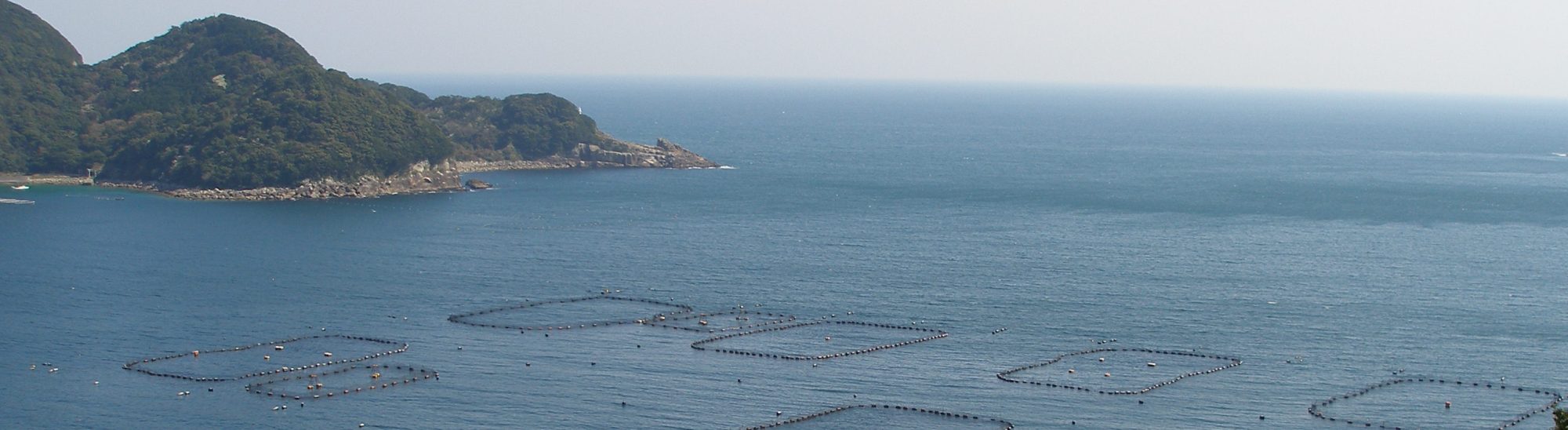
Scattered about in the Sea of Japan, just off Shimane Prefecture, are four inhabited and 180 uninhabited islands.  To many people, they’re a mystery. Often confused for Okinawa because of their name, the Oki Islands are perhaps a great example of what Japan might have been like in the past. With fishing, seafood (squid, turban shell and rock oyster to name a few) and spectacular natural scenery, they are steeped in history, tranquility and charm, a place yet unaffected by the hustle and bustle of a huge metropolis.

It’s precisely this that draws me to this charming destination.  I first visited the Oki Islands in October last year after receiving an invitation from the local tourist association to write an article on diving there.  One article soon became several, and as I returned this time, I spent 8 days diving off Dogo, the largest island of them all.

Sheer colossal cliffs are one of Dogo’s most noticeable features.  Rising up from the ocean, years of rough waves have carved them into what they are today.  The underwater scenery is just as fascinating, with a range of currents, temperate and tropical species.  Beds of seaweed and clusters of soft coral sway to and fro, while schools of fish swim around in the distance.  Huge dynamic rocks abound, offering divers a unique and interesting underwater topography.  Here are some of Dogo’s dive sites that are well worth a visit:

Oki no Tatami: 10minutes away by boat from the dive centre’s shores is Oki no Tatami.  With a backward-roll splash, we descend onto a huge rock that sits on a carpet of white sand at around 25m.  The deeper we go, the more the rock takes recognisable shape from the greenish blue which I’d been focusing on at the start of the dive.  Visibility isn’t great, but it’s good enough to immediately spot a school of damselfish.  Those who enjoy macro photography will enjoy Oki no Tatami, where the current is mild and there is not much in the way of pelagic fish.  The underwater terrain mirrors the high, steep cliffs that exist topside, and upon closer inspection of the rock, crabs and blennies peer from every crevice while barrel sponges draw near and recede.  The bottom can lack obvious signs and the medium-sized rocks scattered around close by make it easy to lose your bearings, so the best way to explore this site is to spend time circling close to the huge rock itself, a journey which takes no more than around 30mins. As well as the schools of damselfish, some highlights are a variety of bennies that look like frogs, poking their heads out from their lairs in the rock, with feathery tentacles above the eye.  I encountered chicken grunts, schools of young yellowtail and even a couple of red sea bream drifting slowly by.  The diving experience exploring the many nooks, crannies and little holes is well worth the exercise here, even though the fish escorts aren’t always present.

Iibiguri: This is a point reserved for advanced divers who enjoy the challenge of deeper depths and currents (an Advanced Open Water certification is a minimum requirement). Iibiguri’s range of pelagic and large schools of fish are a sharp contrast to the rocks and macro life of Oki no Tatami but these vastly different dive locations complement each other well.  Iibiguri lies about 15mins from shore in the open sea, and the fairly strong currents make it extremely rich in marine life and a must-dive spot for anyone visiting Dogo.  We descend along a rope to 16m and gather at a small ledge before clinging to it, chuffed with our front-row seats as we wait for something, anything, to emerge out of the blue. The edge forms part of a gigantic rock, and depending on the direction of the current, the dive involves exploring this structure to about 40m before returning to the ledge and making the ascent. The best way to enjoy this site is to feel the current and take in what’s around you.  We saw several calm red sea bream, schools of pearl-spot chromis, Hong Kong groupers, striped beakfish and a few spotted knife jawfish.  Each side of the rock drops precipitously into the deep blue and seems full of coral, such as small whip coral and soft coral. Chicken grunts and angelfish zipped around while spotted morwongs and tawny groupers glided by.

Aka Beach/Kazemachi Beach: Plunging into the clear water, I descended down one of the most spectacular walls right next to the dive shop.  It seemed that a fest of colours greeted me with seaweed, sponges and soft coral painted in an array of different shades.  I glided down to 5m soaking up the fantastic vista.  As I went deeper, I found more and more small rock formations over the sand, covered in an amazing range of  growth.  As I returned to the shallows, I focused on looking for tiny critters and boulders close to the surface. This is an extremely easy and relaxing dive that’s shallow and close to shore so divers can spend a great deal of time getting lost in a world of biodiversity and discovery.  At one point I was treated to an octopus poking out of a small crevice on the descent before hastily making a getaway, and encountered friendly fish of all shapes and sizes such as pearl-spot chromis, a couple of rockfish that didn’t seem to mind as I leaned in close for some photos, and some very relaxed flatfish lying amongst the sand particles.  There are tiny macro miniature delights and colourful crinoids grazing off the rocks, such as nudibranchs, sea slugs, crabs and a beautiful white seahorse that lives at a depth of just 3m. For divers who love macro life, this is surely one of Dogo’s best underwater environments.

Practical Information

  • I took a flight with JAL around 08:00AM on Monday 10th August from Tokyo’s Haneda Airport to Izumo Airport, and then took another flight around 09:40AM from Izumo airport to Oki airport, which takes about 30mins.  A round trip with this route is about 70,000yen.
  • I spent 8 days diving with Fuse Diving Center (http://www.okidiv.jp) on Dogo. The shop is located right on the waterfront. It’s old, very spacious, with hot showers outdoors and shampoo/conditioner and shower gel provided in two indoor showers. There is a spacious indoor area to look through dive magazines or write up log books. The boat is in good condition, and all dive sites are within 15mins away from the mainland. Free coffee is available, as well as a spacious outdoor area to wash and dry gear.
  • Tanks and gear are stored in the middle of the boat while divers sit around that area. There is also a roof over the tanks that divers can sit under too to avoid the sun.
  • All entries into the water are backward rolls. Ascent is up a ladder.
  • On Dogo I stayed at a traditional Japanese inn (minshuku) called Mizuoka, about 15mins away from Fuse Diving Center. A family-run place, although dinner is not available, the breakfast (rice, miso soup, eggs, fried fish and vegetables with green tea) is basic and healthy.  The minshuku has a bath/shower, shower gel, shampoo and towels available for use.  (The owner is a big worrier, and myself and a couple of other divers had a good laugh over that!) Fuse Diving Center can help with accommodation arrangements.
  • For further details, please contact Nicola Jones at the Nishinoshima Tourism Office ((http://www.nkk-oki.com) to arrange accommodation, transport and diving off Nishinoshima for non-Japanese speakers.  Information on Dogo, including diving, is available from Teresa Sadkowsky at the Oki Islands Global Geopark (http://www.oki-geopark.jp)
  • Please also see my blog entry (https://bonniewaycott.wordpress.com/2014/10/30/october-2014-the-oki-islands-shimane-prefecture-japan/) on diving off Nishinoshima and Dogo in 2014.

October’s dives (these are just some of the dives undertaken during my 8-day stay)

Dive 1: Oki no Tatami: dive number: 183, depth: 18.8m, dive time: 41mins, entry time: 17:07, exit time: 17:48, water temp: 26C, water visibility: 10m, Start pressure: 200 bar, End pressure: 50 bar, used a 10L steel tank, 5mm wetsuit, 3kg weight (plate) and 1kg extra weight in pocket. Saw chicken grunts, pearl-spot chromis, rock fish, red sea bream, damselfish and striped beak fish.

Dive 2: Iibiguri: dive number 185, depth: 40.6m, dive time:33mins, entry time: 11:27, exit time: 12:00, water temp: 26C, water visibility: 10m, start pressure: 200-210 bar, end pressure: 50 bar, used a 10L steel tank, 5mm wetsuit, 3kg weight (plate) and 1kg extra weight in pocket.  Saw schools of yellow tail, striped weakfish, angelfish, chicken grunts, spotted tail morwongs and spotted knife jawfish

Dive 3: Aka Beach/Kazemachi Beach: dive number 186, depth: 10.5m, dive time: 82mins, entry time: 15:38, exit time: 17:00, water temp: 29C, water visibility: 15m, start pressure: 210 bar, end pressure: 50 bar, used a 10L steel tank, 5mm wetsuit, 3kg back plate (no extra weights), saw octopus, rock fish, flatfish, white seahorse, nudibranchs, starfish, pearl spot chromis, rock fish and sea slugs.

July 2015: The Japan International Research Center for Agricultural Sciences (JIRCAS)

IMG_2818 IMG_2815 IMG_2811 IMG_2803 IMG_2824

Wednesday 22nd July 2015

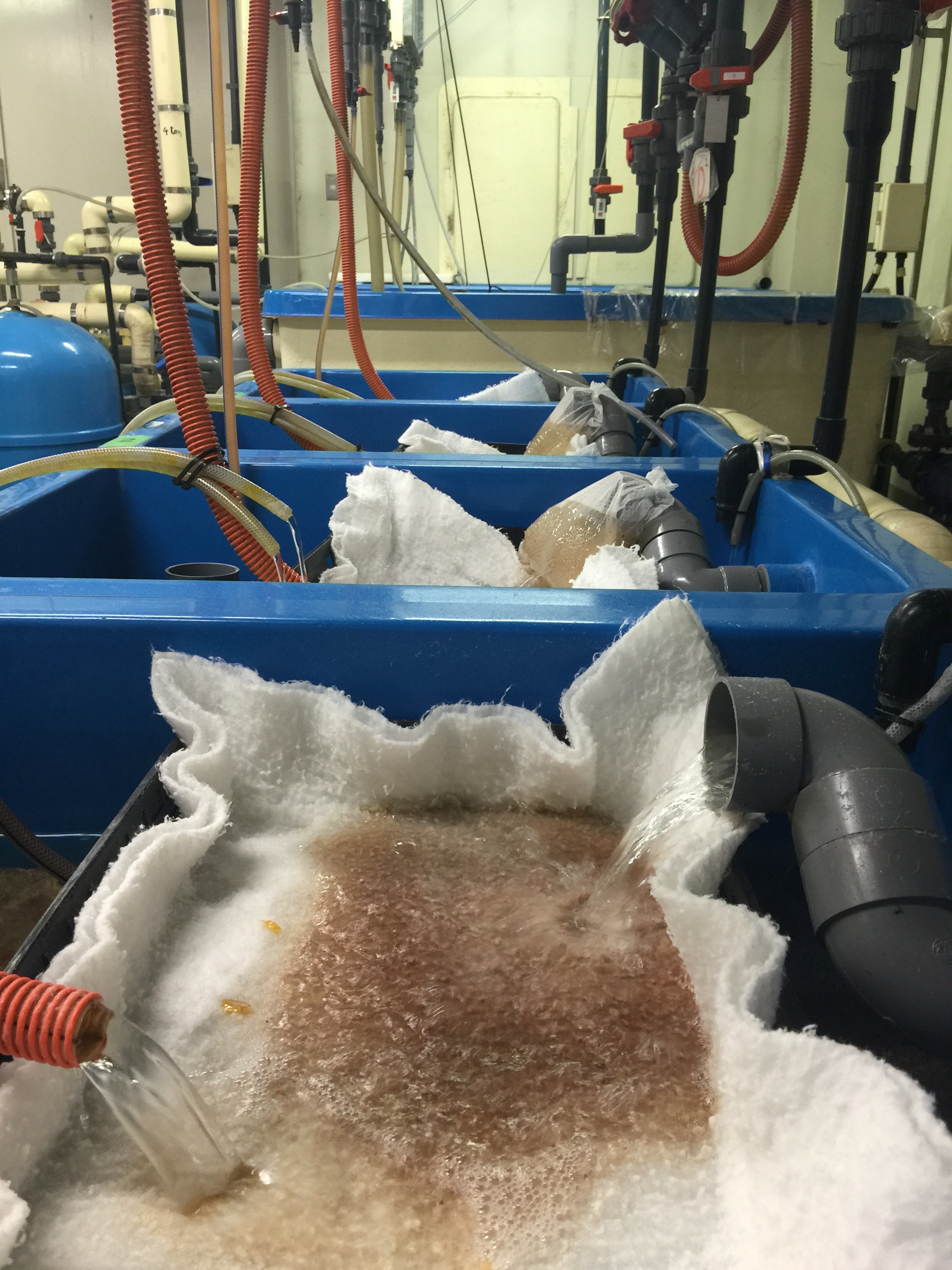
Back in July I was delighted to visit the Japan International Research Center for Agricultural Sciences, or JIRCAS, in Tsukuba, thanks to my friend Dr Marcy Wilder who is involved in shrimp aquaculture there. At first glance there is no obvious link between JIRCA and scuba diving, but as I prepare to start an online MSc in Sustainable Aquaculture with the University of St Andrews in Scotland next month, I’m more than keen to start delving into the world of aquaculture here in Japan.

JIRCAS is what’s known as an “Incorporated Administrative Agency” that comes under Japan’s Ministry of Agriculture, Forestry and Fisheries and plays a key role in international collaborations in agriculture, forestry and fisheries research in Japan.  JIRCAS’s aim is to provide solutions to global food and environmental problems and a stable supply of agricultural forestry and fishery products and resources.

In the fields of fisheries and aquaculture, research at JIRCAS consists of three important areas: the sustainable utilisation of living aquatic resources, technology that doesn’t negatively impact on biological diversity, and socioeconomic studies on the marketing and distribution of aquatic products.
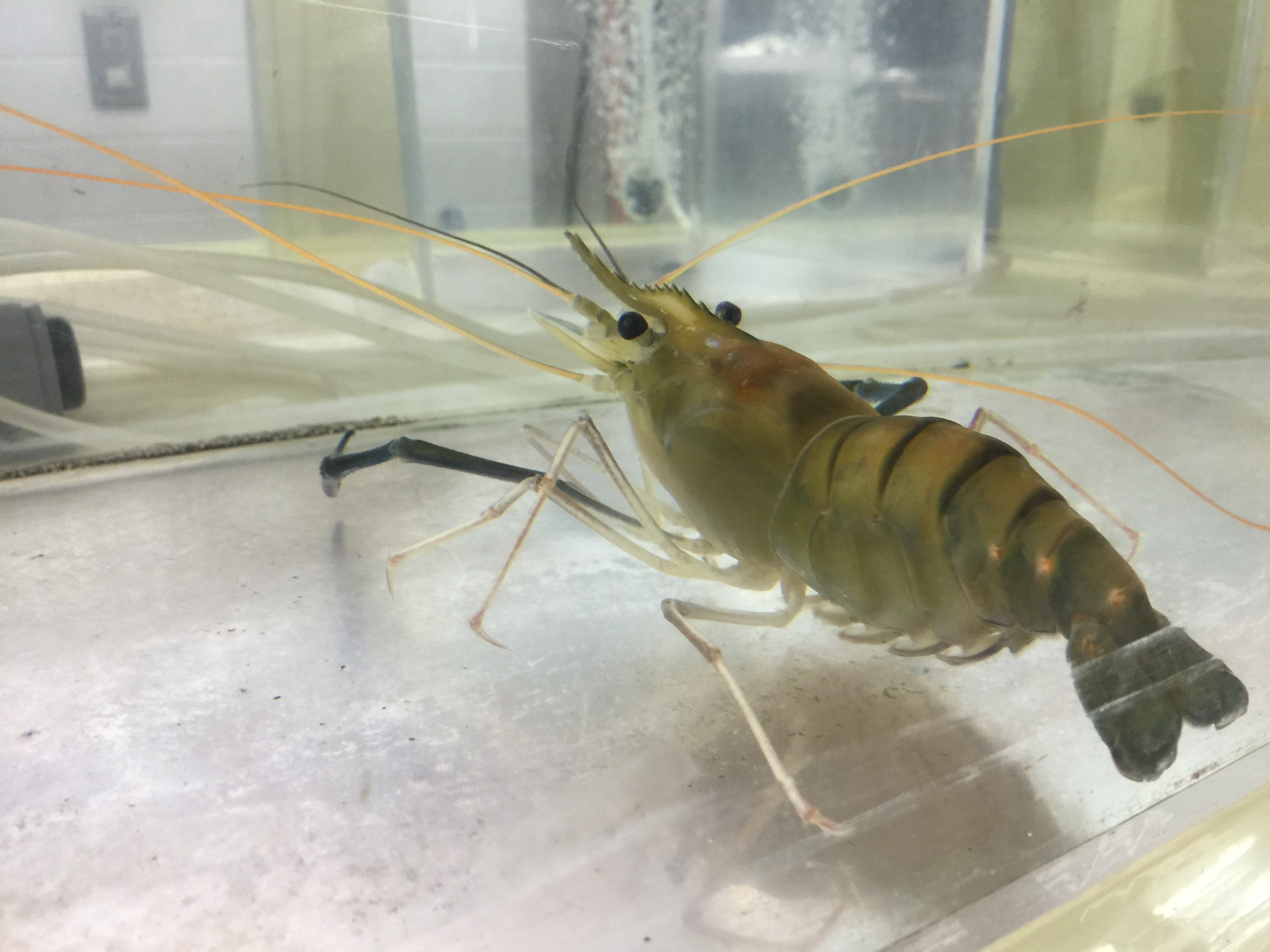
Today shrimp farming is a significant industry worldwide and production is increasing rapidly to meet demand.  The industry has grown in Southeast Asia in particular, but the farming methods involved have often been controversial and resulted in environmental problems and a shortage of shrimp spawners.  Marcy is currently working as a senior research scientist at JIRCAS.  Her research covers areas such as reproduction, osmoregulation and technology to control female maturation in captivity. She is also developing land-based re-circulating systems with zero impact on the environment, and her technology is being used to produce shrimp in the mountains of Niigata prefecture near Myoko.  As she showed me around the labs, I got to see some of the shrimp she is working on and hear more about her research, including the current status of freshwater prawn culture in Vietnam and the light perception capability of shrimp. I was really impressed, not just by the vast amount of research that’s going into a single species, but also by the possibilities Marcy’s technology entails, and hope that its implementation will contribute to the sustainability of shrimp aquaculture and to an even better environment.

July 2015: The Return to Kozushima, Japan

Monday July 27th – Wednesday July 29th, 2015

Kozushima is one of the islands in the Izu Island chain south of Tokyo.  About 3 hours and 45 minutes from the capital by fast boat, its turtles, coral gardens and schools of fish are a sight to behold. The island is an idyllic setting backed by vibrant blue summer skies and lazy azure waters that are peppered with a patchwork of coral reefs and rocky structures. There are many dive spots in and around Kozushima for the curious diver to explore, and below are some of them.  Enjoy the diverse marine life here in the Pacific Ocean, then relax in this warm and tiny paradise so close and yet so different to Tokyo.

Naganne: Located about 10mins away from the mainland, Naganne is a sheltered area near Miura Bay.  Descending to around 5m and swimming over a carpet of shallow rocks, we came to an open spot at about 12m.  Although the site’s maximum depth is around 30m, we spent time exploring the relatively flat 12-14m area.  With a good range of marine species, Naganne is a melting pot of marine life, with spectacular underwater scenery and an abundance of rocks, all of which are home to a wide array of corals and fish.  A porcupine fish peered out at us from his dark crevice, while blue and white nudibranchs Hypselodoris festiva and Chromodoris orientalis were just a few of the many lovely creatures to commonly grace Naganne’s rocky seascape, and no way was I in any hurry to leave as I panned my camera across the entire scene from various angles and hung around for a good while.  The rocks, decorated with banded coral shrimp and two species of the nudibranch Ceratosoma trilobatum, were also home to a huge and sleepy Japanese wobbegong, and created a beautiful stage on which the shimmering sun rays danced nimbly. Lobsters also gave themselves away, their eyes reflecting in the torchlight.

Sanju: Healthy coral of every shape and colour thrive along the walls where the ocean floor drops into oblivion, while schools of knife fish, angelfish and Centropyge interrupta (Japanese angelfish) feed off the area.  Famed for its resident white-saddle goatfish, spotted tail mornings and golden-striped groupers, Sanju has much to offer despite its relatively standard and ordinary appearance as the dive begins at around 5m.  Sanju is also a great place for those who like endless scores of nudibranchs and decorator crabs scuttling about their business, and adding to the site is a comprehensive collection of sponges and soft corals, providing fantastic photo opportunities no matter which area you decide to explore. Streaks of sunlight also glisten through the 12-15m area, making the site all the more attractive. Dragon morays call Sanju home, neon damselfish cruise the sides of the many rocks, and other areas are frequented by thread-sail filefish.  Meanwhile, like an oasis of life, a sac anemone hosted a couple of anemone fish and clownfish.  

Urazakune:  Expect steep walls and congregations of pelagic fish here at Urazakune.  The current can be quite strong and while drifting along the slopes and walls we got to admire schools of knife fish in the blue.  Friendly turtles also love Urazakune and can be seen heartily munching on sponges in the safety of the rock gardens, while chicken grunts become visible in the distance.  Hovering over the rocks are anthias, fusiliers and lots of clownfish in their host anemones.  The currents bring nutrients to feed the area and a range of sponges have all flourished.  The rocks provide shelter at every level for countless thousands of reef fish and easily as many invertebrates.  Moray eels and Pacific burrfish can be found in or close to the dark recesses sheltering from the gentle current, while red-lipped morwongs feed off the area.  As the current slowly picks up, the fish seem to crowd every scene – the density of life here is something to behold with movement and colour everywhere.

Tsumari: This site has white sandy bottoms and can be stunning when visibility is good. The shallow areas are used for introductory dives, night dives and photo excursions. Only 5 minutes away from the dive shop by car, it’s found at the bottom of a cliff where divers walk into the water carrying their gear down a small flight of steps.  If the water is slightly choppy entry can be difficult, but once in the warm clear ocean it’s clear to see why Tsumari is one of Kozushima’s most popular sites. Its highlight is undoubtedly the white sand at around 12m where divers can lie on their backs and look up at the sun streaming through the water. There is also a small cluster of tree branches for squid to lay their eggs and a series of concrete beams that house lobsters.  It’s a sanctuary to a diverse array of marine life, set against a backdrop of teeming rocky outcrops. Ascending through the shallows we spotted beautiful squid and a cluster of their eggs, baby flatfish, spider crabs, nudibranchs (Hypselodoris festiva and Chromodoris orientalis) and yellow boxfish. Brown striped mackerel scad occasionally swirled around out of curiosity, while pufferfish hovered close to the rocks watching the world go by and a school of horse mackerel swam along in a perfect group.

Practical information

  • We took the overnight slow ferry from Takeshiba pier in Tokyo with Tokai Kisen ferries (http://www.tokaikisen.co.jp).  The boat leaves at 23:00 and costs around 6,000 – 7,000yen for a one-way ticket and a seat inside the boat although some people like to sleep on deck and blankets can be rented for 100yen each.
  • We booked our dives with Nangoku (http://www.kozu-nangoku.com/kozu-english.html).  Three boat dives and one beach dive came to just under 30,000yen including tanks, weights and a guide.  Repeat customers also get a 5% discount on dives.
  • Diving equipment can be sent in advance from Tokyo for about 2,500yen using Kuroneko Takkyubin.
  • Immediately upon entering Nangoku there is a huge table surrounded by shelves of books, photos, posters and other decorations, with a reception desk on the left.  The area for diving equipment (washing, drying, hanging, storage) is on their deck upstairs overlooking the sea (Maehama Beach). A toilet and two showers (with shampoo and conditioner, no soap so remember to bring your own!) are also available, and the friendly staff will offer you copious amounts of cold tea.
  • Divers head to the  sites after loading the van with equipment and getting changed into wetsuits at Nangoku.  The boat Nangoku uses appears to be owned by local fishermen, is very spacious and flat with enough place to store gear.  Equipment is put on when the boat arrives at the dive sites.  Bring a towel, some sunscreen and a hat for the boat journey if you are worried about sunburn.
  • Lunch is not provided but after each dive there is time to check out some of the restaurants.  Next door to Nangoku on one side is Tears Blue that serves a range of rice and pasta dishes, coffee and cold drinks, and on the other is a soba noodle restaurant run by the Nangoku owner’s father. Expect to pay around 1,000yen for lunch. There is also an ice cream shop at the bottom of the road, 300yen for one scoop.
  • Divers are responsible for their own equipment.  When the dives are over, they are free to use the deck to change, wash, hang and dry their gear.  Cameras, dive computers and torches can be placed in a tray of cold water at the entrance to Nangoku.
  • We stayed on the 3rd floor of Nangoku for 3,000yen per night.  It’s not in the best condition but there is a fan, basic air conditioning, a huge room where guests sleep on the floor, towels to use and a toilet and kitchen area.  Nangoku can advise on dinner options, and there is a great izakaya (Japanese-style pub) serving excellent sashimi (raw fish).
  • A bit further up the coast from Nangoku is an outdoor hot spring which Nangoku will book for you and take you to.  Buses are available on the island, for 200yen per ride.
  • We booked the fast jetfoil back to Tokyo with Tokai Kisen ferries.  The boat leaves at 15:30 and gets to Tokyo at 18:40.  A single ticket costs 11,200yen.  There is one vending machine and the seats are like airplane seats.  It’s worth bringing a book and something to eat on board.

July’s dives 

Dive 1: Naganne: depth: 14.4m, dive time: 48mins, water temp: 27C, entry time: 09:56, exit time: 10:50, water visibility: 20m, used a 10L steel tank, 5mm wetsuit and 3kg back plate (1kg extra weight in pocket).  Star pressure: 180 bar, End pressure: 50 bar.  Saw Japanese wobbegong, blue and white nudibranchs Hypselodoris festiva and Chromodoris orientalis, white mouth moray eel, puffer fish, banded coral shrimp and two species of Ceratosoma trilobatum

Dive 2: Sanju: depth: 17.6m, dive time: 45mins, water temp: 24C, entry time: 11:33, exit time: 12:13, water visibility: 20m, average depth: 10.9m, used a 10L steel tank, 5mm wetsuit and 3kg back plate (1kg in pocket).  Start pressure: 180 bar, End pressure: 30 bar.  Saw knife fish, angel fish, white-saddle goatfish, spotted tail mornings and golden-striped groupers, decorator crab, dragon morays, thread sail filefish, clownfish and anemone fish.

Dive 3: Urazakune: depth: 14.6m, dive time: 48mins, water temp:23C, entry time:14:27, exit time: 15:18, water visibility: 20m, average depth: 9.7m, used a 10L steel tank, 5mm wetsuit and 3kg back plate (1kg in pocket).  Start pressure: 180 bar, End pressure: 50 bar.  Saw knife fish, turtles, anthias, fusiliers, clown fish, moray eels, Pacific burrfish and red-lipped morwongs

Dive 4; Tsumari: depth: 8.5m, dive time: 46mins, water temp: 26C, entry time: 09.53, exit time, 10:33, water visibility: 25m, average depth: 4.8m, used a 10L steel tank, 5mm wetsuit and 3kg backplate (2kg in pockets).  Start pressure: 180 bar, End pressure: 100 bar.  Saw squid and their eggs, baby flatfish, spider crabs, nudibranchs (Hypselodoris festiva and Chromodoris orientalis) and yellow boxfish, brown striped mackerel scad, horse mackerel and pufferfish

May 2015: Interview with Laurent Ballesta in Singapore (English translation)

Last month I went to the Asia Dive Expo (ADEX) in Singapore and as part of my work for Japanese scuba diving website Ocean +α, spoke to marine biologist and research diver Laurent Ballesta, who has filmed the legendary bottom-dwelling sea creature coelacanth. During our talk, Laurent told me about how he got into diving, his work filming the coelacanth, and his recent visit to Japan where he gave a talk at a dive fair in Tokyo the weekend before ADEX.

Here is the link to the interview on Ocean +α’s website (Japanese only): https://oceana.ne.jp/oversea/56153

…….and a rough translation (many thanks to Fabien at Andromeda Oceanologie for the 3 photos below that have been used here and in the Japanese website):

The coelacanth was thought to have undergone extinction about 65 million years ago, but underwater photographer and marine biologist Laurent Ballesta from Montpellier in the south of France managed to successfully film it at a depth of 120m.  

Following last weekend’s Marine Diving Fair held in Tokyo, Laurent went to Singapore’s Asia Dive Expo (ADEX) where he held a photo exhibition and talked about filming the coelacanth.  

I was able to have a one-to-one chat with Laurent during my visit to ADEX. 

Laurent Ballesta

Considered a living fossil, the coelacanth was first discovered in South Africa in 1938, astonishing and exciting academics and the rest of the world.  Since then it has been found in Africa (South Africa, Comoro and Tanzania) and Indonesia.  Known as Gombessa by local people, its discovery is one of the most important of the 20th century. 

—-How did you become interested in marine biology and diving?

“Through movies, Cousteau adventures, documentaries, what I saw on TV.  The diver seemed like a hero, even more important than the sea and nature, the wildlife itself, and that gave me the wish to become something like that.” 

—-Tell us a bit about the diving in France. 

“I’ve dived all over France, but my place is the south of France.  If you’re interested in marine life, there are nice dive sites all over the world.  Even Singapore is surrounded by ocean so there must be some good places.  The south of Montpellier is quite a poor diving spot but there are plenty of discoveries there.  That’s where my first impressions of diving come from.  It’s a special place for me and there are a lot of interesting species to see.”

—-You set up a company Andromeda Oceanology.  Can you tell us a bit about the work you are doing now? 

“The idea behind this was that we didn’t want to be only researchers and scientists at a university, be busy and never move, or to become just travellers or journalists with no opportunity for research.  We wanted to be everything so we created this association that is now a company, a company that has everything like research, science, expeditions, filming, because we knew that was possible and even necessary.  Now we are involved in a lot of projects, some are scientific studies like pollution studies that are not so interesting, others are expeditions, but no matter what we do, we never forget to make the best possible image.” 

—-How important are underwater photos in your work?

“They’re extremely important, and I have this strong feeling that I want to continue my work because of the very fact that I am taking photos.  I feel pushed to continue.  Thanks to photos, various doors have opened and I even managed to get a sponsor for the coelacanth project.  So many things happened because I took home photos of the coelacanth.  Underwater photos are very important.” 

Coel Ced la parfaite JB

—Do you have any advice when it comes to underwater photos?

“Don’t believe that an underwater photo comes from the photographer.  It comes from the subject.  Divers say that an underwater photo is theirs, that they took it, that they created it, but the most important thing is the subject, not the photographer.  Instead of saying a photo is yours, you need to respect the subject and understand that you have been able to take a good photo thanks to the subject.  Then, once you have understood that, you can start to think that something will come from you one day, ask yourself how you can take a good photo. The most important thing is to find a good subject.”

—-Why do you dive deep?

“Because the ocean is deep and for me it is obvious that diving is not just to make deep dives, it’s to make longer dives.  As long as you dive for a long time you bring back more stuff.  I have a problem with the diving industry because there is no opportunity to dive deep or experience more challenging conditions.  Because of their safety regulations dive shops never promote diving challenges, they never want to promote danger.  Some shops say you will die if you dive deeper than 40m but of course you can go deeper than 40m!  The problem is that everyone is focusing on shallow water.  If you don’t help people to make some non-official dives, deep dives, strong currents, they won’t become good divers.  If young divers aren’t given challenges…..then you are going to kill diving itself.” 

—-Can you tell us a bit about the coelacanth and the deep sea?

“The coelacanth is the biggest discovery of the last century.  It’s something unique in the world.  It was supposed to have disappeared 65 million years ago so it was impossible to find and that is why nobody believed that it would be found.  After taking my photos I looked for palaeontologists and the reaction was unbelievable.”

(Here is a bit more from Laurent’s exhibition and talk to add to the above question): “Very little sunlight penetrates the deep sea, it’s a harsh environment.  There is also no guarantee that the coelacanth will appear.  Sometimes he doesn’t appear for a very long time, and even if he appears he quickly disappears again.  Because of that, I feel honoured to have filmed and photographed him even for a very short time. The coelacanth is like a star.  Filming him is like waiting for your favourite actor to appear and as soon as he does, taking a photo in desperation.”

Coela devant Yanick niveaux

—-Where do you like to dive?

“What I know I don’t like is where there are too many people.  I prefer places with not a lot of creatures, muddy bottoms, darker waters, somewhere boring that is not popular, because I love to have the feeling, even if it’s my imagination, to feel that I am an explorer.  I like places that make me feel like that.” 

—-How was your talk at Tokyo’s Marine Diving Fair?

“I discovered that in Japan they are fanatics of the coelacanth.  There is a museum called the coelacanth museum dedicated to deep marine life.  A lot of people came to the talk because they already knew about the coelacanth.  That was great.  I was delighted.” 

—-What impression do you have of Japan’s oceans?

“I dived in Japan recently but I went to a river to see the giant salamander.  It looks like a living Pokemon!  I can’t say I dived in Japan because I didn’t dive in the sea and my time in Japan was not so much about diving but more about mountains, climbing, drinking…the locals made me feel very welcome and I was really happy about that.”   

My impressions after the interview

Laurent’s footage and photographs were extremely exciting to see.  To stand out as a diver, it’s not enough to simply take photos.  You need a goal, a dream or an idea and then do your utmost to achieve that, right until the end.  That is very important, and I was impressed by Laurent’s skills, passion and determination.

At ADEX it was very clear just how much he loves the deep sea and the coelacanth.

To become involved in things like underwater surveys, conservation or filming, you have to love the sea, and in order to love the sea, you have to know it.  Talking to Laurent, I felt that that’s why he dives deep, for such long periods of time.

April 2015: The Asia Dive Expo (ADEX) 2015, Singapore

Friday April 10th – Sunday April 12th

IMG_2422 IMG_2435

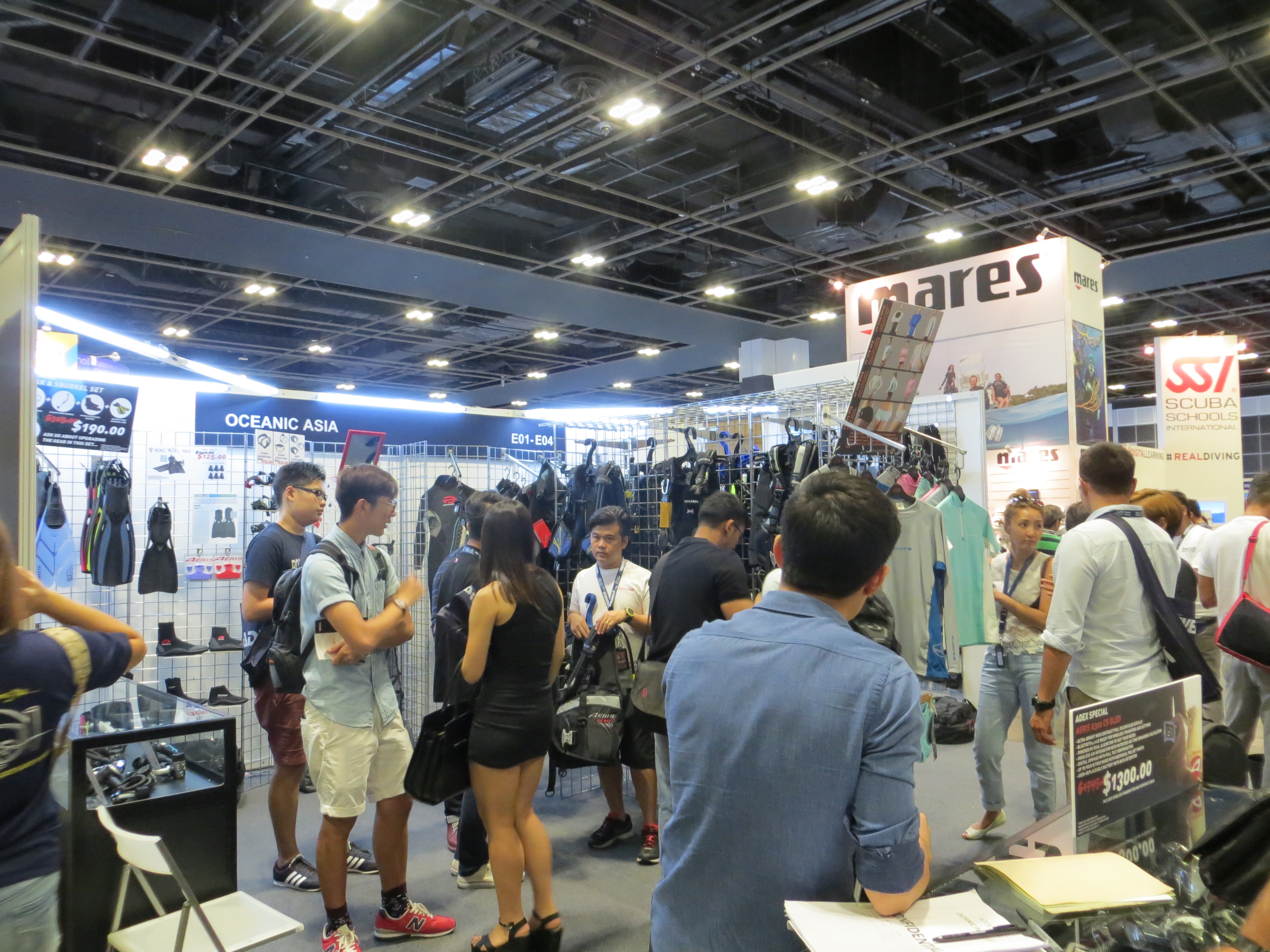
Last week on Thursday 9th April I headed for Singapore to attend my first ever Asia Dive Expo, the longest running dive show in Asia that’s otherwise known as ADEX.

Although the show is mainly for promotional purposes like last weekend’s Tokyo’s Marine Diving Fair, it’s an event on a much bigger scale, a chance to network, get tips and advice from underwater photographers, find some great deals on magazine subscriptions or sit down with a coffee and catch up with fellow divers.

For me, ADEX was a great insight into dive fairs outside Japan. Without further ado, here are some bits and bobs from the big weekend:

Friday 10th: Despite the opening day being on a Friday, thousands of visitors seemed to be pouring in, maybe to avoid the weekend madness and enjoy shopping for new gear and making contacts. The actual opening ceremony got underway around 3pm when hope was expressed for an even bigger and better show than before.

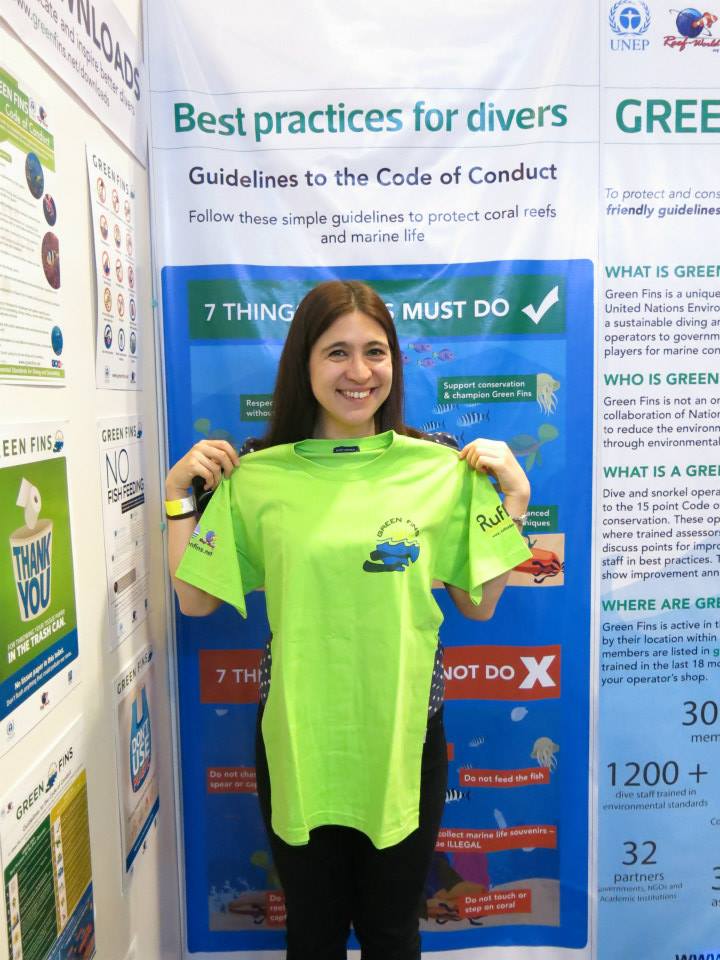
I was particularly looking forward to catching up with the Green Fins team after spreading the word about them in Tokyo last week. ADEX had much more of a conservation focus than Tokyo’s Marine Diving Fair, and word seems to be getting out about Green Fins’ environmental standards for the diving industry as visitors often came to check out the posters and stickers on offer, while a Green Fins talk was held as well. 10432131_10153260977319510_692235878288962081_n 11147078_10153260977374510_3844979768605000144_n

I also enjoyed meeting the staff at iSeahorse who have come up with a smart phone application that divers can use to upload any photos they take of seahorses. These photos are then picked up by scientists worldwide and contribute towards seahorse research. Marine conservation seemed to be high on the agenda at ADEX. There was much interest in Japan’s Sanriku Volunteer Divers, and magazines were keen to discuss possible articles on Green Fins’ initiatives as well.

Meanwhile a vast array of dive retailers was selling everything from wetsuits to fins at very good prices. One of them, Friendly Waters Seasports, had some bright and colourful BCDs on sale that would no doubt attract much attention if sold in Japan!IMG_2494

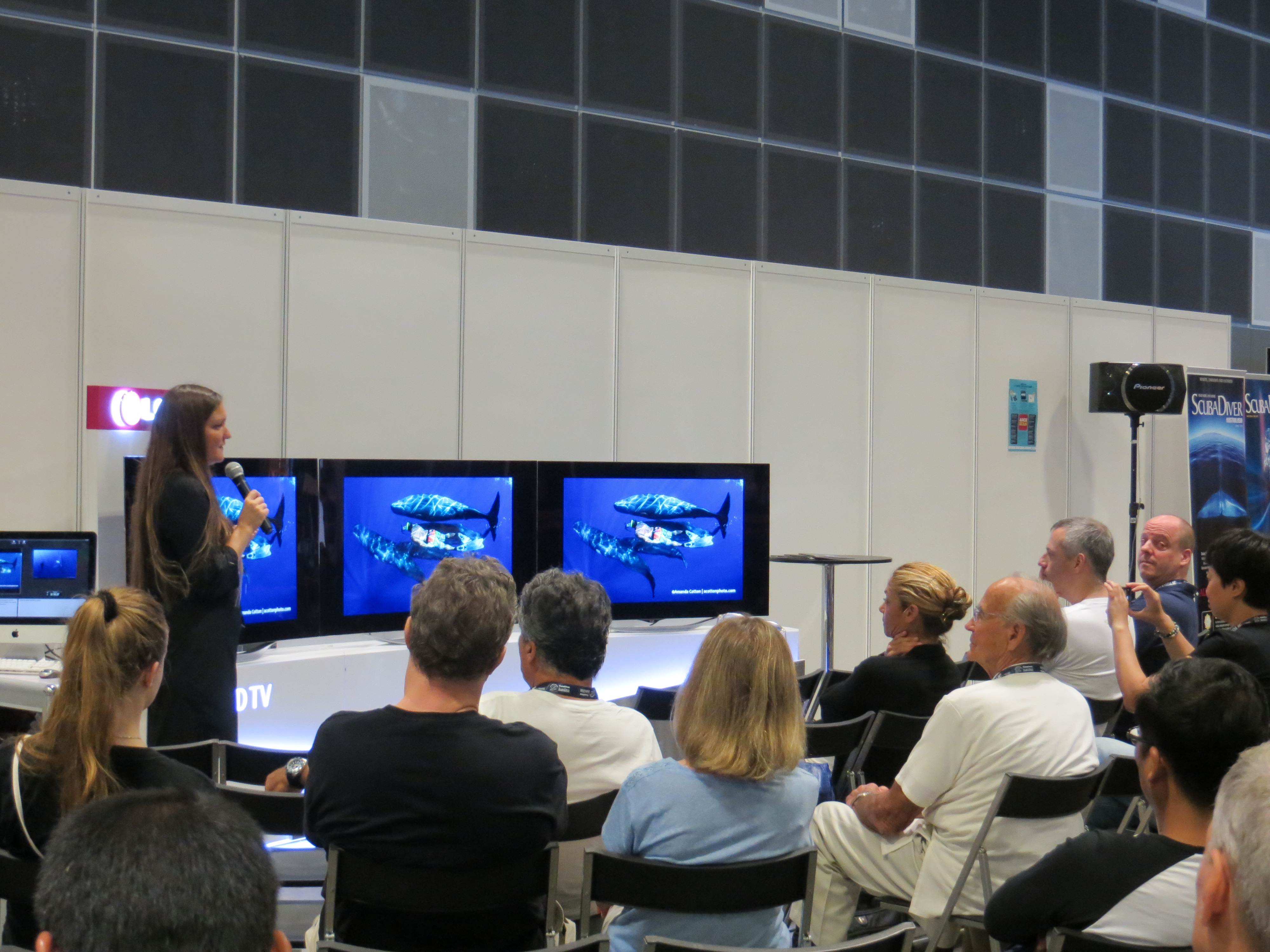
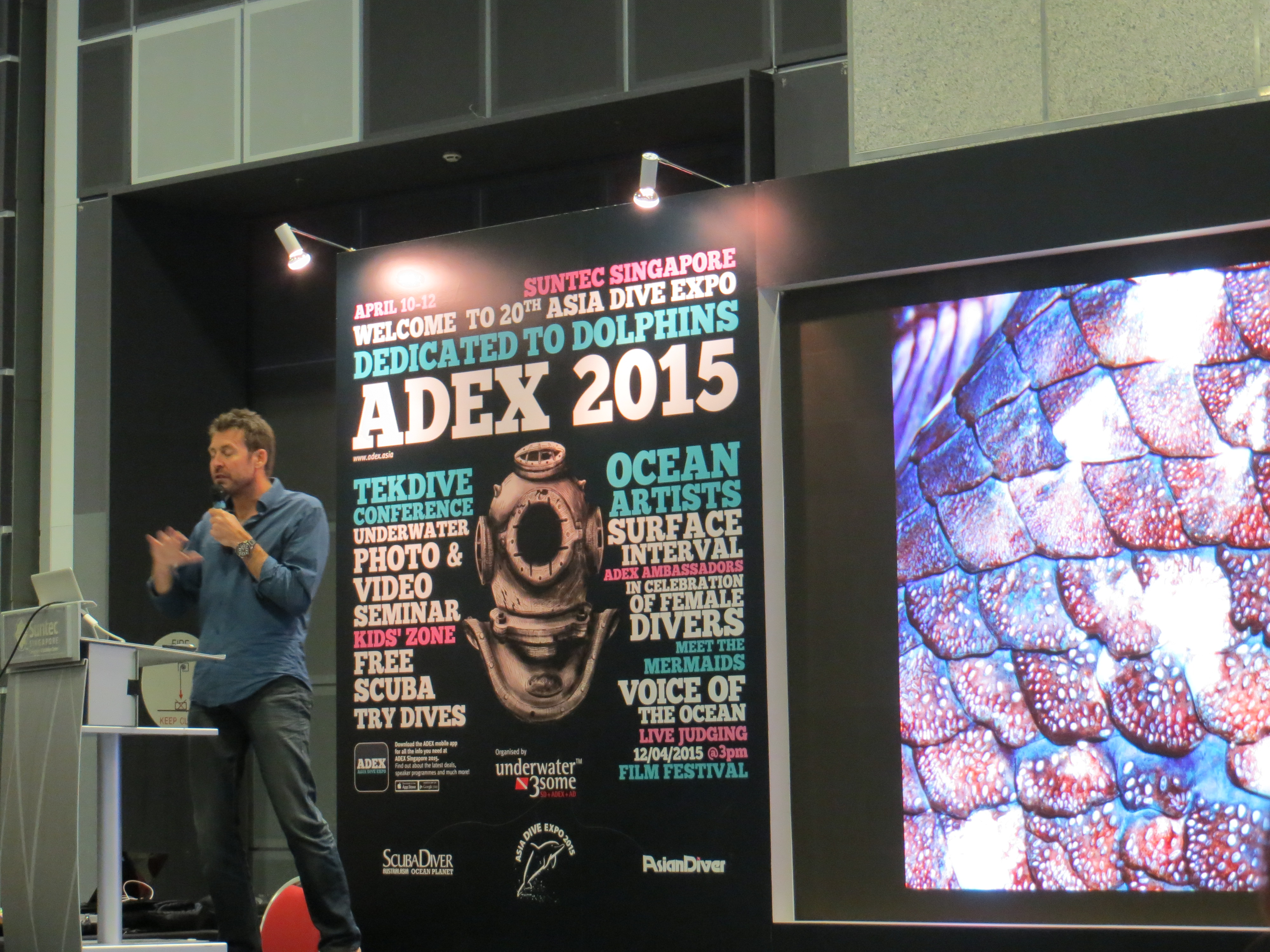
Saturday 11th: The second day opened early with heightened excitement as the weekend had arrived and the venue received an influx of visitors. Laurent Ballesta was a standout star with his brilliantly accessible talk on filming the coelacanth. His presentation pulled in huge crowds and generated buzz and excitement, while his photo display was stunning. I got to have a one-to-one chat with Laurent and was struck by some of the things he said. Listening to him, it hit home that as a diver it is not enough to simply take photos underwater. You need an idea, a goal, something unique or special (in his case the coelacanth) to stand out. Is diving in Japan my something special? Talking to Laurent certainly got me thinking.

IMG_2439 IMG_2468

Tour operators, liveaboards, resorts and clubs from across Asia were also out in force. The Philippines booth was excellent with information from every corner of the country as well as a slideshow of underwater photos and footage taken at some popular dive sites. There were also lots of goodies to buy from the guys at Canon and other camera makers, some very impressive equipment to spend all your cash on!

Sunday 12th: On the final day, it seemed that divers were going crazy with last minute gear grabs, attending as many talks as possible and doing the final networking and meetings before the event drew to a close. It was a great day to be at ADEX as I got the chance to reacquaint myself with the contacts I had made over the past two days.

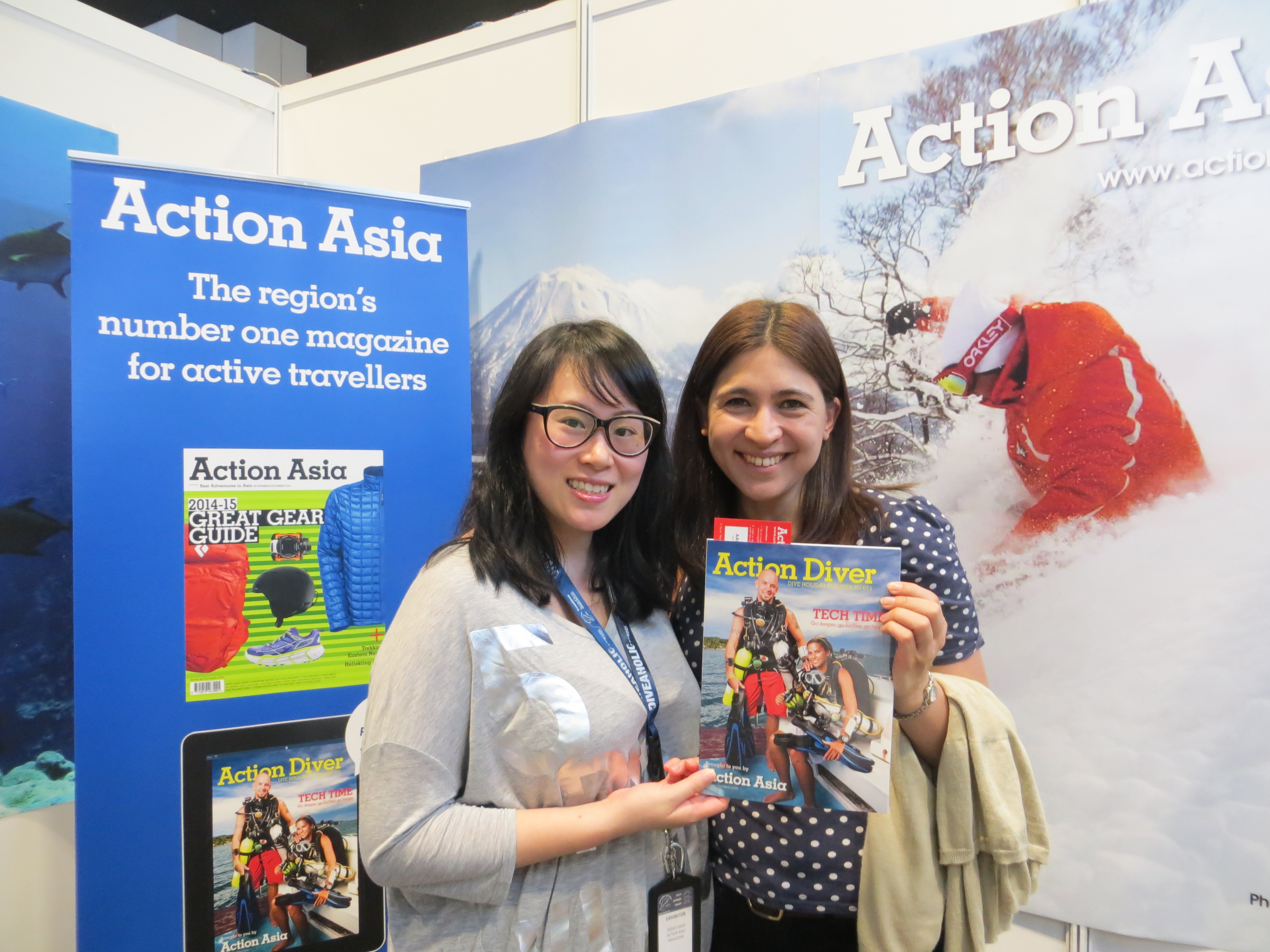
During the weekend I’d been struck by the number of magazines that were represented and was lucky enough to speak to almost all of them. Peggy from Action Diver told me how her boss had gone diving in Okinawa and enjoyed it immensely, while the staff at online magazine X-Ray Mag sat down with me to go through my underwater photos and discuss some Japan-related options. It seems that diving in Japan is not that well known in the rest of Asia and I would like nothing more than for that to change one day. I also spoke to the editor of Scuba Diver Australasia magazine Alice Grainger, who is due to publish an article I wrote recently on diving off Yakushima. She expressed interest in Sanriku Volunteer Divers and we discussed the possibility of publicising coral protection initiatives in Okinawa.

IMG_2505 IMG_2511 IMG_2520 IMG_2525ADEX proved to be a great weekend with a vast range of exhibitors and speakers combined with a really nice location. For me however, the absence of Japan really stood out and it would be great to see Japan’s diving being represented there one day.

April 2015: The Marine Diving Fair, Ikebukuro, Tokyo, Japan

IMG_1620 IMG_1631 IMG_1634 IMG_1645 IMG_1652 IMG_1665 IMG_1672

Friday April 3rd to Sunday April 5th 2015 

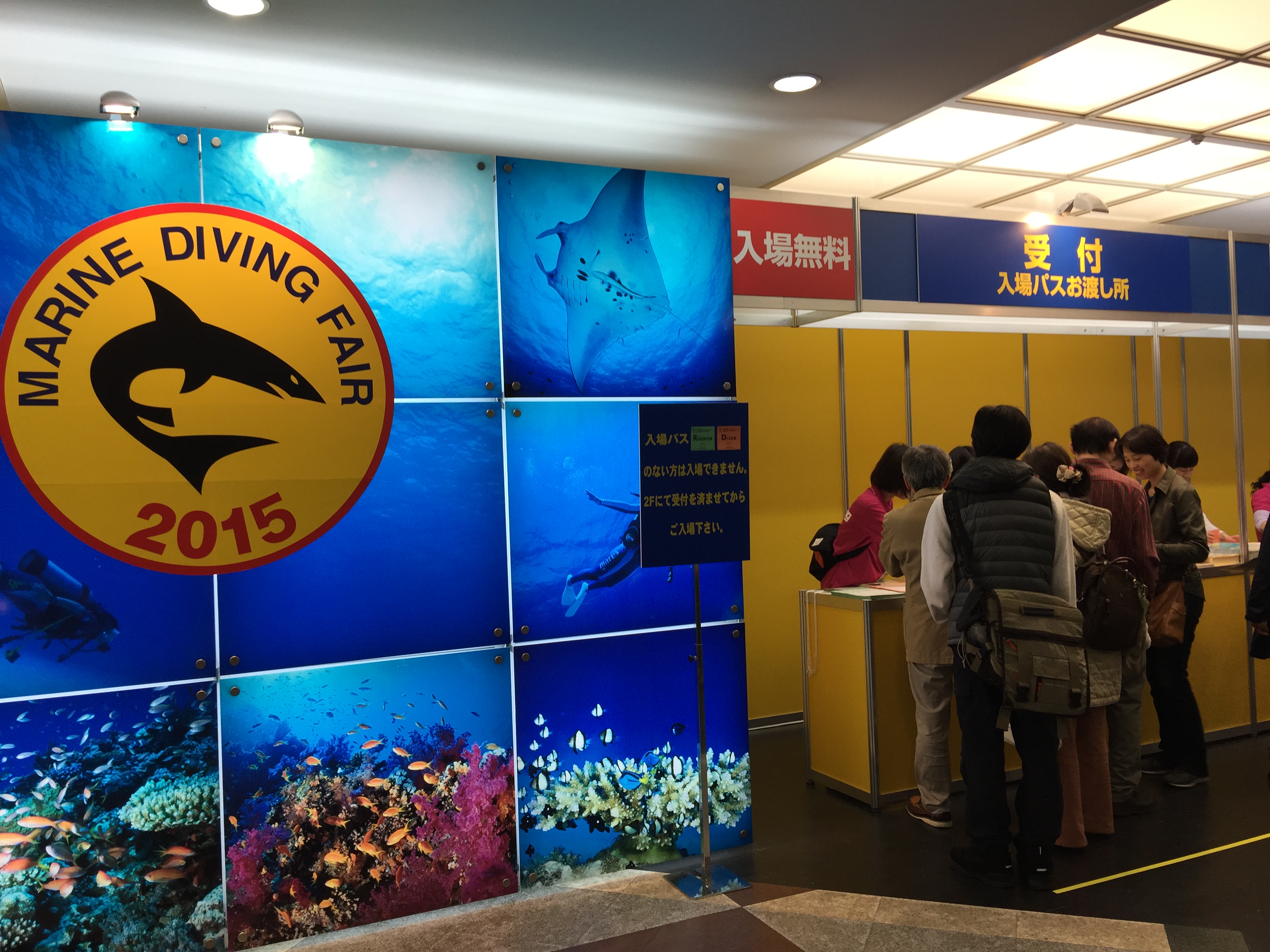
Tokyo’s annual Marine Diving Fair is a unique point of access for divers to get discounts on dive gear, listen to talks from invited guests, catch up with one another and discover new dive sites in Japan and elsewhere.  Organised by Japan’s first scuba diving magazine Marine Diving which began in 1969, the event is mostly for promotional purposes but high on the agenda this year was travel to destinations outside Japan and plenty of information for the increasing tide of divers dedicated to creating images underwater as those in the underwater photo and video business shared their expertise through talks, one-to-one advice and special displays of top images.

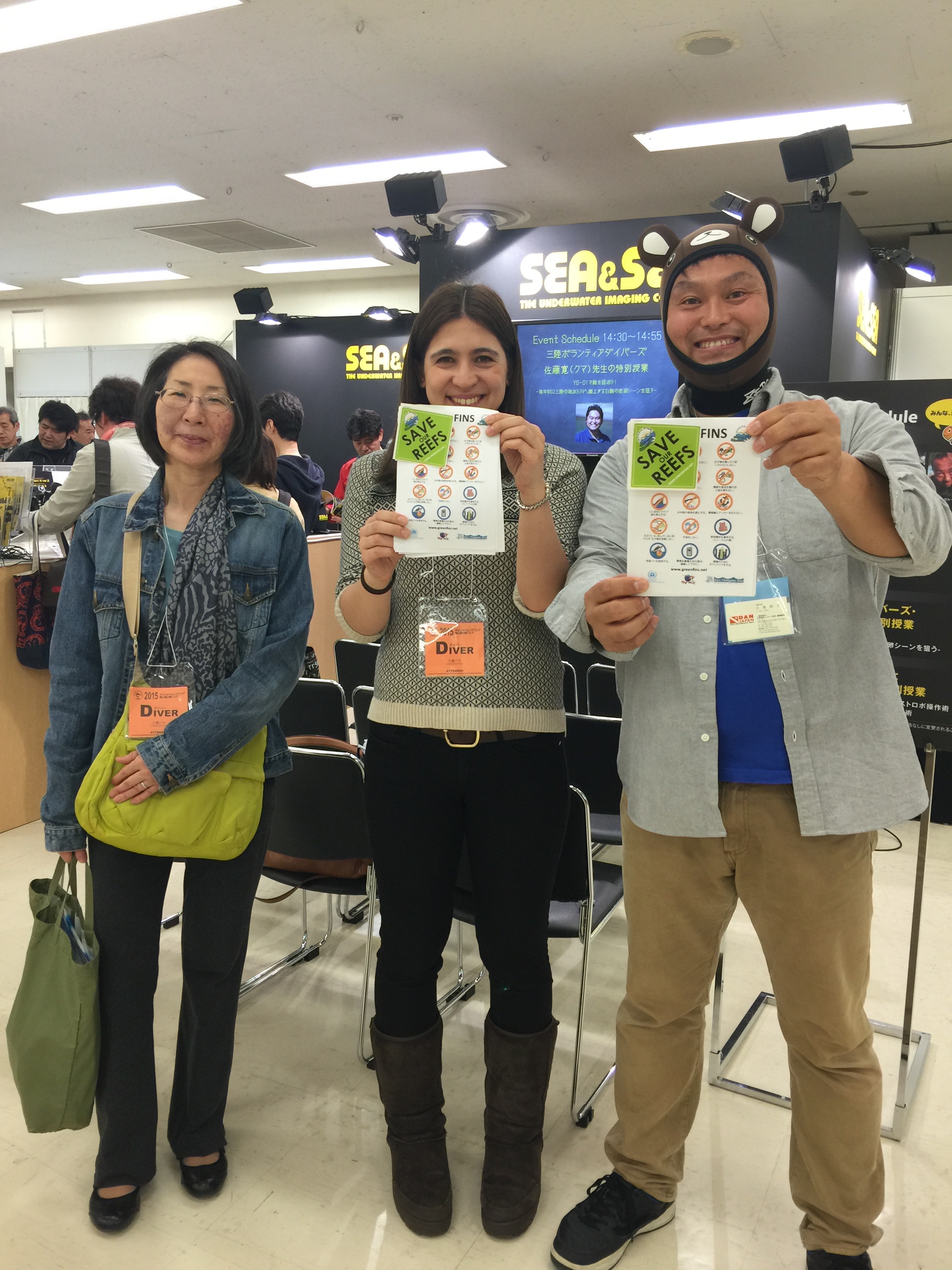
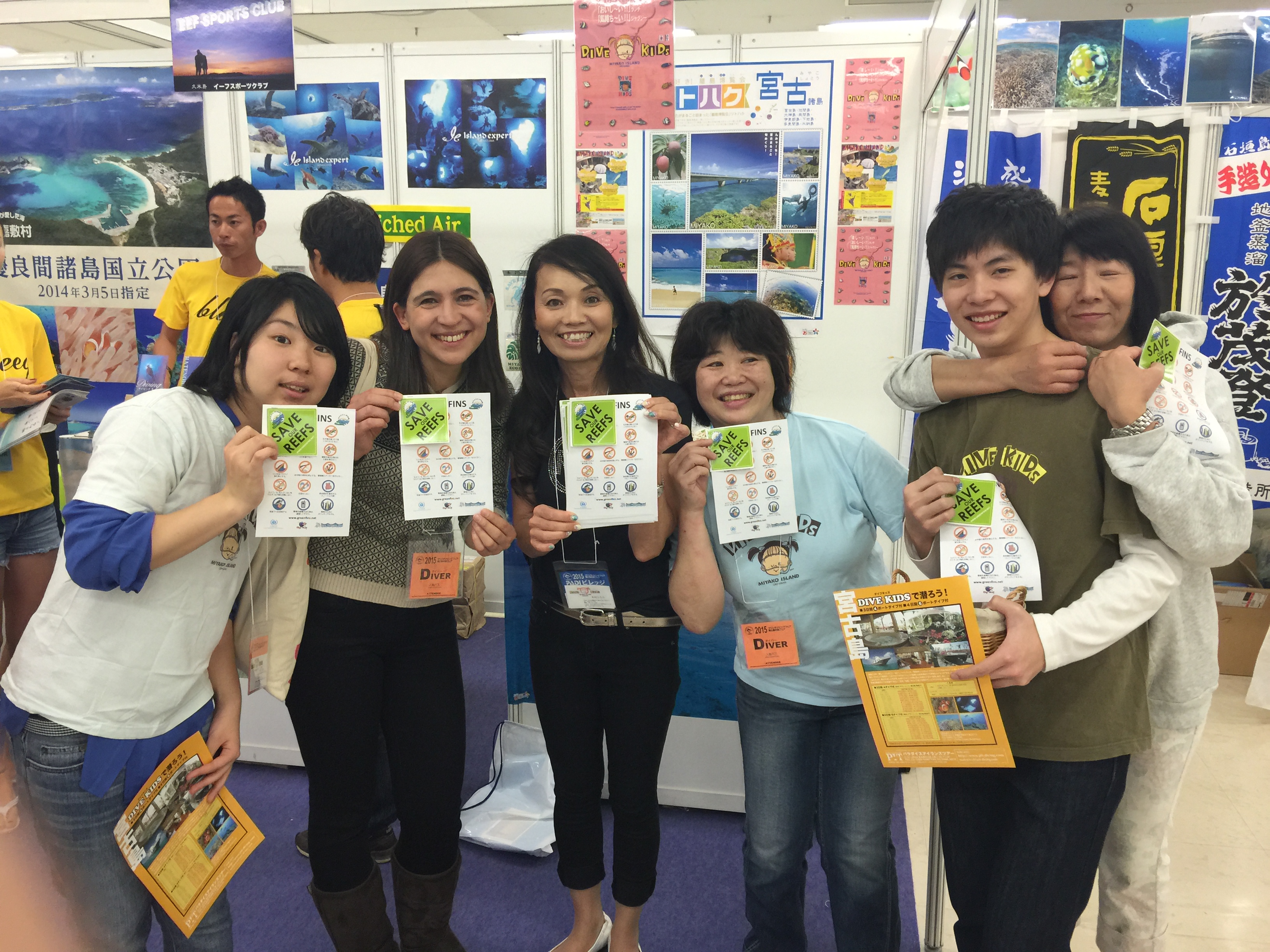
As I headed to the event this weekend I was a diver on a mission, tasked with spreading the word on Green Fins.  Internationally coordinated by UK charity Reef World, Green Fins is a set of environmental standards for the diving industry that provides guidance and support to business owners, dive shops and national authorities to promote best practice underwater.  I was extremely impressed at the high level of enthusiasm towards Green Fins expressed by Japanese divers, dive shops and even PADI Japan.  Everyone was keen to know more and to do their part, so here’s hoping Green Fins will have a role to play one day soon in the Japanese diving industry.  Here are some photos taken while I handed out a few Green Fins leaflets:

IMG_1636 IMG_1638 IMG_1639 IMG_1656 IMG_1667

Another highlight of the event was catching up with Hiroshi Sato who established Sanriku Volunteer Divers, a group that’s been working to restore areas hit by the March 11th 2011 earthquake and tsunami in the Tohoku region.  Unlike previous years there was no Sanriku Volunteer Divers booth at the event.  Instead, Hiroshi was attending by himself to catch up with fellow divers and give a brief presentation on the Tohoku Salmon Swim.  Thanks to Hiroshi’s negotiations with local fishermen, people visiting his local area can don a mask and snorkel to observe the salmon return and run upstream after 4 years’ migration through the open ocean.  Today the salmon are coming back and Hiroshi offered an insight into the latest conditions as well as some tips on taking photos while observing the fast-moving fish.

Heading towards other booths nearby, I could see that the Okinawa region was out in full force.  One dive shop from Miyakojima Island had returned this year to promote the island’s diving and introduce the famous underwater limestone caves, tunnels and arches which I had the pleasure of seeing just last month.  Thanks to a new airport and more direct flights from Tokyo, tourism in Ishigaki Island is thriving and chances are that the diving industry there is going to get stronger.  The Ishigaki booth featured a host of dive shops operating across the island.  It was also great to see the lesser-known Amami region, particularly the islands of Okinoerabu and Yoron (one of my favourite diving spots in Japan!).  Both appear to be upcoming hotbeds of diving activity, with barrier and fringing reefs on Yoron and a range of marine life off Okinoerabu such as sea cucumbers, coral crabs and fish of all shapes and resilient colours.

Once again the Marine Diving Fair drew a huge audience from across Japan and even from abroad as special guest Laurent Ballesta, a French underwater photographer and marine biologist, gave a talk on 40 days of deep water diving and meeting the coelacanth, a legendary bottom-dwelling sea creature.  I spoke to some fellow divers who were also struck by how many people there were, and with such a big interest in Japan’s diving scene, perhaps there will be new and improved products, services and publications in the years to come.   It will be interesting to see just how much of a foreign input there will be too, as more individuals and organisations from abroad start to focus their attention on diving in Japan.